
24/7 Customer Support

Free returns

Same-day & Next-day Delivery

Quality Guaranteed

Unlock Your Welcome Offers: FREE Delivery | Up to 80% OFF | Free 30-day JoyPlus trial
Download the APP
A 1.7L electric kettle is a practical size for family kitchens, shared homes and anyone who regularly prepares several cups of tea or coffee. However, comparing models by appearance or wattage alone can lead to disappointment. A kettle that looks stylish may be awkward to refill, difficult to descale or unnecessarily expensive to run.
Before choosing, look beyond phrases such as “rapid boil” and “premium finish”. The most useful questions are: how much water can it boil in practice, how easy is it to clean and which safety features are included?
A 1.7-litre kettle may suit a family or small gathering, but the maximum line is not always the amount you should boil. Overfilling can cause hot water to spit from the spout and may interfere with automatic shut-off. For one drink, repeatedly boiling a full family-size kettle also uses more electricity than necessary.
Look for a clear water gauge, ideally with a minimum fill line or one-cup marking. This makes it easier to match the water volume to the number of drinks being prepared.
A rapid boil kettle with 3,000W may heat water quickly, but actual boiling time also depends on the starting temperature, water volume, heating element and household electricity supply. A product description that gives an approximate boiling time should be treated as a guide rather than a guaranteed result.
For everyday use, a kettle between around 1,800W and 3,000W can be suitable. More power may reduce waiting time, but it does not remove the need to descale the appliance.
A stainless steel kettle can offer a solid feel and an opaque exterior, while a glass electric kettle allows you to see the water level and boiling process. Both have practical trade-offs. Stainless steel surfaces can become hot and glass bodies need careful handling and regular cleaning to keep them clear.
The more important detail is often the interior design. Check whether the heating element is concealed, whether the lid opens wide enough for cleaning and whether a removable anti-limescale filter is included. These features are particularly useful in hard-water areas.
A 1.7-litre model commonly provides enough water for several hot drinks, although the number of cups depends on cup size. Check the product dimensions before ordering, especially if the kettle will sit beneath wall cabinets or beside other appliances.
A cordless jug kettle with a detachable base is convenient for serving. A 360° swivel base kettle can be lifted and replaced from any direction, which is useful for both left- and right-handed users and shared worktops.
Wattage indicates the electrical power used by the heating element, not a guaranteed boiling speed. Models in this selection range from 1,800W to 3,000W. A one-cup indicator or clearly marked gauge can help reduce waste by preventing unnecessary overfilling.
For a household that boils water many times a day, choosing the correct amount of water is usually more practical than focusing only on the highest wattage.
A standard kettle switches off once water reaches boiling point. A temperature control kettle offers additional settings for drinks that may be prepared below 100°C. The Bear model listed below includes selectable temperatures from 40°C to 95°C, as well as 100°C boiling.
A keep warm kettle can maintain a selected temperature for later use, but this function consumes electricity while active. Essential safety features include automatic shut-off and boil-dry protection. The latter is an auxiliary safeguard and does not replace careful filling, supervision or correct use.
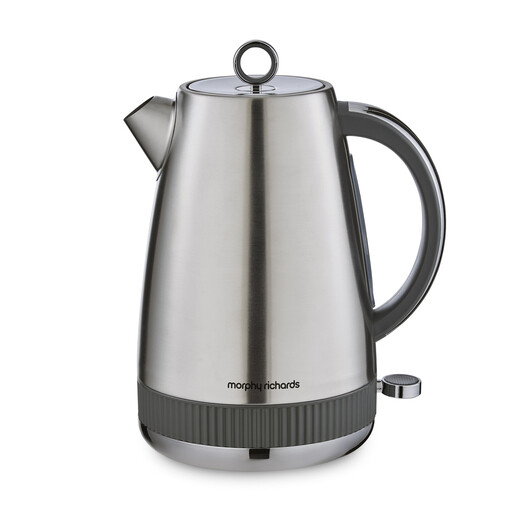
Why This Fits Their Persona: A straightforward family-size kettle for students, renters and households wanting practical everyday controls without temperature programming.
The external water gauge helps avoid overfilling, while the removable filter makes routine cleaning more manageable.
1.7L capacity, cordless 360° swivel base, illuminated switch, automatic shut-off and boil-dry protection.
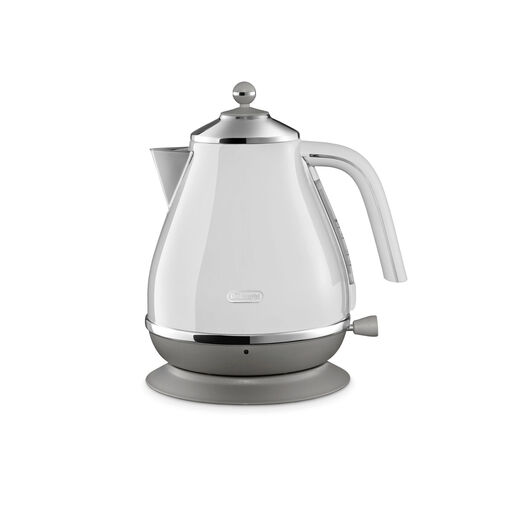
Why This Fits Their Persona: Suitable for shoppers prioritising a stainless steel finish, fast heating and features that support regular use in hard-water UK areas.
Its removable, washable anti-limescale filter and concealed heating element address two common maintenance concerns.
The listed specification includes 3,000W power, a 360° rotational base, water-level indicator and three safety protections.
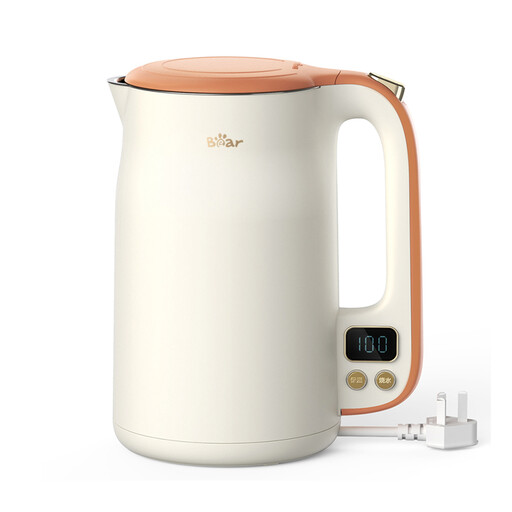
Why This Fits Their Persona: A useful option for tea drinkers, coffee makers or households wanting temperature selection and keep-warm functionality rather than boiling-only operation.
The controls specify selectable temperatures from 40°C to 95°C, plus a 100°C boil setting, instead of relying on vague temperature claims.
1.7L stainless steel body, microprocessor touch panel, keep-warm options, boil-dry protection and automatic shut-off.
We have compiled a complete, real-time list of products that fully satisfy these strict selection criteria and UK safety regulations.
For many UK households, yes. A 1.7-litre capacity can prepare several cups in one boil, making it suitable for families, visitors or shared accommodation. It is still more economical to boil only the amount required rather than filling to the maximum line every time.
The cost depends on the water volume, wattage and your electricity tariff. A higher-wattage kettle may boil faster but can draw more power while operating. The simplest way to reduce running costs is to measure the water accurately and avoid reheating a full kettle unnecessarily.
Neither material is automatically easier in every kitchen. Glass makes scale and water level visible, but marks may be more noticeable. Stainless steel can provide an opaque, durable-feeling body, although fingerprints and scale may need regular attention. A concealed element and removable anti-limescale filter are useful features in either type.