
24/7 Customer Support

Free returns

Same-day & Next-day Delivery

Quality Guaranteed

Unlock Your Welcome Offers: FREE Delivery | Up to 80% OFF | Free 30-day JoyPlus trial
Download the APP
A fire alarm for your home is not just another gadget; it is a critical piece of safety equipment. The appeal of a 10 year smoke alarm is clear: install it and gain a decade of peace of mind without the hassle of yearly battery changes. However, the market is filled with options that can be confusing. Many homeowners and landlords inadvertently purchase alarms that are unsuitable, non-compliant or simply don't last as promised. Before you buy, it is crucial to understand the common pitfalls that could compromise your safety and waste your money.
To ensure you are buying a reliable and appropriate fire alarm for home use, focus on these essential specifications.
We have analysed the market to identify alarms that address the common pitfalls and meet key safety criteria. Here are our recommendations matched to different UK household needs.

Why This Fits Their Persona: This bundle is ideal for landlords or homeowners in Scotland who need to meet strict legal requirements without any guesswork. It provides a complete, regulation-ready system straight out of the box.
It directly solves the interlinking trap by providing a pre-linked set of smoke and heat alarms, ensuring compliance with Scottish fire alarm regulations from the moment of installation.
Includes two smoke alarms and one heat alarm for comprehensive coverage. Compliant with both EN14604 and BS 5446-2:2003 standards.
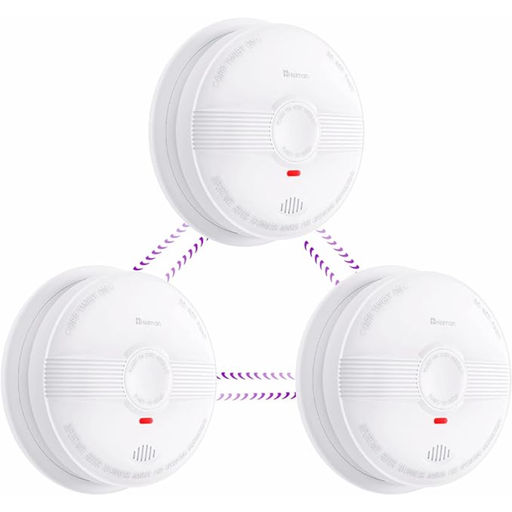
Why This Fits Their Persona: Perfect for the UK homeowner who wants to equip their entire house with a reliable, interconnected system without the cost and complexity of hiring an electrician.
This multi-pack provides a scalable wireless interlinked system. You avoid buying incompatible standalone units and can easily expand the network if needed in the future.
Can connect up to 40 alarms, making it suitable for large or complex properties. Features a convenient mute switch to silence non-emergency alarms from cooking.
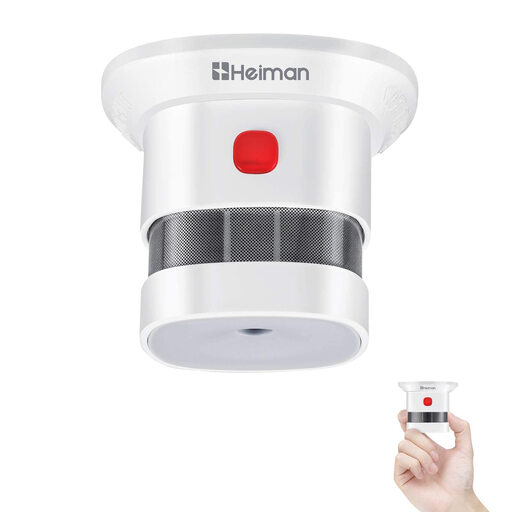
Why This Fits Their Persona: An excellent choice for those living in smaller flats, studios or needing to protect a single area like a hallway or bedroom. It offers certified protection without the need for interlinking.
This is a true sealed unit with a 10-year life for both the battery and sensor, avoiding the "10-year deception" of alarms with just a long-life replaceable battery.
T?V and EN 14604 certified for reliability. The photoelectric sensor reduces nuisance alarms and its mini design is discreet and unobtrusive.
We have compiled a complete, real-time list of products that fully satisfy these strict selection criteria and UK safety regulations.
1. Do I need an electrician to install a 10 year smoke alarm? For battery-powered models, including wireless interlinked systems, you do not need an electrician. They are designed for simple DIY installation with either screws or strong adhesive pads, both of which are usually included. Always follow the manufacturer's instructions for correct placement.
2. How often should I test my smoke detector with a 10 year battery? Even with a long-life battery, the alarm's circuitry and sounder need to be checked. You should test your alarm at least once a month by pressing the 'test' button. This ensures the device is still functioning correctly. It is also good practice to gently vacuum the vents of the alarm every six months to remove dust that could interfere with the sensor.
3. What are the current smoke alarm rules in Scotland? As of February 2022, every home in Scotland must have an interlinked fire alarm system. This means if one alarm goes off, they all go off. The standard requires: