
24/7 Customer Support

Free returns

Same-day & Next-day Delivery

Quality Guaranteed

Unlock Your Welcome Offers: FREE Delivery | Up to 80% OFF | Free 30-day JoyPlus trial
Download the APP
As a homeowner, landlord or property manager in the UK, ensuring your property is equipped with reliable fire safety devices is not just a priority—it's a legal and moral responsibility. A 10 year smoke alarm promises a decade of peace of mind, but navigating the market can be confusing. Many products come with appealing claims that don't always hold up in a real-world setting.
Before you make a purchase, it's crucial to understand the common pitfalls that lead to wasted money and, more importantly, compromised safety.
To ensure you are getting a dependable and compliant device, focus on these key parameters. They are the non-negotiable elements that separate a reliable alarm from a potential liability.
The key feature of a true 10 year smoke alarm is a sealed, built-in lithium battery designed to last the entire lifespan of the unit. This "fit and forget" approach eliminates low-battery chirps at 3 a.m. and ensures continuous protection. When comparing products, always verify that the battery life is 10 years, not just the sensor. At the end of the decade, the entire unit is replaced, guaranteeing both a fresh power source and a new, effective sensor.
Your property's size and layout will determine the best connectivity option.
The type of sensor inside the alarm is crucial for the kind of fires it detects most effectively.
For hallways, living rooms and bedrooms, a photoelectric smoke detector is often the more suitable choice to minimise nuisance alarms while providing reliable detection for common fire types. Many modern alarms also include a combination of smoke and heat sensors for comprehensive coverage.
We've matched some reliable options to different user needs, helping you find a device that fits your specific requirements.
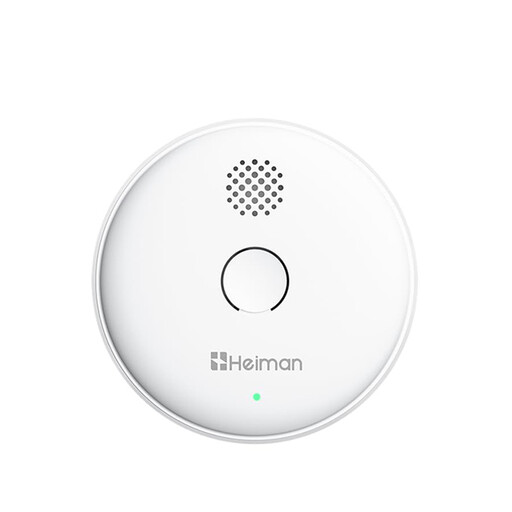
Why This Fits Their Persona: This alarm is built for compliance and whole-property safety. As a landlord, you need a system that meets legal standards (like those in Scotland) and protects tenants effectively. The radio-interlinked feature ensures an incident in one flat or room alerts the entire building.
It directly solves the interlinking issue. Instead of buying standalone units, this system creates a synchronised network. It is also EN14604 certified and features a sealed 10-year battery, avoiding both the compliance and battery replacement pitfalls.
The ability to connect up to 40 alarms in one network makes it suitable for multi-unit properties. The simple wireless setup requires no electrician.
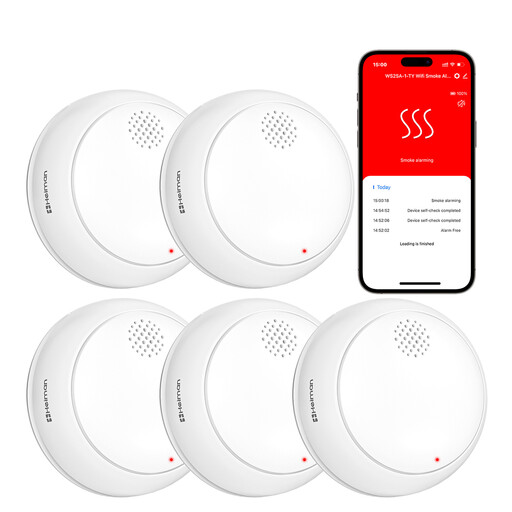
Why This Fits Their Persona: For those who value connectivity and control, this smart smoke detector is a perfect fit. It provides peace of mind by sending instant alerts to a smartphone, whether you are at work or on holiday, allowing for a swift reaction to any potential issue at home.
This model is fully EN 14604 certified, ensuring its core function is reliable. While it uses a replaceable battery to power its Wi-Fi features, it clearly positions this as a smart device, managing expectations away from the sealed 10-year battery model.
The primary benefit is remote monitoring via a mobile app. The mute button is also a convenient feature for silencing false alarms from the kitchen without needing a stepladder.
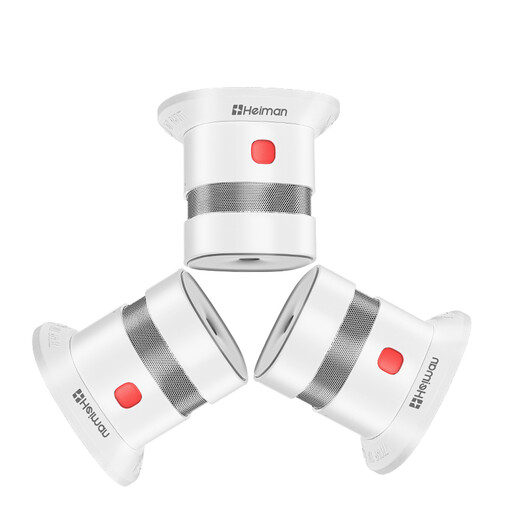
Why This Fits Their Persona: This is a straightforward, no-fuss solution for smaller living spaces. Its compact design is discreet, while the 10-year sealed battery provides maximum convenience for anyone who wants a simple, reliable alarm without the need for wiring or complex setup.
It delivers exactly on the "10-year" promise with a sealed battery. It is also fully certified to T?V and EN14604 standards, and its photoelectric sensor is less prone to the false alarms that can be a nuisance in smaller flats where the kitchen is close to living areas.
Its main advantages are simplicity and reliability. The long-life battery means no maintenance for a decade, and the mini design is unobtrusive.
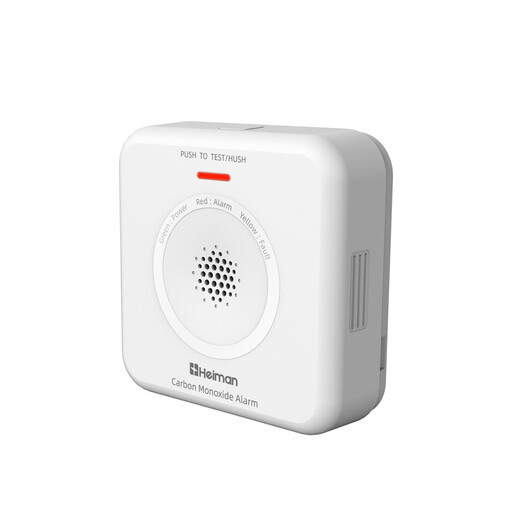
Why This Fits Their Persona: Fire isn't the only risk. This carbon monoxide detector is for those who also have fuel-burning appliances like boilers, gas fires or log burners. Its radio-networked feature allows it to connect with the HEIMAN smoke alarms, creating a complete, integrated safety system.
It provides a clear solution for CO detection, a danger often overlooked. This model features a CO alarm 10 year sensor, ensuring long-term detection capability. Note that while the sensor lasts 10 years, the batteries are replaceable to power the radio function.
Its ability to interlink with smoke alarms is a major safety advantage. A CO leak in the boiler room will trigger the smoke alarm in the upstairs hallway, providing a loud, clear warning throughout the home.
We have compiled a complete, real-time list of products that fully satisfy these strict selection criteria and UK safety regulations.
You should replace the entire unit after 10 years from the date of installation. Even if the test button still works, the chemical and electronic components inside the sensor degrade over time, reducing its sensitivity. Most alarms have a label where you can write the installation and replacement dates.
No. Most wireless fire alarm systems are designed for DIY installation. They are battery-powered and connect to each other via radio frequency, so no wiring is required. Simply follow the manufacturer's instructions to mount them on the ceiling or wall and pair them together.
For smoke alarms, the general guidance is to install one on the ceiling of every level of your home, particularly in hallways and landings near sleeping areas. For carbon monoxide detectors, they should be placed in any room with a fuel-burning appliance (boiler, gas fire, wood stove). Install them at head height on a wall, not on the ceiling, as CO gas mixes with air rather than rising like smoke. Avoid placing either type of alarm in kitchens or bathrooms where steam can cause false alarms.