
24/7 Customer Support

Free returns

Same-day & Next-day Delivery

Quality Guaranteed

Unlock Your Welcome Offers: FREE Delivery | Up to 80% OFF | Free 30-day JoyPlus trial
Download the APP
For commuters, students and travellers across the UK, a dead phone battery is more than a minor inconvenience—it's a disruption to work, communication and navigation. A 10000mAh power bank has become the go-to solution, offering a sweet spot of portability and power. Yet, the market is flooded with options and it's easy to fall for marketing claims that don't hold up in daily use.
Before you make a purchase, it's crucial to understand the common pitfalls that lead to buyer's remorse. Many users find their new portable charger is slower than advertised, provides fewer charges than expected or has a "convenient" feature that quickly becomes a point of failure. This guide will help you see past the hype and select a device that genuinely meets your needs.
To make an informed choice, focus on these three non-negotiable specifications. They provide a much clearer picture of performance than the marketing slogans on the packaging.
Instead of focusing solely on milliamp-hours (mAh), look for the Watt-hour (Wh) rating. This is the most accurate measure of a battery's total energy and is the standard used by airlines for safety regulations. A typical 10000mAh power bank (at 3.7V) is 37Wh, which is well under the 100Wh limit for carry-on luggage on flights departing from the UK. Always check for the rated capacity to get a realistic idea of how many times it can charge your phone. For example, a power bank with a 6,200mAh rated capacity will reliably charge a 3,100mAh phone battery twice.
For genuine speed, your power bank must match your device's charging capabilities.
Consider how you will use the power bank day-to-day. A slim power bank is ideal for carrying in a pocket, while a slightly bulkier model might offer more ports or features.
We've identified several power banks that align with these practical criteria, matching them to the needs of different UK users.
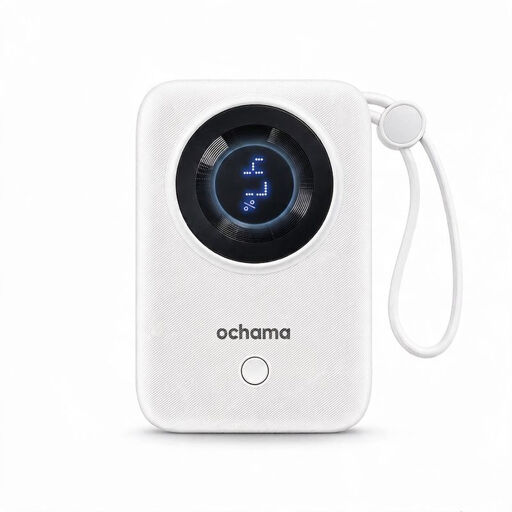
Why This Fits Their Persona: Perfect for the daily rush to the train or campus. The integrated Lightning and USB-C cables mean you never have to remember to pack a separate wire. Its compact size and clear digital display make it a no-fuss companion for keeping your phone topped up between meetings or lectures.
It sidesteps the "convenience flaw" by including standard USB-A and USB-C ports alongside the built-in cables. If an integrated cable fails, the power bank remains fully functional.
1. True all-in-one charging with built-in Lightning and USB-C cables. 2. Clear digital screen shows the exact battery percentage remaining.
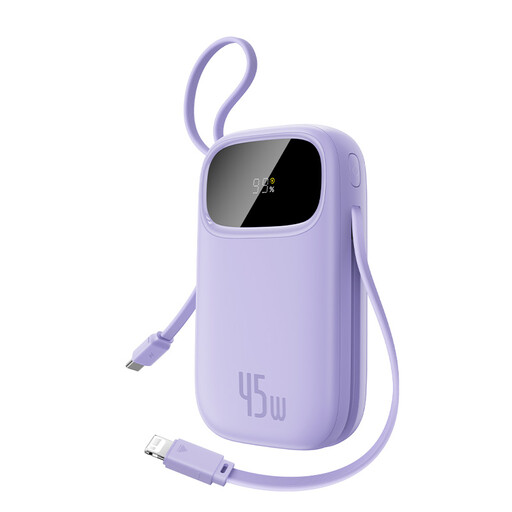
Why This Fits Their Persona: For the person juggling a phone, tablet, earbuds and maybe even a laptop on their travels. The high 45W output via USB-C is powerful enough to charge compatible ultrabooks, allowing you to potentially leave a bulky laptop charger at home. It's a true power hub.
It demolishes the "vague fast charging" trap by offering a specific, high-power 45W PD output. This is a verifiable specification that delivers tangible speed benefits for compatible high-draw devices, not just phones.
1. Exceptionally high 45W output can charge some laptops. 2. Can charge up to four devices simultaneously using its combination of ports and built-in cables.
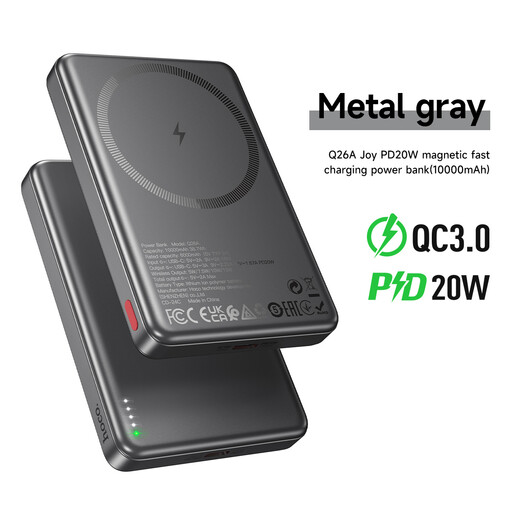
Why This Fits Their Persona: This is the ultimate grab-and-go solution for a **power bank for iPhone** users. The strong magnetic connection provides a secure, cable-free charge for MagSafe models. Its slim, premium aluminium body feels great and is durable, while the 10000mAh capacity provides enough power for a full weekend away.
It avoids the capacity trap common with smaller magnetic chargers. While many offer just 5000mAh (less than one full charge), this model's 10000mAh capacity ensures you get at least 1.5-2 full charges for your iPhone.
1. Strong magnetic attachment for convenient wireless charging. 2. Also features a 20W PD USB-C port for fast wired charging of other devices or the iPhone itself.
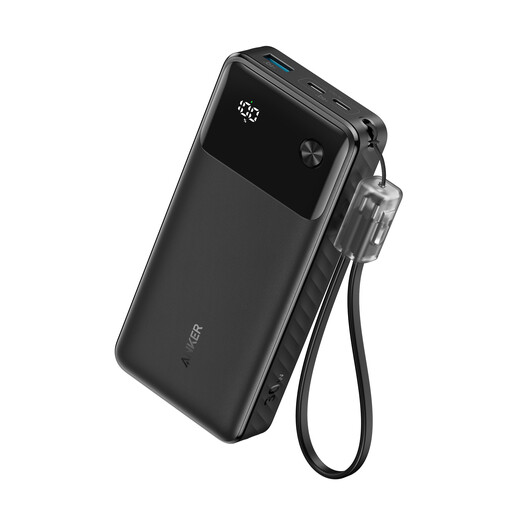
Why This Fits Their Persona: For those who need more than a daily top-up. A **20000mAh power bank** is ideal for multi-day camping trips, festivals or business travellers who are away from a socket for extended periods. This model provides enough power to charge a smartphone 3-4 times, plus other gadgets.
It directly solves the problem for users who find 10000mAh insufficient. By doubling the capacity, it provides a clear, quantifiable benefit for power users, while still offering 30W PD fast charging to keep all that power accessible.
1. Massive 20,000mAh capacity for multiple device charges. 2. Supports charging three devices at once with dual USB-C and one USB-A port.
We have compiled a complete, real-time list of products that fully satisfy these strict selection criteria and UK safety regulations.
1. How many charges can I really get from a 10000mAh power bank? This depends on your phone's battery size. For a typical modern smartphone with a battery around 3,500-4,500mAh, you can realistically expect between 1.5 and 2 full charges from a 10000mAh power bank, after accounting for energy conversion losses.
2. Is a 10000mAh power bank allowed on flights in the UK? Yes. Airline regulations are based on Watt-hours (Wh). A 10000mAh power bank is approximately 37Wh, which is well below the 100Wh limit for devices carried in hand luggage. You must carry power banks in your cabin baggage, not in checked luggage.
3. How long will a 10000mAh power bank last before it needs replacing? The lifespan of a power bank is measured in charge cycles. Most quality power banks are rated for 300-500 full charge/discharge cycles. For a user who recharges their power bank a few times a week, this typically translates to a useful lifespan of 2 to 3 years before the battery's capacity begins to degrade noticeably.