
24/7 Customer Support

Free returns

Same-day & Next-day Delivery

Quality Guaranteed

Unlock Your Welcome Offers: FREE Delivery | Up to 80% OFF | Free 30-day JoyPlus trial
Download the APP
A 100mm faux wool polishing pad can be useful for car paintwork, headlights, cork floors, wood, plastic, stone and metal. However, choosing a pad by diameter alone can lead to poor results, premature wear or an accessory that does not fit your machine.
Before buying, check the attachment system, material and intended surface. A low-cost pad may become inconvenient if it slips, sheds fibres or cannot be cleaned properly. Equally, a pad marketed for “scratch removal” will not correct deep damage, damaged lacquer or marks that have penetrated the surface.
A 10cm polishing pad may refer only to its outside diameter. It does not confirm that the backing is compatible with your tool. A pad designed for a hook and loop backing plate will not attach securely to a bare drill chuck or an incompatible disc.
Check whether your equipment is an eccentric sander, electric polisher, pneumatic polisher or electric drill with a hook-and-loop system. The backing plate must provide full contact, with no loose edges.
Faux wool fibres are soft and flexible, but the correct result also depends on the compound, pressure, speed and material being polished. A pad suitable for light finishing on painted panels may not be appropriate for a delicate plastic lens or a hard stone surface.
Do not treat a polishing pad as a universal repair tool. Test on a small, inconspicuous area first and follow the machine manufacturer’s operating instructions.
A washable polishing pad can be more practical than a disposable accessory, but only if it can be rinsed without losing its shape or shedding excessive fibres. Residue from polishing liquid and powder is normal. Leaving it in the fibres can reduce performance and transfer residue to the next surface.
A reusable polishing pad should be cleaned soon after use, stored dry and checked for worn fibres, damaged backing or reduced adhesion.
The reference product measures 10 × 10 × 1cm, making it suitable for users searching for a 100mm faux wool polishing pad or 10cm polishing pad. A 100mm pad can be easier to control on smaller panels, headlights, trim and confined areas than a larger bodywork pad.
Thickness affects flexibility and contact. A flexible pad can follow modest surface contours, but it should not be forced into sharp edges or deep recesses. Avoid holding the tool in one place for too long, especially on thin paint, corners and panel edges.
A hook and loop polishing pad should attach evenly across the backing plate. Press it firmly into place and check that there are no lifted sections before starting the machine.
This type of fastening allows quick changes between pads and can reduce setup time during a multi-stage job. It does not remove the need to use the correct backing plate. If the pad shifts during operation, stop immediately and inspect the attachment.
Faux wool offers a soft fibre surface for use with polishing liquid or polishing powder. The product specification lists a white fibre construction and a weight of approximately 0.08kg. These details help indicate a lightweight accessory, but they do not guarantee a particular finish on every material.
For longer service:
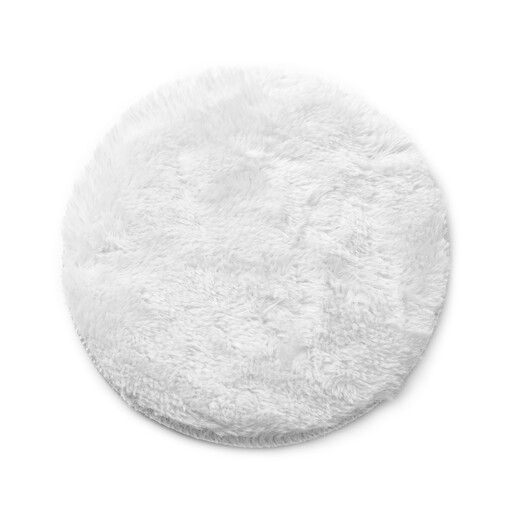
Why This Fits Their Persona: The single-pack format suits occasional DIY users polishing a vehicle, headlight or small household surface without buying a large set of accessories.
The 100mm size and hook-and-loop rear are clearly specified, helping buyers avoid a pad that is the wrong diameter or attachment type.
Single-pack purchase; washable faux wool construction; suitable for compatible electric and pneumatic polishers.
Why This Fits Their Persona: Users who value repeatable preparation and lower consumable waste can use the pad with polishing liquid or powder, provided the surface and machine are compatible.
Its washable design addresses the hidden cost of replacing heavily contaminated pads after one job, while the stated fibre material avoids vague material descriptions.
Washable and reusable; 1cm thickness; designed for hook-and-loop backing systems.
Why This Fits Their Persona: Detailers, tradespeople and restoration users can use the compact pad across listed applications, including car paint, headlights, cork floors, wood, stone, metal and plastic.
The specified application range is more useful than a generic claim of universal compatibility. Users can still test an inconspicuous area before a larger job.
Compact 100mm working area; compatible with listed pneumatic and electric tools; can be used with compound or alone.
We have compiled a complete, real-time list of products that fully satisfy these strict selection criteria and UK safety regulations.
A polishing pad for an electric sander or a polishing pad for a pneumatic polisher should never be used outside the machine’s stated operating limits. For an electric drill, confirm that the accessory system is designed for secure attachment rather than relying on an improvised connection.
It is intended to help remove fine scratches, light grinding marks and surface imperfections when used with a compatible compound. It is not a guaranteed solution for deep scratches, peeling lacquer or damage that has reached below the surface. Test first and use controlled speed and pressure.
A washable, reusable polishing pad may reduce repeat purchases because it can be rinsed and used again. Running cost still depends on cleaning frequency, compound contamination, fibre wear and whether separate pads are needed for different surfaces.
The listed product is suitable for compatible headlight polishing applications. Use gentle pressure, avoid overheating the lens and test a small area first. Check that your machine’s backing plate and hook-and-loop system match the pad before operation.