
24/7 Customer Support

Free returns

Same-day & Next-day Delivery

Quality Guaranteed

Unlock Your Welcome Offers: FREE Delivery | Up to 80% OFF | Free 30-day JoyPlus trial
Download the APP
Replacing standard halogen car headlight bulbs with 100W LED headlight bulbs can give your vehicle a cooler-white appearance and a different lighting performance. However, headline figures alone do not tell you whether a bulb will fit, produce a suitable beam or work correctly with your car’s electronics.
This guide explains the key buying checks for UK drivers, including bulb fitting, brightness claims, colour temperature, cooling, CANbus compatibility and installation.
Listings may describe power and brightness differently. A product advertised as 100W 30000LM LED bulbs may refer to the combined output of a pair rather than each individual bulb. Some sellers may also use theoretical LED-chip output rather than measured light output from the complete headlamp assembly.
Treat wattage and lumen figures as specification points, not guarantees of road illumination. The reflector, projector, lens condition and headlight alignment all affect the result.
A bulb that looks similar to the original may still have a different base, locking tab arrangement or electrical connector. Common fittings include:
Check the original bulb marking, owner’s manual or a reliable vehicle-fitment database before ordering. H8, H9 and H11 fittings can look related but are not automatically interchangeable.
Plug-and-play LED bulbs can simplify installation, but modern vehicles may monitor bulb resistance and current draw. If the replacement does not communicate correctly with the vehicle, you may see dashboard warnings, flickering or delayed activation.
CANbus-ready headlight bulbs can reduce these issues, but “ready” does not mean guaranteed for every car. Compatibility depends on the vehicle’s lighting control system. Keep the original bulbs until the new pair has been installed and checked.
First, match the exact fitting. Also confirm whether the bulb provides dipped beam, main beam or both. An H4 bulb, for example, supports a combined hi/lo function, while many H7 and H11 bulbs are designed for a single beam position.
A 1:1 halogen-size design may make installation easier, particularly where the rear of the headlamp has limited space. Even a compact bulb can require clearance for a fan, driver box or wiring.
Many 100W LED headlight bulbs use a 6000K xenon white headlight bulbs colour description. This generally indicates a cool-white appearance rather than a guarantee of xenon-equivalent performance. Colour temperature affects appearance; it does not alone determine usable light on the road.
Look for details about chip positioning and beam control. Ultra-thin chip spacing and positioning that imitates the original filament may help preserve the intended beam shape. After fitting, inspect the cut-off and have the headlights aligned if necessary. Excessive glare can inconvenience other road users and may create an MOT issue.
Before driving on public roads, check whether LED retrofits are permitted for your specific vehicle and lamp unit under applicable UK requirements. Some products may be suitable for off-road or private-use applications only. Follow the vehicle handbook and product instructions.
High-output LED chips generate heat. A fan-cooled LED bulb with an aluminium body can provide active heat dissipation, while a passive heatsink avoids moving parts but may need more space.
An IP65 waterproof headlight bulb offers protection against dust and water jets from specified directions. It is not the same as being submersible. Some products carry higher ratings, but the rating of the bulb does not make the entire headlamp housing waterproof.
Also check:
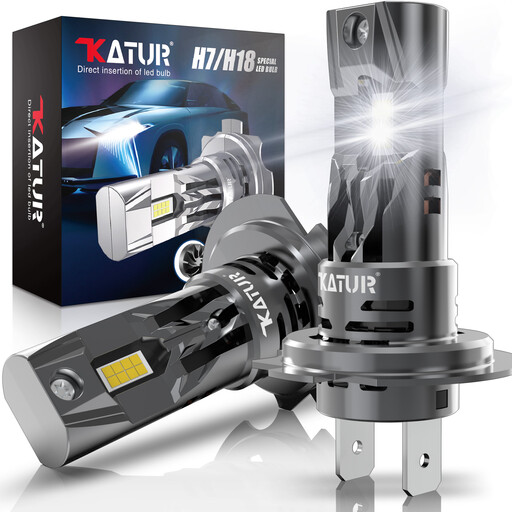
Why This Fits Their Persona: A practical option for drivers whose vehicle specifically uses the widely encountered H7 fitting and who want a compact replacement for standard halogen bulbs.
The listing identifies the H7 fitting, 1:1 mini size, external driver and CANbus-ready design, making the key compatibility points easier to check before purchase.
6000K colour specification, 16,000 RPM fan and IP65-rated design are listed, alongside a plug-and-play installation format.
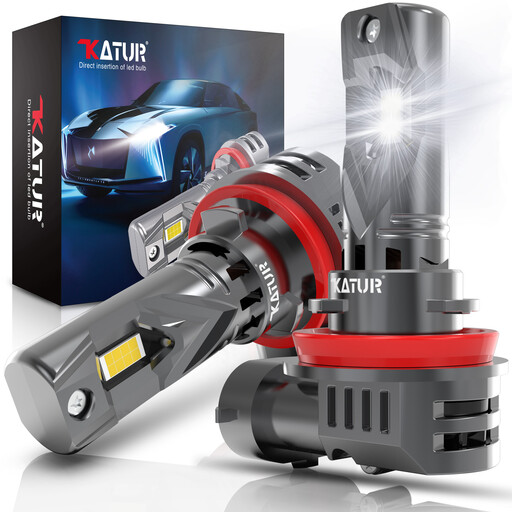
Why This Fits Their Persona: Suits drivers placing emphasis on heat management, compact dimensions and a stated focus on a controlled beam presentation.
The specification separates the H11/H8/H9 model reference from the 1:1 bulb format, helping buyers verify the actual fitting rather than relying on appearance alone.
The product lists 6063 aviation aluminium, a 16,000 RPM turbo fan, external driver and IP65 waterproof design.
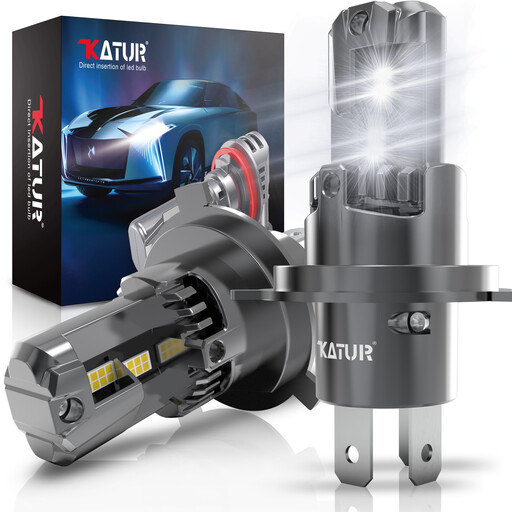
Why This Fits Their Persona: Designed for vehicles using an H4, HB2 or 9003 hi/lo fitting, making it relevant to drivers replacing a combined high- and dipped-beam bulb.
The product identifies its hi/lo function and includes CANbus-related decoding features, while the 1:1 design helps address space and fitting concerns.
The listed features include 6000K light colour, 360-degree illumination, aviation aluminium construction and an IP65 design.
We have compiled a complete, real-time list of products that fully satisfy these strict selection criteria and UK safety regulations.
Legality depends on the vehicle, headlamp assembly, bulb type and intended use. A bulb being advertised as road-ready does not automatically confirm approval for every UK vehicle. Check applicable lighting requirements, the product documentation and your vehicle handbook. Correct beam alignment is also important for MOT compliance and avoiding glare.
Manufacturers may publish operating-life figures, such as 50,000 or 60,000 hours. These are stated product specifications rather than a guarantee of real-world service life. Heat, vibration, moisture, electrical faults and fan wear can affect durability. A suitable heatsink, functioning fan and correctly sealed housing all matter.
LEDs can use a different amount of electrical power for a comparable lighting application, but the saving depends on the vehicle and how long the lights are used. Purchase price, installation, cooling components and replacement frequency should be considered alongside power consumption. Check the complete bulb specification rather than judging running cost from the advertised lumen figure alone.