
24/7 Customer Support

Free returns

Same-day & Next-day Delivery

Quality Guaranteed

Unlock Your Welcome Offers: FREE Delivery | Up to 80% OFF | Free 30-day JoyPlus trial
Download the APP
If you own a modern, high-power device like a MacBook Pro, Dell XPS or the latest iPhone 15, you'll know that not all charging cables are created equal. A standard cable might leave you waiting hours for a full charge, while a flimsy one can fray and fail in a matter of months. To get the most out of your technology, you need a cable that can deliver sufficient power quickly and withstand the rigours of daily use.
This guide is designed to help you navigate the options for a 100W USB C to USB C cable. We'll break down the essential features to look for and provide a few recommendations to help you find a reliable cable that meets your needs, whether you're working from the office, at home or on the move.
Choosing the right cable involves more than just matching the connectors. Here are a few key factors to consider before making a purchase.
The headline feature of a 100W USB C to USB C cable is its ability to handle high power output. This is made possible by the USB Power Delivery (PD) standard, a protocol that allows for much faster charging speeds than traditional USB. While your iPhone 15 or Samsung Galaxy will charge perfectly well with a lower-wattage cable, a power-hungry laptop requires a PD charging cable rated for at least 65W-100W to charge efficiently. Using a 100W cable ensures you can power everything from your phone to your laptop with a single, versatile lead.
A cable is only as good as its construction. For a long-lasting and reliable connection, look for a durable charging lead made from robust materials. A braided USB C cable, typically woven from nylon, offers excellent protection against fraying and tangling. Some cables go a step further by incorporating materials like Kevlar fibre for added strength or using a soft-touch silicone that resists kinking. Pay attention to the connector housing as well; reinforced metal or moulded plastic ends are less likely to bend or break over time.
Consider where you will be using your cable most often. A standard 1-metre cable is often sufficient for charging at a desk or in the car. However, a 2m USB C cable provides much more flexibility, making it easier to reach awkward wall sockets or use your device comfortably while it charges from across the room. Longer cables are particularly useful for a home office or bedside setup.
Here are our recommendations for high-performance Type C to Type C cables that balance power, durability and practical features.
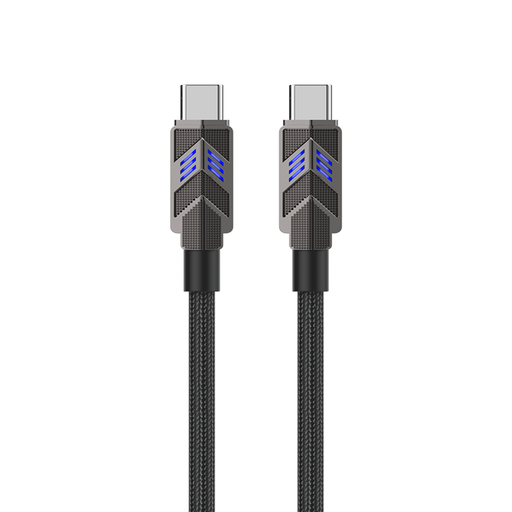
Why It Stands Out: This cable from PAVAREAL offers a unique feature for those mindful of battery health and energy use. It incorporates an intelligent chip with an LED indicator that changes colour. The light glows red while charging and switches to blue when your device is full, at which point it enters a trickle-charge mode. This helps prevent overcharging and provides a clear visual cue of the charging status.
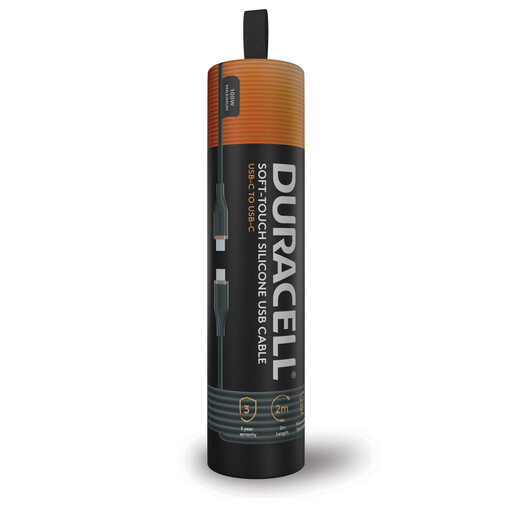
Why It Stands Out: Known for reliability, Duracell brings its reputation for durability to this USB C fast charging cable. Its generous 2-metre length provides excellent reach, while the soft-touch silicone finish feels premium and resists tangling. Internally, it is reinforced with a double-braided nylon outer and Dupont Kevlar fibre, making it an exceptionally robust choice for demanding daily use.
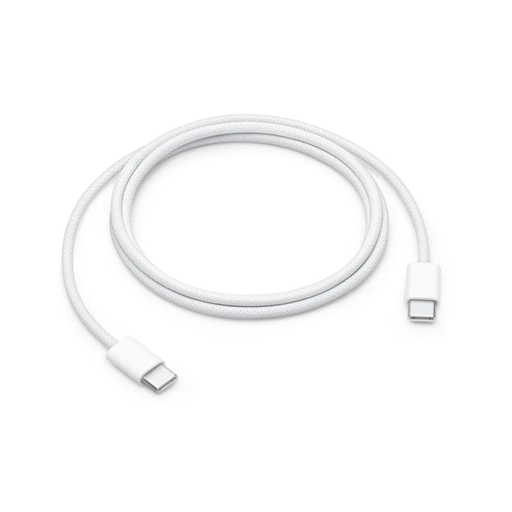
Why It Stands Out: For those invested in the Apple ecosystem, this official cable offers seamless compatibility and a significant durability upgrade over older, non-woven models. The woven design not only looks clean but also helps prevent tangling and fraying. While it supports charging up to 60W, it is more than sufficient for fast-charging an iPhone, iPad or MacBook Air, making it a solid choice for everyday use.
Our recommendations cover some of the most common needs, but the world of charging accessories is vast. If you're looking for different lengths, materials or specific features, you can find a wider selection to suit your requirements.
Explore our full collection of Type-C charging cables to find the perfect match for your devices.
It depends on your devices. For high-power laptops like a MacBook Pro 16-inch, a 100W cable (paired with a 100W+ power adapter) is necessary to charge at full speed. For phones, tablets and smaller laptops, a 100W cable is not strictly required, but it is backwards-compatible and will safely charge them at their maximum supported speed. It can be a good way to "future-proof" your setup.
Yes, absolutely. Modern devices, including the iPhone 15, use the USB Power Delivery protocol to communicate with the charger and cable. The phone will only draw the amount of power it is designed to handle (around 27W for the iPhone 15 Pro). Using a higher-rated cable is completely safe and will not damage your device.
While they may look the same, the key difference is internal. A PD charging cable contains an "e-marker" chip that communicates with the charger and the device to safely manage the delivery of high power levels (above 60W). A standard, non-PD USB-C cable typically lacks this chip and is limited to 60W or less, which is not enough to charge a powerful laptop efficiently.