
24/7 Customer Support

Free returns

Same-day & Next-day Delivery

Quality Guaranteed

Unlock Your Welcome Offers: FREE Delivery | Up to 80% OFF | Free 30-day JoyPlus trial
Download the APP
The universal adoption of USB-C has promised a world where one cable can charge everything. Yet, many of us find ourselves with a drawer full of cables that look identical but perform very differently. A cable that quickly charges your phone might barely keep your laptop alive. If you're juggling a powerful laptop, a modern smartphone like an iPhone 15 and a tablet, finding a single, reliable cable is key to a clutter-free setup.
This guide is designed to help you navigate the specifications and select a high-performance 100W USB C to USB C cable that meets the demands of your high-power devices. We will look at the essential features to consider and present some of our top recommendations available in the UK.
Before you add a cable to your basket, a few key details can make all the difference. Understanding these will ensure you get the performance you expect.
Not all Type C to Type C cables are created equal. The most critical specification is the power delivery, measured in watts (W). For power-hungry devices like a MacBook Pro, Dell XPS or other performance laptops, a cable rated for 100W is essential to charge at full speed. A lower-wattage cable (e.g., 60W) will charge these devices slowly or may only be able to maintain the current battery level. For smartphones, tablets and smaller laptops, a 60W cable is often sufficient. To achieve these speeds, you must also use a compatible USB-C power adapter that can supply the required wattage.
Cable length affects convenience. A standard 1-metre cable is fine for a desktop setup, but a 2m USB C cable provides valuable flexibility for charging from awkward wall sockets or using your device comfortably while it powers up. Durability is equally important. A braided USB C cable, often made from nylon, offers excellent resistance to fraying and everyday wear. Alternatively, modern silicone cables provide a soft, premium feel and are exceptionally resistant to tangling and kinking, making them easy to manage.
While the primary goal is charging, it's useful to know a cable's data transfer capabilities. Most high-wattage charging cables, including those marketed as an iPhone 15 charging cable, support USB 2.0 data speeds, which are around 480Mbps. This is perfectly adequate for syncing photos, music and documents. If your work involves transferring very large files, such as 4K video, you may need to look for a specialised USB 3.1, USB4 or Thunderbolt cable, which will be specified separately. For most users, a fast charging USB C cable with standard data speeds is the ideal all-rounder.
Here are a few standout options that cater to different needs, from maximum power delivery to premium handling.
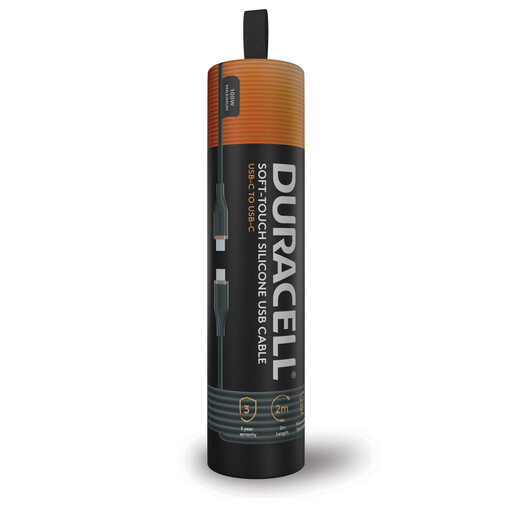
Why It Stands Out: This cable from Duracell is built for power and endurance. It combines a 100W power delivery capability with a robust construction that includes a double-braided nylon outer and a Dupont Kevlar fibre core. The generous 2m length makes it a highly practical choice for home, office and travel.
Pros:
Who is it for? This is an excellent choice for professionals, students or anyone needing a reliable and long USB C laptop charger cable that can withstand the rigours of daily use in various settings.
View Product Details on Joybuy
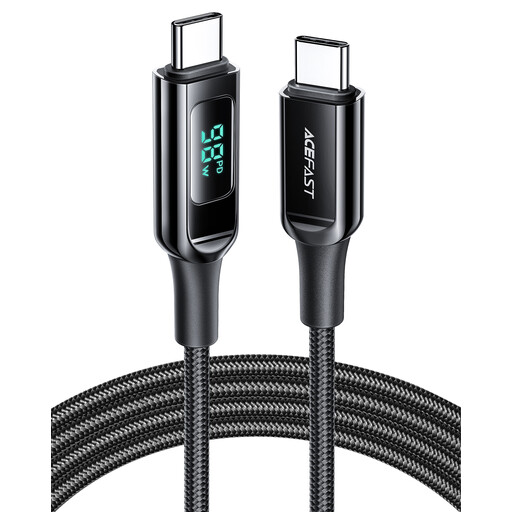
Why It Stands Out: The ACEFAST C6-03 cable brings a unique feature to the table: a built-in digital display that shows the real-time charging wattage. This allows you to instantly verify that your devices are receiving the optimal amount of power. Combined with its 100W rating and 2m length, it's a modern and practical tool.
Pros:
Who is it for? Tech enthusiasts and users who appreciate data-driven feedback will find the live power display invaluable for ensuring their high-end electronics are charging efficiently.
View Product Details on Joybuy
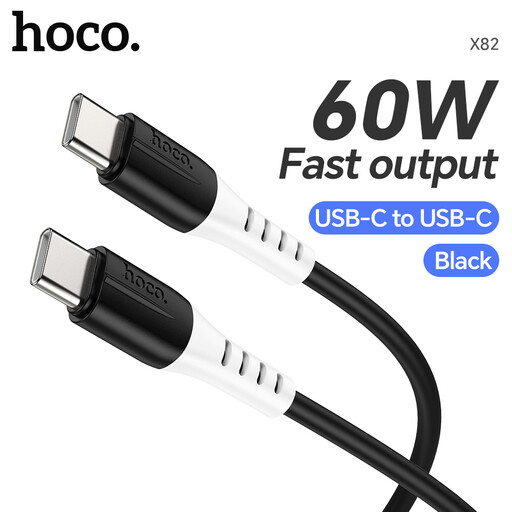
Why It Stands Out: While not a 100W cable, the HOCO X82 is an exceptional choice for those who primarily charge smartphones, tablets and less demanding laptops. Its standout feature is the food-grade silicone jacket, which feels remarkably soft and is completely resistant to tangling. It delivers a solid 60W of power, more than enough for fast-charging most portable devices.
Pros:
Who is it for? This cable is perfect for users who prioritise a premium feel and tangle-free experience for their phones and tablets and do not require the full 100W for a high-power laptop.
View Product Details on Joybuy
If these recommendations don't quite fit your specific requirements for length, colour or features, there are many other choices available.
Explore Our Full Range of Wired Charging Cables
No, you don't strictly need one. The iPhone 15 series charges at a maximum rate of around 27W. A 100W cable will work perfectly and safely, but it will not charge the phone any faster than a quality 30W or 60W rated cable. However, investing in a 100W USB C to USB C cable allows you to use the same cable for your iPhone, iPad and a powerful laptop, making it a versatile, future-proof accessory.
Yes, it is completely safe. The USB Power Delivery (PD) standard involves communication between the charger, cable and device. The device requests the amount of power it can safely handle, and the charger supplies only that amount. A 100W cable is simply certified to handle up to 100 watts, so it will work perfectly with lower-power devices.
A braided USB C cable, typically made with a woven nylon fabric exterior, is known for its excellent resistance to abrasion, cuts and fraying. It offers a classic, rugged feel. A silicone cable, on the other hand, is prized for its superior flexibility, soft touch and high resistance to tangling and kinking. The choice often comes down to personal preference for handling and texture.