
24/7 Customer Support

Free returns

Same-day & Next-day Delivery

Quality Guaranteed

Unlock Your Welcome Offers: FREE Delivery | Up to 80% OFF | Free 30-day JoyPlus trial
Download the APP
A garden trampoline can be a fantastic source of fun and active play for the whole family. However, choosing the right one can feel overwhelming. With so many options on the market, it is easy to fall for marketing hype and end up with a product that is difficult to assemble, wears out quickly or worse, compromises on safety. As a Joybuy Product Recommendation Officer, my role is to help you navigate these choices with practical, objective advice.
This guide focuses specifically on the popular 10ft garden trampoline with safety net, a size that fits well in many UK gardens. We will break down the common pitfalls to avoid and the essential features to look for, ensuring you find a durable and enjoyable addition to your garden.
Before you start comparing models, be aware of these frequent issues that can lead to disappointment and wasted money:
To avoid the pitfalls above, focus your attention on a few key technical specifications. These are the non-negotiable elements that define a quality kids garden trampoline.
The safety enclosure is arguably the most critical component. There are two main types:
For a safe trampoline for children, an internal 10 foot trampoline with enclosure is often the preferred choice. Also, check that the net material is UV-resistant to prevent it from becoming brittle and tearing after exposure to sunlight.
The foundation of any good round outdoor trampoline is its frame. Look for frames made from galvanised steel, which has a protective zinc coating to resist rust and corrosion—an essential feature for any garden trampoline in the UK. The number of legs also contributes to stability; for a 10ft model, four 'W'-shaped legs provide a solid base.
The spring system dictates the quality and longevity of the bounce. Pay attention to:
To avoid the "assembly illusion" pitfall, look for models that feature modern, user-friendly construction systems. Some brands use patented T-Socket systems, which allow the frame sections to slot together securely without the need for countless nuts and bolts. This can dramatically reduce assembly time and complexity, making it a genuine easy assembly trampoline.
Based on these practical criteria, here are some recommendations matched to different family needs.
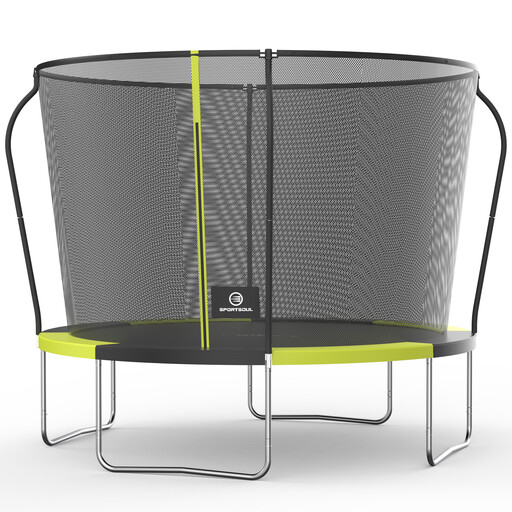
Why This Fits Their Persona: This family's top priority is ensuring their children can play without risk. They meticulously check safety standards and design features before making a purchase.
It directly counters the flimsy net pitfall. The enclosure uses an inside net attachment, keeping jumpers away from the springs. The patented buttonhole technology ensures a secure, gap-free fit that will not easily tear.
Its design is constructed to meet ASTM F381 & F2225 safety standards, providing documented peace of mind. The thick foam spring pad adds another layer of protection.
Why This Fits Their Persona: Juggling work, school runs and household chores, this parent values convenience. They need a product that can be set up quickly and without frustration.
This model tackles the "difficult assembly" pitfall head-on. Its patented T-Socket system is designed to allow two people to complete the frame setup in approximately one hour, a significant time-saver compared to traditional designs.
The convenience extends to seasonal storage. The enclosure's patented steel top ring design allows for reassembly by two people in just a few minutes.
Why This Fits Their Persona: This buyer sees a trampoline as a long-term investment. They want a robust product that will withstand years of energetic bouncing and survive the unpredictable British weather.
It avoids the "unresponsive bounce" and "weatherproof myth" pitfalls. The 64-spring system provides a responsive, high-quality bounce, while the durable steel frame and high-strength polypropylene (PP) mat are built for longevity.
The combination of a robust 4-leg configuration, a high spring count and resilient materials ensures a stable and durable structure that maintains its performance over time.
We have compiled a complete, real-time list of products that fully satisfy these strict selection criteria and UK safety regulations.
For a 10ft (3.05m) diameter trampoline, you need more than just a 10ft circle of space. It is recommended to have at least 2 metres of clear, flat ground around the entire perimeter of the trampoline. This safety zone should be free of fences, trees, sheds and other hazards. You should also ensure there is adequate overhead clearance of at least 7-8 metres from ground level.
The lifespan of a trampoline depends heavily on its material quality and maintenance. A budget model with an unprotected frame and low-quality pads might only last 1-2 years before showing significant rust and degradation. A higher-quality model with a galvanised steel frame, UV-resistant components and a durable mat can last for 5-8 years or more with proper care. Regular inspections and replacing worn parts like the net or spring pad can extend its life significantly.
For younger children, an internal safety net is generally considered the safer option. Because the net is attached inside the springs, it creates a barrier that prevents children from accidentally jumping or falling onto the hard steel frame or springs. This significantly reduces the risk of impact injuries and limb entrapment, making it a key feature to look for when prioritising safety.