For basic console play on a shared living-room screen, an HDMI television may be enough: Which? says a console can connect to any TV with an HDMI input. If you play compatible fast-paced games on a PS5 or Xbox Series X|S, consider 120Hz, variable refresh rate (VRR) and a low-latency mode, but check the exact TV input and supported output before choosing a screen size that fits your seating position.
Who is this decision for?
PS5 or Xbox Series X|S players of fast-paced games
If you want to use 120Hz or VRR in compatible games, check the game, console settings and specific TV input rather than relying on an HDMI connection alone. PlayStation and Xbox Support both make supported equipment a condition of these output modes.
Households sharing a living-room TV
When the screen is also used for films, programmes and group viewing, measure from the main sofa position and consider how you will switch between gaming and other picture settings. RTINGS.com advises choosing a size that shows detail without making the screen uncomfortable to watch.
Console players sitting at a desk
If you play close to the screen and do not need a household TV, compare a gaming monitor as well. RTINGS.com distinguishes that desk setup from a larger television used for living-room viewing and other content.
What should you check before choosing?
Start with the games and console output you intend to use, then check the TV input, seating position and other household uses.
| Priority | What to check | Your needs |
|---|
| Console output |
Check whether your games support 120Hz or VRR. Confirm the intended TV input’s resolution, refresh rate, VRR support and cable requirements; Xbox Support describes 4K at 120Hz on Xbox Series X as requiring a compatible HDMI 2.1 TV. |
I play compatible fast-paced games and want to use the output modes my console and TV both support. If I only need a basic connection, I can compare HDMI televisions without assuming I need those features. |
| Gaming mode |
Look for a game or low-latency mode. HDMI Licensing Administrator explains that Auto Low Latency Mode (ALLM) can signal a compatible display to switch modes automatically; check how the exact TV handles other viewing. |
The same screen is used for games and programmes, so I want a practical way to change picture modes without leaving the gaming setting on for everything. |
| Room fit |
Measure the main seating distance and the space available for the TV. Compare the set’s physical width and height, not just its diagonal size; RTINGS.com notes that an overly large screen can be uncomfortable from a fixed position. |
From the sofa, I want to see game detail comfortably, and the television needs to fit the furniture and sight lines used by everyone sharing it. |
| Running use |
Compare energy-consumption figures alongside screen size and the label rating. Energy Saving Trust notes that larger models can use more energy even when they have a better efficiency rating. |
I am replacing a household screen, so electricity use matters alongside gaming features and whether the new size works in the room. |
What can go wrong when choosing a TV?
-
Assuming every HDMI port works the same way
Xbox Support notes that some TVs offer their full 4K capabilities only on particular inputs. An AV receiver or soundbar between the console and TV can also affect video features.
Check the exact input in the TV manual before buying. Once connected, inspect the console’s display-capability settings, including when you use equipment between the console and screen.
-
Buying 120Hz or VRR for games that cannot use it
A feature on the television does not add a supported output mode to every game. PlayStation specifies that PS5 120Hz output and VRR depend on compatible games and displays.
Check the titles you play and the console’s supported output before making 120Hz or VRR a deciding requirement.
-
Choosing screen size before measuring the room
From a fixed sofa position, a screen can be too large for comfortable viewing or too small for fine detail. RTINGS.com treats viewing distance as part of the size decision.
Measure the main seating distance, then check the TV’s full dimensions against the stand or wall space.
-
Comparing energy-rating letters alone
Energy Saving Trust notes that a larger appliance can use more energy despite a better rating. A move to a larger TV therefore calls for a comparison of consumption figures as well as rating letters.
Check the energy label against your expected use. If you are replacing a television, arrange an appropriate electrical-equipment recycling or take-back route for the old one.
Which TV brands are relevant to compare?
Which? includes these brands in its UK television coverage; the gaming capabilities that matter here still need checking on the exact model and input.
LG
A brand to include when comparing televisions for shared living-room viewing and console play.
- Check 120Hz, VRR and the intended HDMI input on the particular LG model; the brand name does not establish those features.
Samsung
A brand to compare across televisions intended for household viewing and gaming.
- Confirm 4K at 120Hz, VRR and game-mode behaviour for the exact model and port you plan to use.
Sony
A brand to consider when a living-room TV needs to serve both a console and other viewing.
- Check the model’s supported console output formats and port-specific capabilities rather than assuming they apply across the range.
Panasonic
A brand to include in a comparison of household televisions.
- Verify gaming modes, VRR and refresh-rate support on the exact model if those features affect your choice.
Hisense and TCL
Two further brands in Which?’s UK television coverage to compare at model level.
- Check the stated gaming resolution, refresh rate and HDMI-input features for each model; a series name alone does not settle compatibility.
Joybuy TV options for console gaming
These Sony and TCL televisions are options to examine for a shared home screen. Compare their stated screen sizes and features with your seating distance, then confirm the gaming output available on the HDMI input you intend to use.
 No image available
Sony BRAVIA A90 XR42A90K 42-inch OLED 4K HDR Google TV
The 42-inch screen is a size to assess against your seating distance and available space. The product name states OLED, 4K HDR and Google TV; if 4K at 120Hz or VRR matters to your games, confirm support on the HDMI input you will use.
View on Joybuy
 No image available
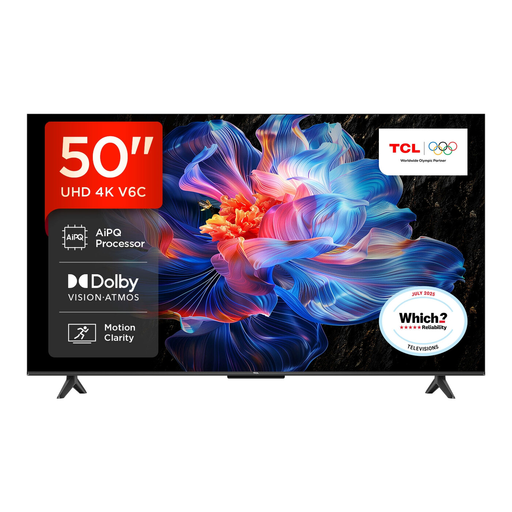
TCL 50V6C 50-inch Direct LED 4K HDR Google TV
Consider the 50-inch size against the main sofa position. The product name specifies a 120Hz Game Accelerator at FHD; do not read that as a claim of 4K at 120Hz. Check resolution, refresh rate and VRR support on your intended HDMI input.
View on Joybuy
 No image available
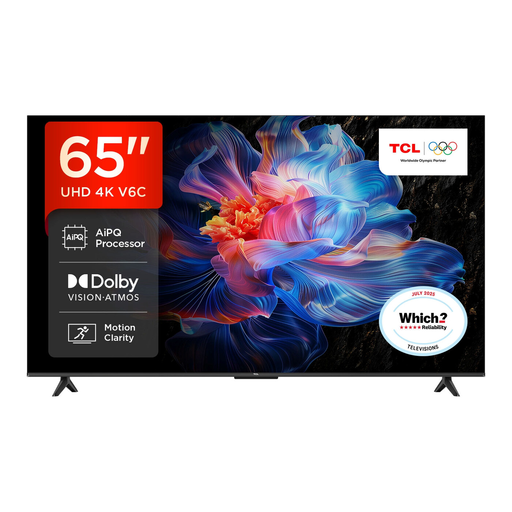
TCL 65V6C 65-inch Direct LED 4K HDR Google TV
Measure seating distance and furniture space before choosing this 65-inch screen. Its product name specifies a 120Hz Game Accelerator at FHD, not 4K at 120Hz; confirm the gaming modes and supported output on the HDMI input you plan to use.
View on Joybuy
 No image available
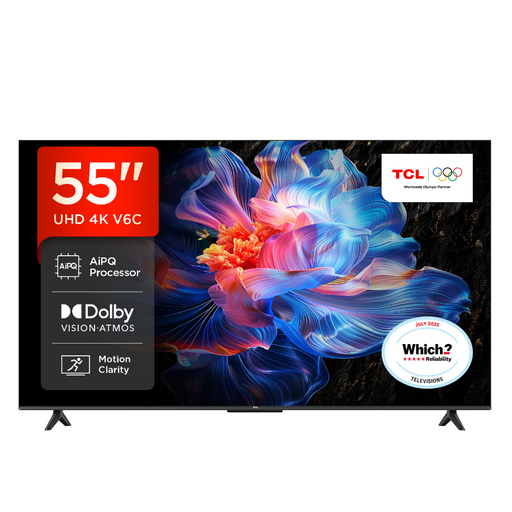
TCL 55V6C 55-inch Direct LED 4K HDR Google TV
Check whether the 55-inch screen fits the shared seating arrangement. The stated 120Hz Game Accelerator is qualified as FHD, so verify the maximum gaming resolution and refresh rate, plus VRR support, for the HDMI input you intend to connect.
View on Joybuy
 No image available
TCL 43V6C 43-inch Direct LED 4K HDR Google TV
Assess this 43-inch TV from your usual viewing position. Its product name specifies a 120Hz Game Accelerator at FHD; check the exact HDMI input’s supported resolution, refresh rate and VRR before relying on a particular console output mode.
View on Joybuy
Common questions
Will any HDMI television work with a console?
Yes, for a basic connection: Which? says a games console can connect to any TV with an HDMI input. That connection alone does not establish support for 4K at 120Hz, VRR or automatic low-latency switching.
When is a 120Hz TV worth considering for console gaming?
Consider it when your console and the games you play support 120Hz output. PlayStation makes supported TVs and games a condition of PS5 120Hz output; Xbox Support describes Xbox Series X 4K gaming at 120Hz with a compatible HDMI 2.1 TV and cable.
Do I need VRR and ALLM for a PS5?
Neither is required for a basic connection. PlayStation describes VRR for supported TVs and games, while HDMI Licensing Administrator says ALLM lets compatible equipment signal the display to switch automatically to a low-latency gaming mode.
Why is my console not showing the video mode I expected?
Start by checking the selected HDMI port, TV settings and cable against the output mode you want. Xbox Support notes that some inputs have different capabilities and that a receiver or soundbar between the console and TV can affect video features.
Should I choose a TV or a monitor for console play?
A TV suits a sofa-distance screen shared for games and other viewing; a monitor is worth comparing if you play close to the display at a desk. RTINGS.com distinguishes these uses, so decide where and how the screen will be watched before comparing their gaming features.


