
24/7 Customer Support

Free returns

Same-day & Next-day Delivery

Quality Guaranteed

Unlock Your Welcome Offers: FREE Delivery | Up to 80% OFF | Free 30-day JoyPlus trial
Download the APP
For UK motorists, campervan owners, tradespeople and families, 12V car accessories can make everyday travel more comfortable and help manage unexpected problems. However, product listings often focus on large numbers while leaving out the details that matter in real use.
A 150PSI label does not automatically mean an inflator is suitable for every tyre. A jump starter rated for 12V vehicles may not work with a 24V truck. Likewise, a powerful inverter can place considerable demand on a vehicle battery if it is used without the correct wiring.
This guide explains the main traps to avoid, the specifications worth checking and which types of equipment suit different vehicle lifestyles.
Jump starters, power inverters and compressors often advertise their highest possible output. A jump starter’s peak current is not the same as its guaranteed starting capability across every engine. Check the stated petrol and diesel engine capacity, system voltage and operating conditions.
For inverters, distinguish between continuous wattage and surge wattage. A model rated at 2,000W continuous and 4,000W peak may handle short motor start-ups, but it should not be treated as a 4,000W continuous power source.
A 12V tyre inflator, portable car fridge or fan can drain a vehicle battery when used with the engine switched off. Look for battery-protection settings, automatic shut-off and clear operating limits.
Compressors also need rest periods. Repeatedly running a 12V tyre inflator beyond its recommended cycle can cause heat build-up, even if the advertised pressure appears suitable.
“Universal” does not always mean suitable for every vehicle. Check whether your vehicle uses 12V or 24V, the type of accessory socket, available clearance and the product’s connection method.
For example, a jump starter designed for 12V systems should not be connected to 24V equipment. A diesel heater requiring direct battery wiring should not be connected through a cigarette lighter socket unless the manufacturer specifically permits it.
Start by identifying your vehicle’s electrical system:
For larger equipment, direct battery connection with suitable fuse protection may be required. This is particularly important for a diesel heater or high-output inverter.
A portable car fridge should be selected according to trip length and available storage. Compact 9L models may suit solo travel or short journeys, while a 49.4L compressor cooler box offers more space for families, fishing trips and longer campervan stays.
Measure the storage area before ordering. Allow ventilation clearance around compressor coolers and secure heavier equipment so it cannot move during braking or cornering.
For refrigeration, check the temperature range, battery-protection settings and whether the unit functions as a fridge, freezer or both. For tyre equipment, compare the digital pressure display, hose length, preset shut-off and recommended rest period.
When selecting heating equipment, check fuel type, power input and installation requirements. A portable diesel heater must have its combustion exhaust routed outside the vehicle, with the combustion air intake separated from the living area. A carbon monoxide detector should be installed inside any enclosed sleeping or living space.
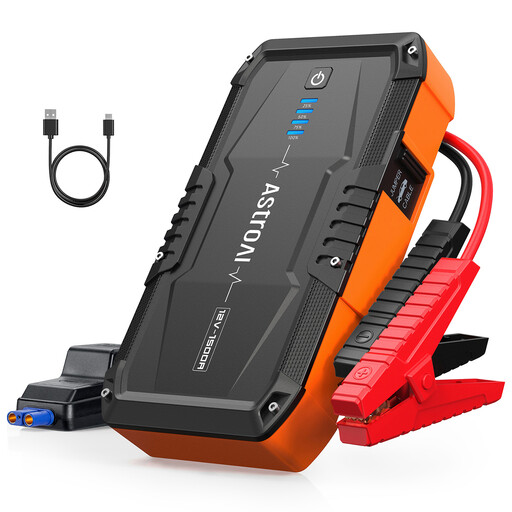
Why This Fits Their Persona: A compact option for drivers wanting vehicle emergency equipment without carrying a large roadside power pack. It is specified for 12V vehicles, including cars, SUVs, motorcycles and pick-ups.
The stated compatibility is up to 6.0L petrol or 3.0L diesel engines, helping buyers compare the device with their vehicle rather than relying only on the 1,500A peak figure.
Includes eight listed protection functions, USB outputs and a three-mode LED light. It is not intended for 24V equipment.
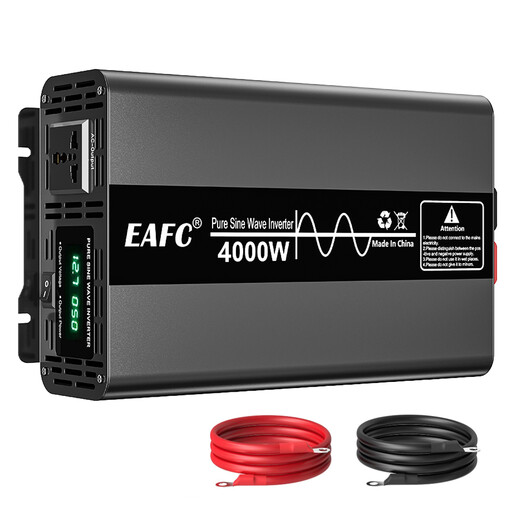
Why This Fits Their Persona: Suitable for motorhome, campervan, truck, boat and camping electrical accessories where stable AC output is required from a 12V battery.
The listing separates its 2,000W rated output from its 4,000W peak output, making the load limits clearer than a peak-only description.
Provides 12V DC to 220V AC conversion, pure sine wave output, dual cooling fans and listed overload, reverse-polarity and voltage protections.
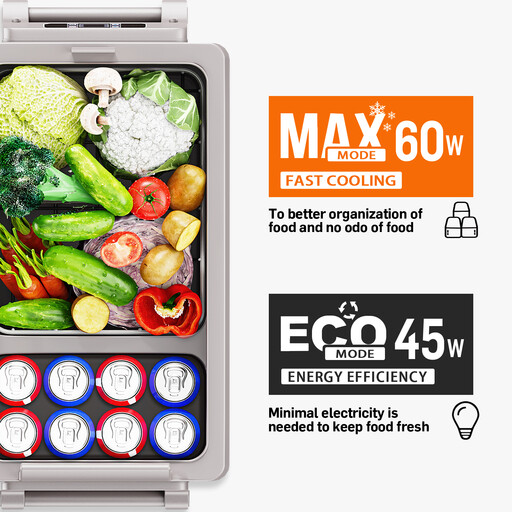
Why This Fits Their Persona: Designed for families, motorhome owners, boat users, anglers and long-distance travellers who need substantial chilled or frozen storage.
It specifies both 12V and 24V DC compatibility, three battery-protection levels and a required clearance around the compressor.
Offers 49.4L capacity, a temperature range from -20°C to 20°C, dual storage areas and 12/24V DC plus 240V AC operation.
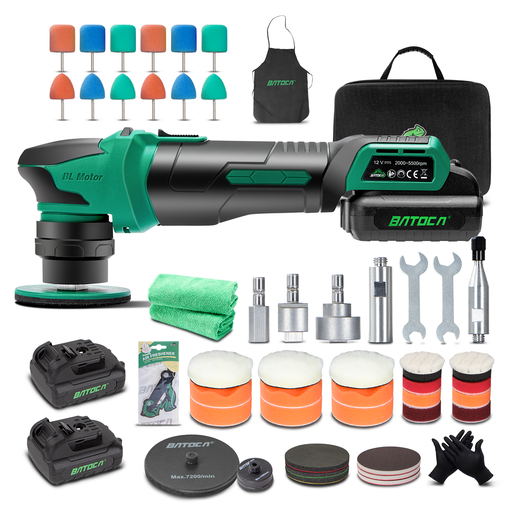
Why This Fits Their Persona: A cordless detailing tool for vehicle owners working on bumpers, mirrors, wheels, trim and confined areas where a larger polisher is inconvenient.
The product information identifies the 12V battery system, four speed settings and separate rotary and random-orbital modes rather than relying on vague performance language.
Includes 25mm and 75mm backing plates, two 12V 2.5Ah batteries and speeds from 2,000 to 5,500 RPM.
We have compiled a complete, real-time list of products that fully satisfy these strict selection criteria and UK safety regulations.
Depending on your routine, other practical 12V car accessories may include:
No. Check the product specification before connecting it. Some equipment, such as the dual-head fan and selected coolers, supports both 12V and 24V input, while a 12V-only jump starter or inverter should not be connected to a 24V system.
It can if left running for extended periods with the engine off. Choose a model with adjustable battery protection, keep compressor ventilation clear and consider a leisure battery or suitable power station for overnight use.
Follow the product instructions. The Carsun inflator guidance recommends running the vehicle engine during use to reduce the risk of draining the battery. Place the vehicle safely, apply the handbrake and allow the compressor to cool between extended sessions.