
24/7 Customer Support

Free returns

Same-day & Next-day Delivery

Quality Guaranteed

Unlock Your Welcome Offers: FREE Delivery | Up to 80% OFF | Free 30-day JoyPlus trial
Download the APP
A flat battery, soft tyre or overheated cabin can turn an ordinary UK journey into an expensive delay. The right 12V car accessories can improve preparedness, comfort and vehicle care, but product pages often make specifications difficult to compare.
This guide from the Joybuy Product Recommendation Officer focuses on practical buying decisions for motorists, campervan owners, van drivers, families and DIY mechanics.
A car jump starter may advertise a high peak current, but that figure does not tell you everything about compatibility. Check the supported engine size, fuel type and voltage system. A compact booster designed for 12V cars may not be suitable for a 24V truck, even if the packaging uses broad terms such as “universal”.
Similarly, a car power inverter can list a peak wattage that is only available briefly. Its continuous or rated output is the more useful figure when powering equipment over time.
Some devices plug into a cigarette lighter or accessory socket, while higher-load equipment must connect directly to the battery with suitable fuse protection. A diesel air heater, for example, should not be connected to a cigarette lighter socket if the manufacturer specifies a direct battery connection.
Before ordering, check whether your vehicle provides 12V or 24V, the socket’s current rating and whether it remains powered when the ignition is switched off.
Portable equipment can be compact without being suitable for continuous operation in a confined space. Compressors require cooling breaks, inverters need airflow around their fans and fridges need clearance around the compressor vents. A product that fits in the boot may still be impractical if its cable, hose or exhaust routing is too short.
For vehicle-mounted heating, exhaust gases must be routed outside and a carbon monoxide detector should be installed inside the vehicle. Always follow the supplied manual.
The first filter for portable car accessories is electrical compatibility:
Do not assume a 12V accessory can be used with a 24V vehicle. For jump starters and inverters, incorrect voltage can damage the equipment or vehicle.
For a cooler, compare internal capacity, temperature range and battery protection. A 12V car fridge with a compressor can cool or freeze without ice, but it still requires ventilation and an appropriate power source.
For an inverter, compare continuous wattage, peak wattage, output waveform and protection features. Pure sine wave output is a consideration for sensitive electronic equipment, but the connected device’s starting load must remain within the inverter’s limits.
For a portable tyre inflator, look for a readable pressure display, automatic shut-off, compatible pressure units and a stated duty cycle. A 150 PSI headline figure does not mean every tyre will inflate at that rate; vehicle tyre size and operating time affect practical performance.
Check for clear instructions, secure mounting points, cable protection and ventilation. Electrical accessories should be used according to the supplied instructions and connected with suitable polarity and fusing.
For replacement bulbs, confirm the exact fitting, wattage and vehicle compatibility using the owner’s handbook or the existing bulb. A bulb suitable for interior or number-plate use is not automatically suitable for every exterior lamp or road application. For accessories used on public roads, check relevant UK requirements and ensure they do not obstruct the driver’s view or controls.

Why This Fits Their Persona: A compact option for drivers who want basic automotive emergency equipment for a car, SUV, motorcycle or lawnmower.
It states compatibility with 12V vehicles and identifies limits of up to 6.0L petrol or 3.0L diesel engines, rather than implying suitability for every vehicle.
1500A peak current, USB outputs and a three-mode LED light. It includes reverse-polarity and short-circuit protections.

Why This Fits Their Persona: Suits families, boat owners and campervan travellers who need chilled or frozen food during longer journeys.
Its specifications state the -20°C to +20°C range, 12/24V DC and 100–240V AC inputs, plus three-stage battery protection.
18-litre capacity, compressor cooling and app control. Leave around 10cm clearance around the ventilation area.
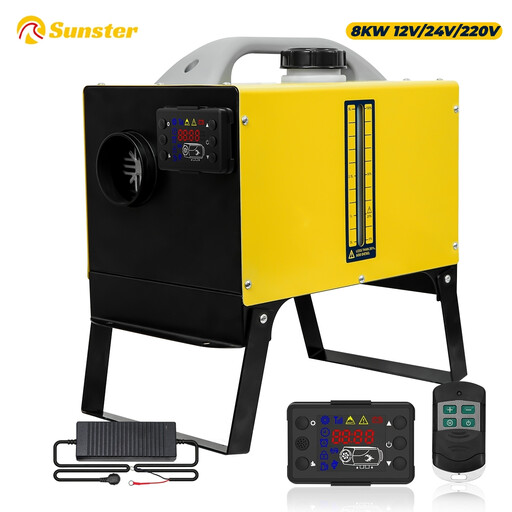
Why This Fits Their Persona: Designed for campervan, truck, bus and outdoor users who need a diesel heating setup with multiple power-input options.
The listing identifies 12V, 24V and AC input options, fuel consumption of 0.11–0.45L/h and a 5-litre tank, making running requirements easier to assess.
LCD and remote control, supplied base bracket and an advertised adjustment range of 8°C–35°C. Exhaust routing and carbon monoxide protection remain essential.
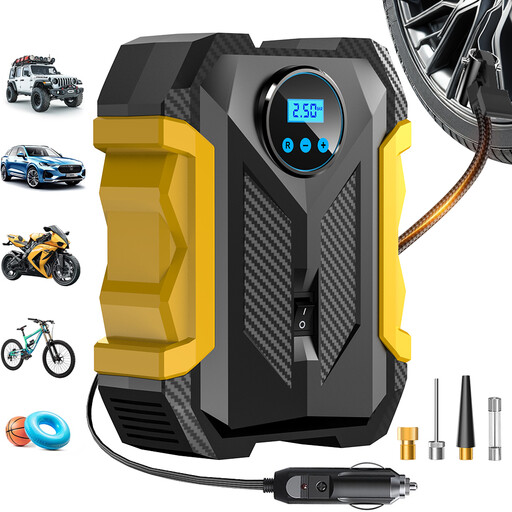
Why This Fits Their Persona: Useful for drivers, cyclists and families wanting a compact emergency inflator for the boot.
A digital display supports pressure checking, while the 3m cable helps reach the vehicle’s tyres without moving the unit repeatedly.
150 PSI stated maximum pressure, LED light and 12V socket operation. Run the vehicle when appropriate to reduce accessory-battery drain.
We have compiled a complete, real-time list of products that fully satisfy these strict selection criteria and UK safety regulations.
No. Many passenger vehicles use 12V systems, but socket ratings, connector styles and available space differ. Check the handbook and product specifications. Do not connect a 12V-only product to a 24V vehicle.
Yes, particularly a fridge, fan, inverter or heater running while the engine is off. Use battery-protection settings where provided, monitor operating time and follow the manufacturer’s connection instructions. High-load products may require direct battery wiring rather than a cabin socket.
Store battery devices partially charged according to their manuals, away from damp and extreme temperatures. Keep hoses and cables free from sharp bends, clean compressor vents and inspect plugs for heat damage. Testing emergency equipment periodically is preferable to discovering a fault during a roadside problem.