For PS5 or Xbox Series X football games, a roughly 32-inch 4K 16:9 monitor is the more straightforward large-screen format; check that its HDMI input supports the console modes you want. For PC play, a 34- or 45-inch ultrawide, or a 49-inch super-ultrawide, makes sense when extra width matters enough to justify more desk space and a demanding display resolution. Match the monitor’s resolution and refresh rate to the connection and games you will actually use.
Who is each format for?
Console players wanting a large screen
If you mainly play on PS5 or Xbox Series X, start with a conventional 16:9 display. PlayStation and Xbox Support describe 4K at 120Hz output under compatible conditions, so check the monitor’s HDMI input and supported modes rather than relying on its headline refresh rate.
PC players drawn to an ultrawide view
If a wider image is your priority, compare 34-, 45- and 49-inch formats against your desk and PC output. Check how the football games you play handle the monitor’s aspect ratio before choosing extra width.
Players sharing a desk with everyday work
A large monitor also needs to fit around your keyboard, seating position and lighting. This matters particularly with a 45- or 49-inch display, or when you plan to use a monitor arm.
What matters when choosing?
Choose the screen format around your main gaming device, then check the input modes, motion specifications and physical fit of the exact monitor.
Around 32 inches, 4K and 16:9
Choose when: You mainly use a PS5 or Xbox Series X, or want a conventional large PC display.
Trade-off: It offers less horizontal image space than an ultrawide, and a PC must be capable of driving your intended 4K settings.
Around 34 inches, ultrawide
Choose when: You play chiefly on PC and want a wider format without moving to a 45- or 49-inch screen.
Trade-off: Check the game’s aspect-ratio behaviour and allow more desk width than for a conventional 16:9 monitor.
45 inches, ultrawide
Choose when: A very large curved PC display is the priority and your desk can accommodate it.
Trade-off: The LG 45GX950A’s 330Hz mode runs at a lower resolution than its 5120 × 2160, 165Hz mode, according to LG UK.
49 inches, super-ultrawide
Choose when: Panoramic width is a leading priority for a PC setup with sufficient desk space.
Trade-off: Its specialist shape makes desk fit and game-format checks especially important; do not assume a console game will fill the panel.
| Concern | What to check | Who this matters to |
|---|
| Console-compatible 4K |
Check 4K at 120Hz and VRR on the intended HDMI input, including the console and cable requirements. |
I mainly play football games on a console and want a large picture without uncertainty about the screen format. Around 36% of consumers put console-compatible 16:9 viewing first. |
| PC ultrawide view |
Compare aspect ratio and native resolution; check how your games use the wider image. |
A broader view matters more to me than keeping a conventional screen shape for console play; around 29% of consumers place PC ultrawide viewing first. |
| Motion and responsiveness |
Pair each refresh-rate figure with its resolution and input mode; check VRR and the stated response-time measure. |
I want match movement to look consistent and care whether my setup can use the display’s higher-refresh mode. For around 21% of consumers, motion is the primary concern. |
| Desk fit and daily use |
Measure width and depth, check dimensions with the stand or mounting requirements, and consider reflections. |
I need the screen to fit where I play and work, without crowding the desk or sitting awkwardly. Practical fit comes first for around 14% of consumers. |
Mistakes to avoid
-
Assuming a high-refresh monitor guarantees 4K at 120Hz from a console
The advertised maximum refresh rate does not, by itself, establish the modes available through the HDMI input connected to your PS5 or Xbox Series X.
Check the exact monitor’s input-mode table for 4K at 120Hz and VRR with your console, and use a suitable cable.
-
Choosing a 45- or 49-inch screen before measuring the desk
A very wide screen needs room for its stand or mount as well as a usable viewing position.
Measure the available width and depth, then compare them with the manufacturer’s dimensions including the stand or mounting requirements.
You may need to rearrange the desk or use a compatible monitor arm.
-
Reading a dual-mode monitor’s highest Hz figure in isolation
LG UK specifies the 45GX950A at 165Hz in its 5120 × 2160 mode and 330Hz in a lower-resolution 2560 × 1080 mode.
Compare resolution and refresh rate together, then decide which mode you would use for football games.
-
Overlooking energy information
Screen size alone does not tell you how two particular monitors’ stated energy information compares.
Look at the energy label and product information sheet for the exact models you are considering where these are displayed.
Relevant brands and models
These models illustrate different screen formats; a brand’s inclusion does not establish the specifications of its other monitors.
ASUS ROG
The ROG Swift OLED PG32UCDM is a 31.5-inch 4K QD-OLED option for a conventional large-screen format.
- ASUS ROG specifies a 240Hz refresh rate and 0.03ms GTG response time for this model.
- For PC play, check whether your hardware can make use of its intended 4K refresh mode; follow the model’s OLED care guidance.
LG UltraGear
The 45GX950A represents the large curved ultrawide route for PC-focused play.
- LG UK specifies a 45-inch 5120 × 2160 OLED display with separate 165Hz native-resolution and 330Hz lower-resolution modes.
- Allow room for the wide screen, and choose between the two modes with their different resolutions in mind.
Samsung Odyssey
The Odyssey OLED G95SD is a 49-inch super-ultrawide option for a PC setup where width is a priority.
- Samsung UK lists the model as a Dual QHD gaming monitor with a 240Hz refresh rate.
- Measure the desk and check the football game’s aspect-ratio behaviour before choosing this format.
Alienware
The AW3425DW offers a 34.2-inch curved ultrawide format for PC players who do not want a 45- or 49-inch panel.
- Dell UK specifies a 3440 × 1440 resolution and 0.03ms GTG response time for this model.
- For console use, confirm the available input modes and how your games display on an ultrawide panel.
Joybuy product choices for large-screen football games
These choices include conventional large-screen monitors and wider displays for PC-first play. Compare each model’s input modes and desk fit against your own setup.
 No image available
LG UltraGear 34GX900A-B 34-inch OLED gaming monitor
Consider this model if you mainly play on PC and want a wider screen. Its product title specifies a 34-inch OLED panel, WQHD resolution and 240Hz; check your game’s aspect-ratio behaviour and the supported mode on your chosen input.
View on Joybuy
 No image available
Samsung Odyssey OLED G8 LS32DG802SUXXU 32-inch Ultra HD monitor
The 32-inch Ultra HD format is worth considering for a conventional large-screen setup. Before choosing it for PS5 or Xbox Series X, confirm 4K at 120Hz and VRR on the HDMI input you will use.
View on Joybuy
 No image available
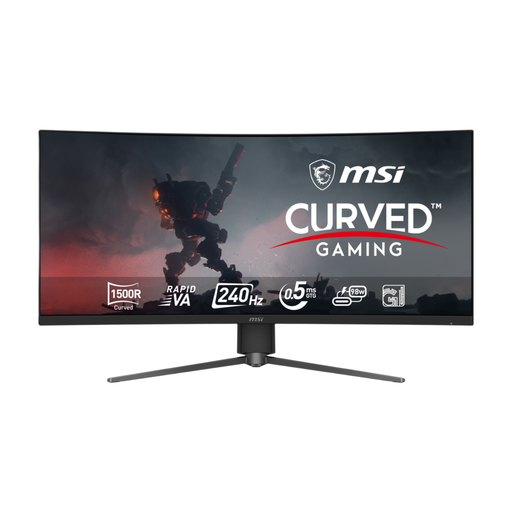
MSI MPG 346CQRF X24 34-inch UWQHD curved monitor
This is a PC-first choice if a curved, wider-format screen is your priority. Its product title lists a 240Hz refresh rate, Adaptive Sync, a Rapid VA panel and a 0.5ms response-time figure; check the supported input mode and console aspect ratio if you also use a console.
View on Joybuy
 No image available
LG UltraGear 39GX900A-B 39-inch OLED QHD gaming monitor
Consider this larger ultrawide for PC play if you have room for a 39-inch screen. Its product title specifies OLED, QHD and 240Hz; confirm the exact input modes, desk fit and how your football games use the wider format.
View on Joybuy
 No image available
Dahua 32-inch 4K 165Hz curved OLED gaming monitor
This conventional large-screen format is worth comparing for console or PC use. Its product title specifies 3840 × 2160 resolution and 165Hz; confirm VRR, your console’s supported HDMI modes and the dimensions with the stand before buying.
View on Joybuy
Frequently asked questions
Can a PS5 use a large 4K monitor at 120Hz?
Yes, with a game and display that support the mode. PlayStation states that PS5 supports 4K 120Hz video output; check the exact monitor input’s supported modes before buying, and check HDMI 2.1 VRR compatibility if VRR matters to you.
What should I check for Xbox Series X at 4K and 120Hz?
Check the display’s HDMI 2.1 support and its 4K at 120Hz input mode, as well as the cable. Xbox Support describes this setup for Xbox Series X with a compatible display and an Ultra High Speed HDMI cable.
Should I compare energy information for large monitors?
Yes, when comparing particular models, look at their energy labels and product information sheets where provided. UK government guidance includes electronic displays among the products covered by energy-labelling rules; compare the exact displays rather than assuming size alone determines their stated energy use.
Does workstation guidance matter if I also use the monitor for work?
It can help you plan the setup. The Health and Safety Executive discusses display-screen equipment at fixed and home workstations; consider desk space, screen placement, lighting and reflections when choosing a large monitor you will also work at.


