
24/7 Customer Support

Free returns

Same-day & Next-day Delivery

Quality Guaranteed

Unlock Your Welcome Offers: FREE Delivery | Up to 80% OFF | Free 30-day JoyPlus trial
Download the APP
For the modern professional, digital nomad or anyone who relies on their vehicle as a mobile base, a dead laptop is not an option. Yet, finding a car charger that can genuinely power a demanding device like a MacBook Pro, while also charging your phone and tablet, can be a frustrating exercise. The market is flooded with options, but many fall short when put to the test.
As a Product Recommendation Officer at Joybuy, my role is to help you navigate these choices. We will look past the marketing buzz and focus on the practical details that separate a reliable mobile workstation from a useless gadget. Before you invest in a high-power 165W USB-C car charger, be aware of these common purchasing traps.
100W PD car charger with a standard cable rated for only 60W, you will only get 60W of power. The cable itself becomes the limiting factor, making your investment in a high-speed charger redundant.To ensure your car becomes a truly productive workspace, focus on these non-negotiable specifications. They are the difference between frustration and seamless power on the go.
Forget the total wattage for a moment. The most critical number for a laptop car charger is the maximum power a single USB-C port can deliver. To effectively charge a modern laptop like a MacBook Pro or a high-end Windows machine, you need a port that supports Power Delivery (PD) 3.0 and can output at least 65W. For the fastest charging speeds, look for a dedicated 100W port. This ensures your laptop receives enough power to charge quickly, even while you are using it for demanding tasks. Protocols like QC 4.0+ (Quick Charge) are also a good indicator of a versatile and fast car charger for MacBook and other devices.
For those who need to power multiple devices, a multi-port car charger is essential. However, not all are created equal. A quality charger will feature intelligent power distribution. This means if you plug in a 100W laptop and a 20W smartphone, the charger automatically allocates the correct power to each port. A dual USB-C car charger is a great starting point, but for maximum flexibility, a model with two USB-C ports and one USB-A port can cover both new and legacy devices simultaneously, making it a true hub for all your car charger for laptops and phones needs.
A heavy duty car charger is defined by its construction and safety features. Look for models built with a zinc alloy frame and fire-retardant PC materials, which help dissipate heat and enhance durability. Furthermore, a car charger with digital display is an invaluable feature. It provides real-time feedback on your vehicle's battery voltage (warning you if it gets too low) and confirms the wattage being delivered to your devices. This transparency allows you to verify that you are getting the charging speeds you paid for and adds a crucial layer of safety.
Based on these practical criteria, here are some options matched to specific user needs.
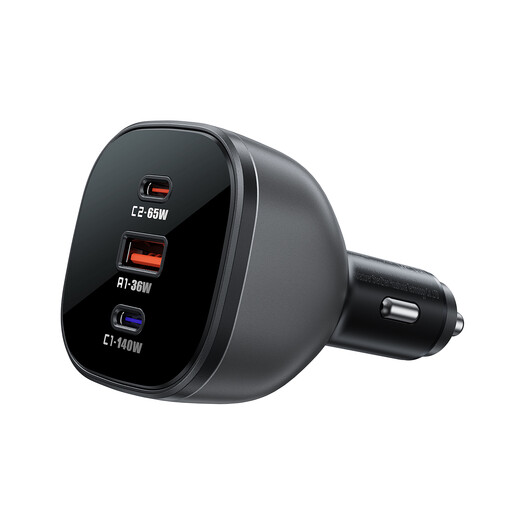
Why This Fits Their Persona: For the professional who truly works from their vehicle. This charger provides enough power to run a high-performance laptop, a tablet and a phone simultaneously, effectively turning any car or van into a fully powered mobile office.
It directly counters the "total wattage" deception by offering a dedicated 100W USB-C port, clearly labelled and confirmed by the digital display. This guarantees your laptop gets the power it needs.
Uncompromised power. It can sustain a 100W + 35W + 30W output across its three ports, and the smart digital display provides real-time voltage and power monitoring for total peace of mind.
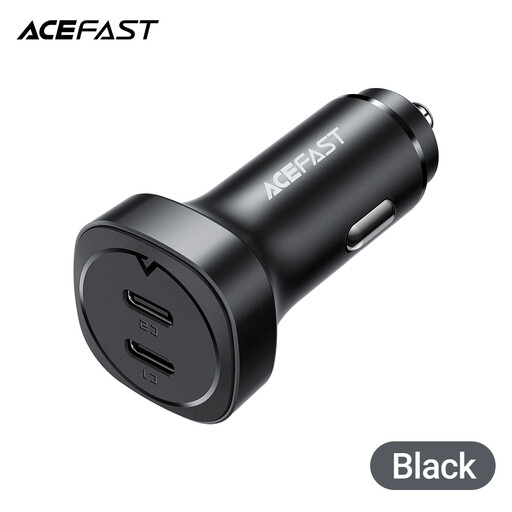
Why This Fits Their Persona: Perfect for the daily commuter who needs to keep a standard work laptop (like a MacBook Air or Dell XPS 13) and a phone topped up between meetings. It's compact, efficient and doesn't require the extreme output of a 165W model.
It offers a clear and balanced power promise: 36W from each of its two USB-C ports. This is ample power for most standard laptops and tablets, avoiding the overheating risk of underpowered chargers trying to do too much.
A compact and cost-effective solution. Its fireproof PC material and support for various fast-charging protocols (PPS, PD, QC 3.0) provide reliable performance in a small, sturdy package.
Why This Fits Their Persona: For the family on a road trip. This single charger can power a parent's work laptop, a child's tablet for entertainment and a smartphone for navigation, all at the same time, from one socket.
It eliminates the need for multiple, weaker chargers that clutter the car and can't keep up. Its intelligent power distribution ensures every device gets a safe, fast charge, preventing arguments over the "good" port.
Future-proof power for the whole family. The mix of high-power USB-C and a universal USB-A port provides compatibility for everyone's gadgets, from the latest laptops to older devices.
We have compiled a complete, real-time list of products that fully satisfy these strict selection criteria and UK safety regulations.
When your vehicle's engine is running, the alternator generates more than enough power to supply the charger and run the car's systems. However, if you use a high-power charger for an extended period with the engine off, it can drain the battery. Quality chargers with a digital voltage display are useful here, as they allow you to monitor your car's battery health. As a general rule, it is always wise to unplug the charger when you leave the vehicle.
Yes, this is absolutely critical. To achieve the full 100W charging speed for your laptop, you must use a USB-C to USB-C cable that is specifically rated for 100W power delivery and contains an E-Marker chip. Using a standard 60W-rated cable will create a bottleneck, and your device will only charge at the cable's maximum rated speed, not the charger's.
With a well-designed multi-port car charger, it is perfectly safe. Reputable models incorporate multiple safety systems, including protection against over-current, over-voltage, overheating and short-circuits. These features work together to manage power flow intelligently, ensuring that all connected devices charge efficiently without overloading your vehicle's electrical system or posing a risk to your electronics.