
24/7 Customer Support

Free returns

Same-day & Next-day Delivery

Quality Guaranteed
Download the APP
Categories
As a Joybuy Product Recommendation Officer, my role is to help you navigate the crowded market of gaming hardware. If you're a competitive gamer, you know that every millisecond counts. Stuttering, screen tearing and motion blur can be the difference between victory and defeat. A 180Hz gaming monitor offers a significant step up in smoothness and responsiveness, giving you a clearer view of the action and a tangible edge in fast-paced games.
This guide is designed to cut through the clutter. We will explore the key features you should consider when choosing a high refresh rate monitor and present a few carefully selected options that deliver on performance and value.
Choosing the right monitor involves more than just the refresh rate. Here are a few crucial factors to consider to ensure you get the best fit for your gaming setup.
The combination of screen size and resolution determines the clarity of your image. For a 180Hz gaming monitor, the most common options are:
A fast response time monitor is essential to prevent ghosting and motion blur, ensuring the image remains sharp during rapid movement. Look for response times of 1ms or lower. The panel technology also plays a role:
Screen tearing occurs when your monitor's refresh rate is out of sync with the frame rate from your graphics card. Adaptive Sync technology solves this.
Here are a few standout models that cater to different types of gamers, from the immersion seeker to the competitive purist.
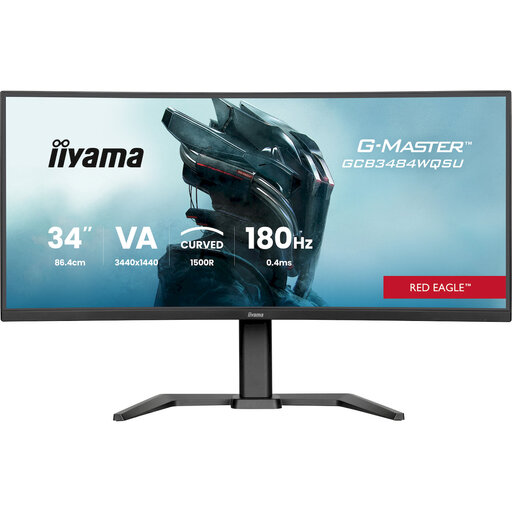
Why It Stands Out This monitor is all about immersion. The deep 1500R curve and expansive 34-inch ultrawide panel wrap around your field of view, pulling you into the game world like few other displays can. It combines this immersive design with top-tier gaming performance.
Pros
Who is it for? Gamers who want a captivating, cinematic experience in single-player adventures and racing games or multitaskers who can leverage the vast screen real estate of an ultrawide gaming monitor.
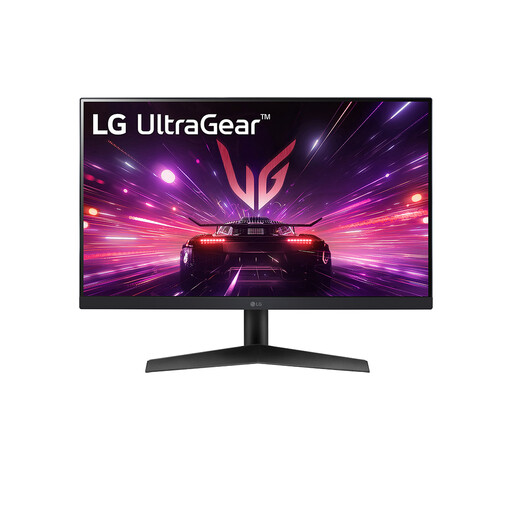
Why It Stands Out The LG UltraGear 24GS60F is a pure performance machine. It strips away the extras to focus on what matters most for competitive gaming: speed. The combination of a 180Hz refresh rate and a rapid 1ms (GtG) IPS panel on a compact 24-inch screen is purpose-built for esports.
Pros
Who is it for? The dedicated competitive player. If you primarily play fast-paced FPS, MOBA or fighting games and need an esports monitor that prioritises reaction time and clarity, this is an excellent choice.
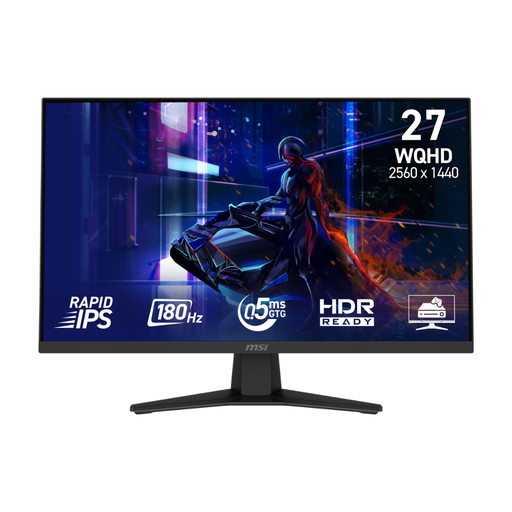
Why It Stands Out The MSI MAG 274QF is a superb all-rounder. It hits the sweet spot for modern gaming by pairing a crisp 27-inch 1440p (WQHD) display with a blazing-fast 180Hz refresh rate and 0.5ms response time. It’s a monitor that doesn’t force you to choose between visual quality and competitive speed.
Pros
Who is it for? The versatile gamer who enjoys a mix of everything. This 1440p 180Hz monitor is equally adept at handling intense online matches and showcasing the beautiful worlds of single-player AAA titles.
While these three monitors represent excellent choices across different categories, your perfect display might be waiting. If you'd like to explore a wider selection of models with varying sizes, features and price points, browse our full collection.
Explore All 180Hz Monitors on Joybuy.co.uk
Is a 180Hz monitor worth it for gaming? Yes, particularly for anyone playing fast-paced competitive titles. The jump from a standard 60Hz or even a 120Hz monitor is noticeable, resulting in smoother on-screen motion, reduced blur and lower input lag. This can provide a clearer picture of the action and a more responsive feel, which is a distinct advantage in competitive gaming.
Can my PC run a 180Hz monitor? This depends on your graphics card (GPU) and the resolution you choose. To consistently achieve 180 frames per second (fps) on a 1080p 180Hz monitor, a modern mid-range GPU is generally sufficient for most esports titles. For a 1440p 180Hz monitor, you will need a more powerful, high-end GPU to maintain high frame rates, especially in graphically demanding games.
What is the difference between 144Hz and 180Hz? A 180Hz monitor can display 36 more frames per second than a 144Hz monitor. While the improvement is more subtle than the leap from 60Hz to 144Hz, many competitive players can perceive the extra smoothness and reduced motion blur. It represents the new standard for a modern best monitor for competitive gaming, offering a slight but meaningful refinement in performance.