
24/7 Customer Support

Free returns

Same-day & Next-day Delivery

Quality Guaranteed

Unlock Your Welcome Offers: FREE Delivery | Up to 80% OFF | Free 30-day JoyPlus trial
Download the APP
An 18V cordless combi drill can cover furniture assembly, shelving, home repairs, woodwork and light masonry drilling. However, comparing models by voltage alone can lead to an unsuitable purchase. Battery capacity, torque, chuck size and included accessories often have a greater effect on day-to-day usefulness.
Before choosing a rechargeable power drill, watch for these common buying traps.
A product may advertise a high torque figure, but maximum torque is not the same as sustained performance in every material. The result can vary according to the gear selected, battery charge, bit type and pressure applied.
For general DIY, also check the clutch settings. A cordless drill driver with multiple clutch positions gives better control when driving screws into timber, plasterboard or furniture panels. Without suitable adjustment, it is easier to strip screw heads or damage softer materials.
A combi drill normally combines screwdriving, standard drilling and hammer action. The hammer function is intended for lighter masonry tasks, such as drilling into brick or blockwork for wall plugs. It does not automatically make a battery drill suitable for large holes in reinforced concrete or prolonged building work.
Check the stated impact rate, use masonry bits in hammer mode and avoid applying excessive force. For extensive concrete drilling, a dedicated rotary hammer may be more appropriate.
A large accessory count can include duplicates, small sizes or bits that do not match your projects. Compare the actual contents: wood bits, metal bits, masonry bits, screwdriver tips, nut drivers and extension holders are more useful than the headline number alone.
Also check whether the kit includes a battery, charger, storage case and a UK-compatible charging arrangement. Some listings show a drill body only, which can make the apparent price less representative.
Torque is measured in Newton metres (Nm) and indicates the turning force available from the drill. A higher figure can help with larger screws and tougher materials, but it should be considered alongside speed control and clutch adjustment.
For household work, look for:
An 18V electric screwdriver with 21 or more clutch positions may offer more adjustment than a basic drill with only a few settings.
Battery capacity is normally stated in amp-hours (Ah). A 2Ah battery drill is relatively compact and can suit furniture assembly, occasional repairs and short DIY sessions. Larger-capacity batteries may provide longer working time but can add weight.
A single battery is sufficient for intermittent use if charging time is acceptable. Two batteries are more practical for renovation or garden projects because one can charge while the other is in use. Check the charger rating and stated charging time rather than assuming every “fast charger” performs identically.
For safe use, charge the battery with the supplied or manufacturer-approved charger, keep contacts clean and store the pack in a cool, dry place. Do not use a damaged, swollen or modified battery.
A 10mm chuck is suitable for many household bits, while a 13mm chuck can accommodate a wider range of accessories. A keyless chuck makes bit changes quicker, but it still needs to be tightened securely before operation.
Dual-speed drills commonly offer a slower range for screwdriving and a faster range for drilling. Variable trigger control is also useful when starting a hole or driving a screw accurately.
If you need a hammer drill function, compare the stated impact rate in beats per minute (BPM), the available masonry bit sizes and the manufacturer’s intended applications. Wear eye protection, secure the workpiece and follow the supplied instructions.
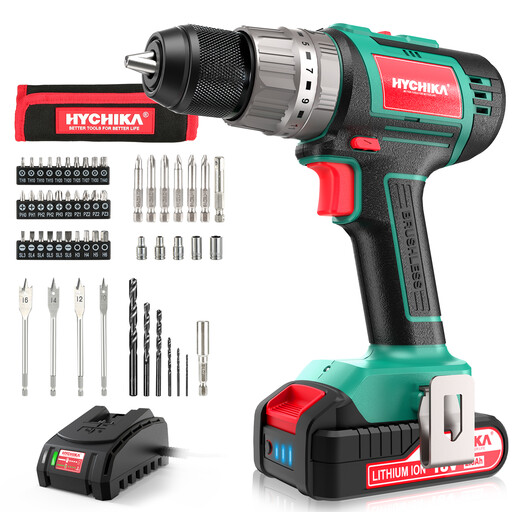
Why This Fits Their Persona: A practical starter option for assembling furniture, putting up shelves and handling routine home and garden jobs without buying separate bits immediately.
The listing specifies a 2.0Ah battery, charger and 26-piece accessory set, making the included equipment clearer than a body-only drill listing.
35Nm maximum torque, 21+1 clutch settings, dual speed and a stated one-hour charging time.
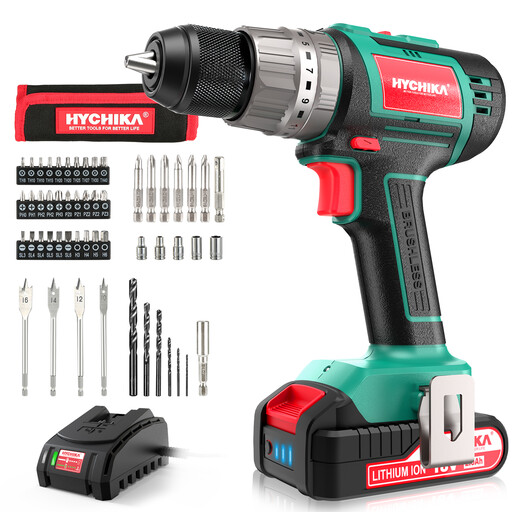
Why This Fits Their Persona: Suited to users who want a more substantial cordless drill for repeated DIY, renovation tasks and mixed materials around the home.
Its specifications identify a brushless motor, 13mm chuck, two batteries and three operating modes, rather than relying on voltage alone.
60Nm maximum torque, 21+3 clutch levels, hammer function and two 2.0Ah batteries with fast charging.

Why This Fits Their Persona: A suitable match for homeowners tackling wall fixing, assembly and varied repair jobs who value a broad accessory selection and organised storage.
The accessory breakdown includes masonry, wood and metal bits, while the hammer mode is clearly identified for brick, stone and similar work.
104-piece kit, 11-position clutch, two-speed gearbox, 21,000 BPM impact rate and a 19-inch toolbox.
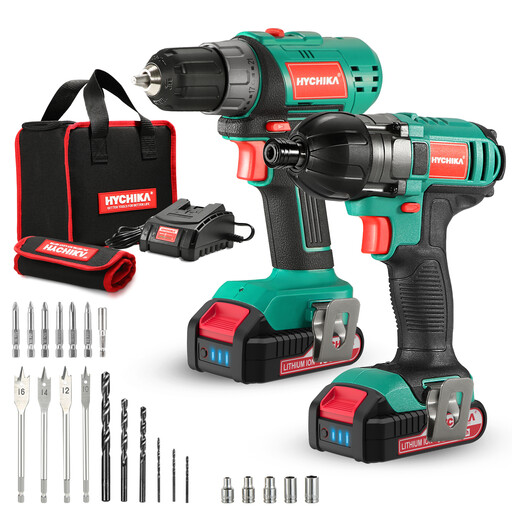
Why This Fits Their Persona: Designed around flexibility for regular household maintenance and garden-related DIY where a spare battery can reduce interruptions.
The product name specifies separate drill-driver and impact-driver functions, so buyers can distinguish the included tool combination from a single standard drill.
Two 2.0Ah batteries, 35Nm drill-driver torque stated in the listing and a 160Nm impact-driver specification.
Before ordering, confirm:
Use eye protection when drilling, disconnect the battery before changing accessories and do not operate the tool in wet or explosive environments. For electrical installations or structural work, follow relevant UK safety requirements and use a suitably qualified professional where necessary.
We have compiled a complete, real-time list of products that fully satisfy these strict selection criteria and UK safety regulations.
For many household tasks, yes. An 18V model can handle screwdriving, wood and metal drilling and light masonry work when paired with the correct bit. For repeated large holes in concrete, choose a dedicated rotary hammer instead.
A 2Ah battery can be suitable for short DIY sessions, furniture assembly and occasional repairs. It may require more frequent charging during renovation work. A kit with two batteries offers a more convenient working cycle.
Brushless motors use electronic control rather than brushes that physically contact the motor’s rotating section. This can reduce a source of mechanical wear and may improve efficiency, but actual lifespan also depends on workload, storage, battery care and maintenance.