
24/7 Customer Support

Free returns

Same-day & Next-day Delivery

Quality Guaranteed

Unlock Your Welcome Offers: FREE Delivery | Up to 80% OFF | Free 30-day JoyPlus trial
Download the APP
Buying a 1kg PLA 3D printer filament spool can seem straightforward, but low prices and impressive packaging do not always reveal whether the material will feed consistently through your printer. A spool that produces uneven layers, tangled filament or repeated nozzle blockages can quickly cost more through wasted time and failed prints.
This guide explains the practical details to check before buying, then matches several options to different UK printing needs.
Most home FDM printers use 1.75mm filament, but the stated diameter alone does not tell you how consistently it is manufactured. Variations along the spool can affect extrusion, surface finish and layer bonding.
A stated tolerance such as ±0.02mm provides a more useful indication of manufacturing consistency. It does not guarantee that every print will succeed, as nozzle condition, temperature and slicer settings still matter, but it can reduce one avoidable source of uneven flow.
PLA is generally easier to print than many technical materials, but warping can still occur. A cold draught, an unlevel build plate, poor bed adhesion or an unsuitable first-layer temperature can lift corners.
“Low-warp filament” should therefore be viewed as a helpful material characteristic rather than a promise of perfect results. A stable indoor setup and correct bed preparation remain important, particularly in colder UK rooms.
A bright coloured PLA filament may suit toys, display models and classroom projects, while a matt or textured surface can make layer lines less noticeable on prototypes. Silk PLA creates a reflective appearance, but its visual finish may be more important than dimensional consistency for functional parts.
Transparent filament also needs realistic expectations. It can allow light through, but FDM printing normally creates visible layers and internal boundaries, so it is not equivalent to moulded clear plastic or optical-grade material.
Confirm that your printer accepts 1.75mm PLA filament. This is common among desktop FDM machines, including many models from Anycubic and Creality, but the printer’s manual should take priority.
Where available, check the dimensional tolerance. A ±0.02mm tolerance is a clearly stated specification on selected spools and supports more predictable feeding than a listing that only says “high precision”.
PLA, or polylactic acid, is commonly selected for models, prototypes, decorative items and general-purpose parts because it normally prints at relatively accessible temperatures and has limited shrinkage compared with some other materials.
Some products are described as biodegradable PLA filament. This wording should be interpreted carefully: biodegradability depends on the formulation and disposal environment. For example, a product may be intended to biodegrade under industrial composting conditions rather than in a typical household compost bin.
PLA is not the automatic choice for parts exposed to sustained high heat, outdoor weather or heavy mechanical stress. For those applications, compare the required temperature resistance and toughness with the specifications of alternatives such as PETG, ABS or other engineering filaments.
Check the spool dimensions, holder arrangement and filament path before ordering. A 1kg PLA filament spool may be physically suitable for one printer but awkward for another if the holder is narrow or enclosed.
Also consider:
Store opened filament in a sealed bag or dry box. Moisture can contribute to popping, rough surfaces and inconsistent extrusion, even when the filament itself has a suitable diameter.
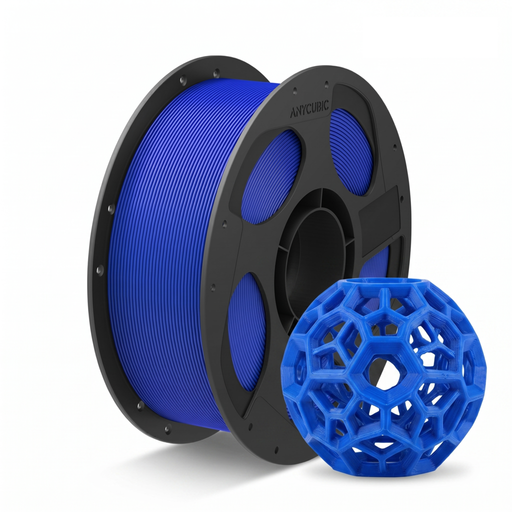
Why This Fits Their Persona: A straightforward blue spool for beginners learning calibration, school projects, household models and general FDM printing.
The listing states a 1.75mm diameter and ±0.02mm tolerance, so buyers can assess more than colour and spool weight alone.
1kg quantity, stated ±0.02mm tolerance, low-warp characteristics and compatibility with many FDM printers.
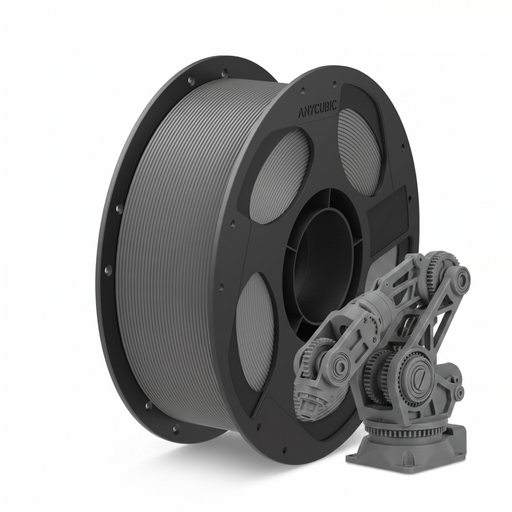
Why This Fits Their Persona: A matt-style option for designers, makers and small businesses that want a more subdued appearance on prototypes and display parts.
Its listed tolerance gives a measurable specification, while the textured grey finish is selected for appearance rather than being mistaken for a structural upgrade.
1.75mm filament, ±0.02mm stated tolerance, matt surface and low-warp PLA characteristics.
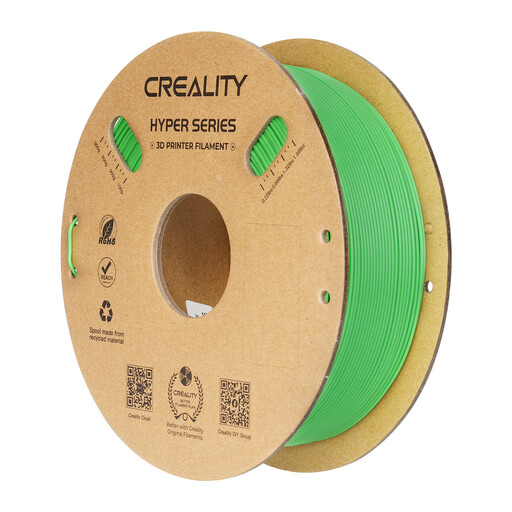
Why This Fits Their Persona: Suited to users with a compatible high-speed setup who print frequently and want to investigate a faster-printing workflow.
The listing identifies a 30–600mm/s speed range and ±0.02mm dimensional accuracy. Buyers should still confirm that their printer, hot end and cooling system support the intended speed.
1kg spool, stated ±0.02mm accuracy and a listed high-speed range for compatible FDM printers.
We have compiled a complete, real-time list of products that fully satisfy these strict selection criteria and UK safety regulations.
Before loading a new spool, trim the filament at an angle and check that the feed path is clear. Follow the printer manufacturer’s temperature guidance rather than copying a setting from another machine. PLA should be printed in a well-ventilated area, and the hot nozzle, heated bed and freshly printed parts should be kept away from children and pets.
If a print fails, change one variable at a time. Check the bed level, first-layer adhesion, nozzle cleanliness and filament moisture before assuming the spool is defective.
Usually, PLA is a practical starting material for FDM printing because it is commonly easy to feed and has relatively low shrinkage. Beginners should still confirm the required 1.75mm filament size and use the printer’s recommended temperature range.
It depends on model size, infill, layer height, supports and failed prints. A 1kg spool can produce many small models, but larger functional parts may consume substantial material. Slicer software normally estimates filament length and weight before printing, helping you calculate running costs.
Keep it in a sealed moisture-resistant bag or dry box with desiccant when not in use. Store the spool away from damp areas such as kitchens, garages and unheated sheds. Proper storage helps maintain consistent extrusion over time, although it cannot correct material that has already absorbed significant moisture.