One-dish buffet hosts
If pasta is a main dish for a larger group, the total dry weight and number of packs to open matter more than having several shapes.


For one large pasta dish, a 1 kg pack means fewer packs to open; several 500 g packs give you more flexibility to split dishes or leave a reserve unopened. Choose a shape that works for how guests will serve themselves, and check the current pasta and sauce labels before preparing a separate dish for anyone with an allergy or intolerance.
If pasta is a main dish for a larger group, the total dry weight and number of packs to open matter more than having several shapes.
Separate sauces, shapes or dishes can make smaller packs useful, particularly when an unopened pack might be kept in reserve.
When a guest needs a separate dish, the current ingredients and allergen statements on the pasta and sauce matter, as does keeping serving utensils separate.
Work out the dry weight for the dishes you plan to make, then choose pack sizes and shapes that fit the menu. Check labels before deciding whether a separate pasta dish will meet a guest’s needs.
| Concern | What to check | Who this matters to |
|---|---|---|
| Dry weight and pack handling | Check pack weight against the quantity needed for your planned dish. One 1 kg pack has the same dry weight as two 500 g packs. | If pasta is the main dish for a larger group, I want enough dry pasta without opening numerous packs. About 50% of consumers would put quantity and pack handling first. |
| Shape and menu flexibility | Choose a shape for the sauce and serving method; check whether it comes in the pack size you want. | When I am making separate pasta dishes, I want pack sizes that let me divide the menu and keep a reserve unopened. For about 30% of consumers, that flexibility would be the primary need. |
| Ingredients and allergens | Read the current pasta and sauce labels, including precautionary statements, and plan separate utensils where a separate dish is needed. | If a guest has an allergy or intolerance, I need to establish what is suitable before cooking and keep their dish distinct. Ingredient and allergen certainty would come first for about 20% of consumers. |
A single 500 g pack provides half the dry weight of a 1 kg pack, regardless of how it is described on the shelf.
Write down the total dry weight for your menu, then check how many packs of each size would provide it.
M&S identifies gluten in its 1 kg spaghetti and states that it is not suitable for people with an egg allergy. The Joybuy listing for Barilla Pasta Spaghetti 500g identifies wheat and says it may contain mustard and soya.
Check the current labels on every pasta and sauce you serve. If a separate dish is needed, keep its utensils and serving area distinct.
The Dolmio Bolognese recipe listed by Sainsbury’s pairs a 675 g sauce jar and 600 g mince with 100 g dry pasta per person for six servings. That describes the specified recipe, not every buffet plate.
Start with the recipe you are making, then account for the other dishes on your table and the number of guests you expect.
Tesco Groceries lists an own-label Spaghetti Pasta 1Kg option for a single large pasta dish.
M&S lists 1 kg spaghetti, penne and fusilli, as well as separate specialist pasta lines.
Barilla lists its Classic Blue Box Spaghetti N°5 in a 500 g pack.
Dolmio is a sauce-planning reference here, rather than a dried-pasta option: its specified Bolognese recipe provides quantities for one dish.
These Barilla spaghetti selections offer either one 500 g pack or three separate 500 g packs for a spaghetti-led buffet dish.
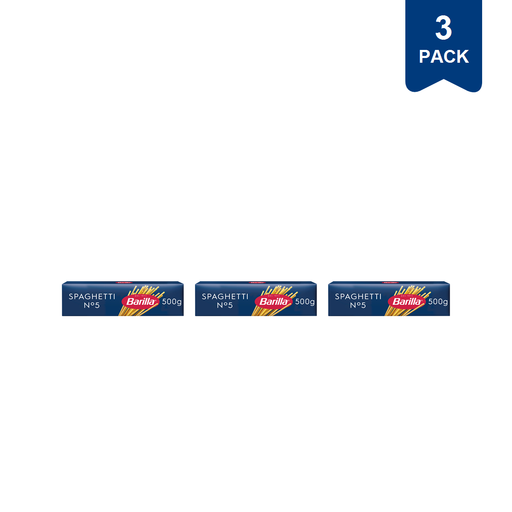 Image unavailable
For a larger spaghetti dish or portions divided between dishes, this bundle contains three 500 g packs: 1.5 kg of dry pasta in total. Check each current pack’s ingredients and allergen information against your guests’ needs.
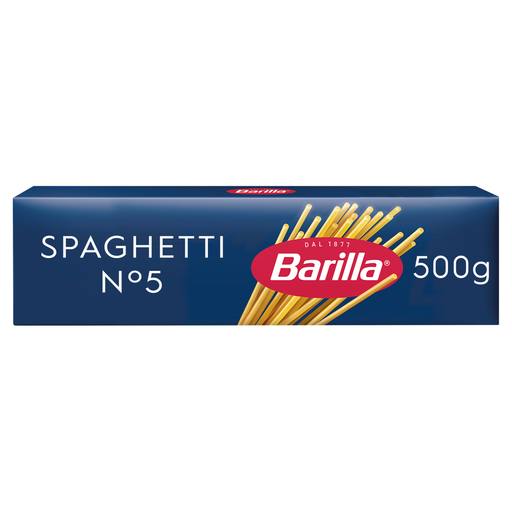 Image unavailable
For a smaller spaghetti dish or an additional pack kept unopened, this is one 500 g pack; two packs equal the dry weight of a 1 kg pack. The Joybuy listing identifies wheat and says it may contain mustard and soya, so check the current pack label before serving.
Start with the quantities for the dish you are making, then consider what else guests will be served. The Dolmio Bolognese recipe listed by Sainsbury’s uses 100 g dry pasta per person with its specified 675 g sauce jar and 600 g mince for six servings; it is a reference for that recipe, not a universal portion rule.
A 1 kg pack means fewer packs to open for one large dish. Several 500 g packs give you the option to split dishes or leave a reserve unopened; check that the shape you want comes in the pack size you choose.
No. M&S identifies gluten in its 1 kg spaghetti and states that it is not suitable for people with an egg allergy. Read the current pasta and sauce labels, including precautionary statements, for each guest’s specific needs.
The Food Standards Agency’s cited allergen-information duties concern food businesses, rather than automatically applying to a private meal at home. For a home buffet, keep packaging or an ingredient list available so guests can check what is in each dish; if food is supplied as part of a business, check the applicable business requirements.