Hosts serving a mixed group
Offer a choice of recipes rather than assuming everyone wants the same cola. In particular, a no-sugar bottle is not necessarily caffeine-free.


For a Bonfire Night group, choose a 2-litre cola by recipe: a sugar-containing version if guests want regular cola, a no-sugar version if they prefer a sweetener-based drink, or an explicitly caffeine-free variant if caffeine avoidance matters. No-sugar Pepsi Max contains caffeine, while Pepsi Max No Caffeine is a different formulation. Check the exact bottle label and the number of bottles in the pack before buying.
A bottle for sharing still needs to suit the people who will drink it: sugar, caffeine and pack size can change the choice.
Offer a choice of recipes rather than assuming everyone wants the same cola. In particular, a no-sugar bottle is not necessarily caffeine-free.
Check the sugars figure and ingredients on the exact bottle. Pepsi Max and Diet Coke list 0g sugars per 100ml, but their listed recipes contain caffeine.
Compare branded and supermarket own-label recipes as well as bottle size. A multipack of 2-litre bottles may provide considerably more cola than one gathering needs.
Start with the recipe your guests want, then check the pack and storage instructions for the way you plan to serve it.
| Priority | What to check | Your needs |
|---|---|---|
| Sugars | Compare sugars per 100ml on the exact bottles. ASDA Groceries lists Coca-Cola Original Taste 2L at 10.6g per 100ml and 27g per 250ml serving; its Diet Coke 2L listing gives 0g per 100ml. | I want to know whether I am putting out a sugar-containing cola or a no-sugar alternative. |
| Caffeine | Read the full variant name and ingredient list. Pepsi UK lists caffeine in Pepsi Max; Pepsi Max No Caffeine is a separate no-sugar formulation. | If someone wants to avoid caffeine during an evening gathering, I need a bottle explicitly identified as caffeine-free, not simply no sugar. |
| Recipe and label | Check the ingredients and any relevant statements on the bottle received. Pepsi Max, Pepsi Max No Caffeine and Diet Coke list a source of phenylalanine. | Where an attendee needs to avoid a particular ingredient, I need to check the physical label before serving. |
| Amount to serve | Check whether the listing is one 2-litre bottle or a multipack. A 2-litre bottle provides eight 250ml measures; guests may pour different amounts. | I want enough cola to share without mistaking a six- or eight-bottle pack for a single bottle. |
| After opening | Follow the bottle’s storage directions. ASDA Groceries instructs shoppers to refrigerate its 2-litre Classic Cola and Cola Zero after opening and use them within three days. | If bottles will be opened at different times, I can leave unopened ones sealed and follow each opened bottle’s instructions. |
The figures can differ substantially by recipe: ASDA Groceries lists 27g sugars per 250ml serving for Coca-Cola Original Taste 2L, while its Diet Coke 2L listing gives 0g per 100ml.
Decide which recipe you want, then compare the same per-100ml measure on the bottles you are considering.
Pepsi UK lists caffeine in Pepsi Max. Its Pepsi Max No Caffeine is a separately named product.
If caffeine avoidance matters, check both the variant name and the ingredients on the bottle.
A product listing is useful for narrowing the choice, but the pack received is the one guests will drink. This distinction matters when an ingredient or phenylalanine statement affects serving.
Read the physical label before offering the cola to someone with a relevant dietary requirement.
ASDA Groceries identifies its 2-litre Classic Cola and Cola Zero bottles as pressurised and instructs shoppers to refrigerate them after opening and use them within three days.
Open a fizzy bottle carefully, then follow its own post-opening storage instructions.
These names provide different recipes to compare; a brand name alone does not establish a bottle’s sugar or caffeine content.
Coca-Cola Original Taste and Diet Coke both have 2-litre grocery listings, but their listed sugars figures differ.
Pepsi UK describes distinct regular, no-sugar and no-sugar, no-caffeine formulations.
Tesco Groceries lists 2-litre own-label Classic, Diet, Xero and Caffeine Free Diet colas alongside branded options.
ASDA Groceries lists 2-litre Classic Cola and Cola Zero with different sugars figures.
RC Cola International describes a wider soft-drink range that includes carbonated drinks.
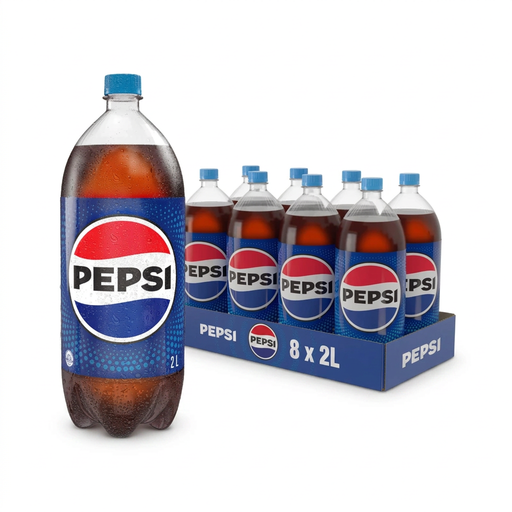
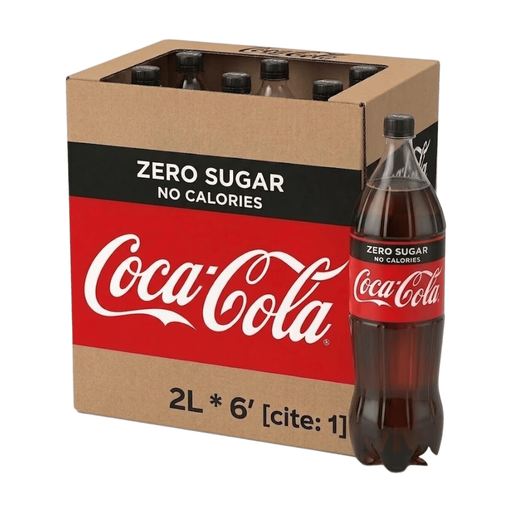
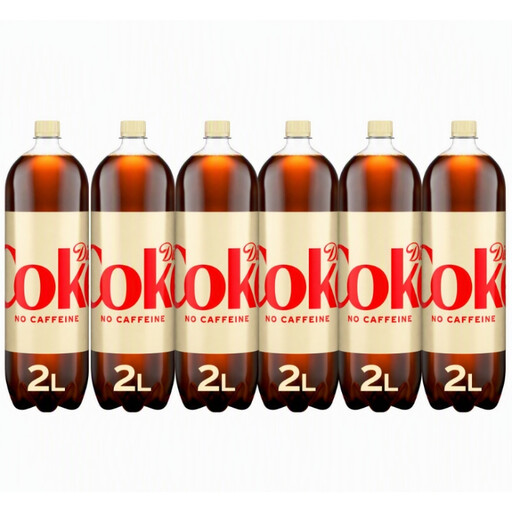
These options are multipacks of 2-litre Pepsi Regular, Coca-Cola Zero Sugar and Diet Coke Caffeine Free bottles for group serving. Check the number of bottles against your plans; the Diet Coke listing’s caffeine information needs particular care if you are choosing for caffeine avoidance.
 No image available
Eight 2-litre bottles suit a gathering that needs several bottles, though the pack may be more than one event requires. Pepsi UK lists sugar and caffeine in its regular Pepsi recipe; check the bottles’ current labels before serving.
 No image available
This six-bottle pack offers a Zero Sugar variant for sharing. If caffeine or a particular ingredient matters to a guest, check the exact bottles’ labels before serving; the product name alone does not answer those questions.
 No image available
This is a six-bottle, 2-litre multipack. Although its title says Caffeine Free, the caffeine statements associated with this listing conflict. If avoiding caffeine is essential, confirm the exact bottle’s label before buying rather than relying on the title.
A 2-litre bottle provides eight 250ml measures. Coca-Cola Original Taste 2L uses that serving basis on its listing, but guests may pour different amounts, so use it to plan volume rather than to prescribe a serving.
No. Pepsi UK lists caffeine in Pepsi Max, which has 0g sugars per 100ml; Pepsi Max No Caffeine is a separate formulation. Check the full variant name and ingredients when caffeine avoidance matters.
Follow that bottle’s storage directions. ASDA Groceries instructs shoppers to refrigerate its 2-litre Classic Cola and Cola Zero after opening and use them within three days; open pressurised bottles carefully.
Read the physical bottle label before serving it. Pepsi Max, Pepsi Max No Caffeine and Diet Coke list a source of phenylalanine, and the exact product label is the place to check ingredients relevant to a guest’s requirements.