Who is choosing the drinks?

Organisers serving mixed adult groups

A regular and a zero-sugar choice lets attendees select between different formulations. For quantities, Tesco Groceries describes its 2-litre Coca-Cola Original Taste bottle as eight 250 ml servings; self-service pours may vary.

Caterers considering own-label cola

Tesco Classic Cola, Sainsbury's Cola Zero and ASDA Diet Cola show why the exact variant matters: own-label bottles do not all have the same sugar content or ingredients.

Planners with a caffeine-avoidance requirement

Keep caffeine separate from sugar when choosing drinks. Pepsi UK lists caffeine in Pepsi Max, while caffeine-free zero-sugar variants are also identified by Coca-Cola GB and in Sainsbury's cola range.

What should you check before ordering?

Set the required drink choices first, then plan bottle quantities and how the cola will be served.

Priority What to check Your needs
Sugar formulation Read the sugars value per 100 ml on each variant. Tesco Groceries lists 10.6 g for Coca-Cola Original Taste 2L, while Coca-Cola GB lists 0 g for Coca-Cola Zero Sugar; an own-label name does not establish its sugar content. I want attendees to be able to choose between regular and zero-sugar cola, rather than assuming one formulation suits everyone.
Caffeine Check that the exact bottle is labelled caffeine-free when required. Pepsi UK lists caffeine in Pepsi Max despite its 0 g sugars; Coca-Cola GB identifies a separate Zero Sugar Caffeine Free variant. If the event calls for no caffeine, a zero-sugar bottle alone will not meet that requirement.
Servings and service Use the stated serving size when estimating quantities: Tesco Groceries gives eight 250 ml servings for a 2-litre Coca-Cola bottle. Allow for different pour sizes, chill bottles for service and open them in batches. I need enough chilled cola across the breaks without opening every bottle at the start.
Ingredients and labels Check the delivered bottle's ingredient and allergen information, especially when switching variants. Make the current information accessible to the catering team serving the drinks. When someone asks what a cola contains, staff need information for the bottle actually being served.

What can go wrong during selection and service?

  • Assuming zero-sugar means caffeine-free

    Pepsi UK lists caffeine in Pepsi Max. A sugar-free drink can therefore miss a separate caffeine-avoidance requirement.

    Choose a variant explicitly labelled caffeine-free and check the exact bottle before service.

  • Opening every bottle before the first break

    Opened cola can lose carbonation. Tesco, Sainsbury's and ASDA also give post-opening guidance for the own-label bottles described on their product pages.

    Chill bottles for service, open them in batches and follow the storage instructions on each delivered bottle.

  • Treating all own-label bottles as the same formulation

    Tesco Groceries lists 4.4 g sugars per 100 ml for Tesco Classic Cola, while Sainsbury's Cola Zero and ASDA Diet Cola each list less than 0.5 g per 100 ml. The names refer to different choices, not interchangeable recipes.

    Compare bottle size, sugars per 100 ml, caffeine status and ingredients for the exact variant being ordered.

  • Relying on an old product listing for ingredient enquiries

    An online listing may not describe the formulation on bottles delivered for the event. That matters when staff answer questions about ingredients and allergens.

    Check the physical labels and use the caterer's established process for providing current allergen information.

Which brands and ranges are relevant?

Coca-Cola

The range includes Original Taste, Zero Sugar and Zero Sugar Caffeine Free choices; check the bottle size and variant when ordering for a group.

  • Tesco Groceries lists eight 250 ml servings and 10.6 g sugars per 100 ml for its Coca-Cola Original Taste 2L bottle.
  • Coca-Cola GB identifies Zero Sugar Caffeine Free as a separate variant; do not assume an ordinary Zero Sugar bottle is caffeine-free.

Pepsi

Regular Pepsi and Pepsi Max provide different sugar formulations, with caffeine-free Pepsi Max listed separately in Sainsbury's cola range.

  • Pepsi UK lists 4.5 g sugars per 100 ml for regular Pepsi and 0 g for Pepsi Max.
  • Pepsi UK lists caffeine and aspartame in Pepsi Max; confirm the variant if either ingredient matters to the event brief.

Tesco

Tesco Classic Cola is an own-label 2-litre regular-cola option; its formulation should not be confused with a zero-sugar variant.

  • Tesco Groceries lists 4.4 g sugars per 100 ml for Tesco Classic Cola 2L.
  • The listing says it contains sulphites and advises consumption within three days of opening.

Sainsbury's

Sainsbury's Cola Zero 2L is an own-label option for a conference requiring a cola with a stated low sugars value.

  • Sainsbury's lists less than 0.5 g sugars per 100 ml and eight servings per bottle.
  • Its product information says to refrigerate after opening and use within three days; check the delivered label for ingredients.

Asda

ASDA Diet Cola 2 Litres is another own-label choice with a stated sugars value below 0.5 g per 100 ml.

  • ASDA Groceries suggests eight servings from its 2-litre bottle.
  • Its product information lists caffeine and advises refrigeration after opening, with use within three days.

RC Cola

RC Cola International identifies the brand as part of its carbonated-drinks range. For this conference decision, assess a specific 2-litre bottle rather than the brand name alone.

  • Confirm the bottle size, ingredients and supplier arrangements for any RC Cola variant under consideration.

Joybuy 2-litre cola options

These multipacks represent regular, zero-sugar and labelled caffeine-free cola choices for group service. Check the exact variant against the conference brief, particularly where caffeine avoidance is required.
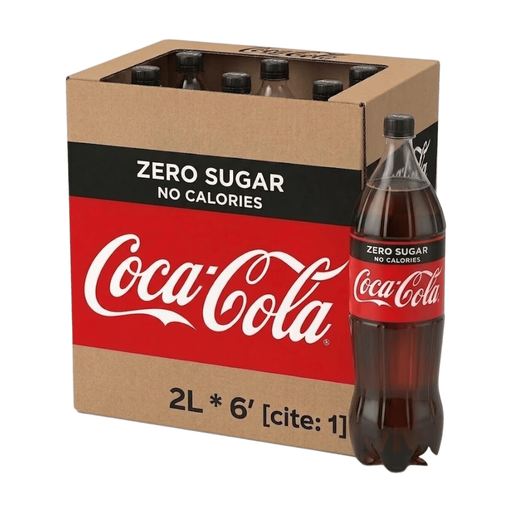
Coca-Cola Zero Sugar, six 2-litre bottles

Coca-Cola Zero Sugar 2L × 6

A six-bottle option when the conference calls for zero-sugar cola alongside other drinks. Check the delivered labels for caffeine and ingredients before service.

Joybuy
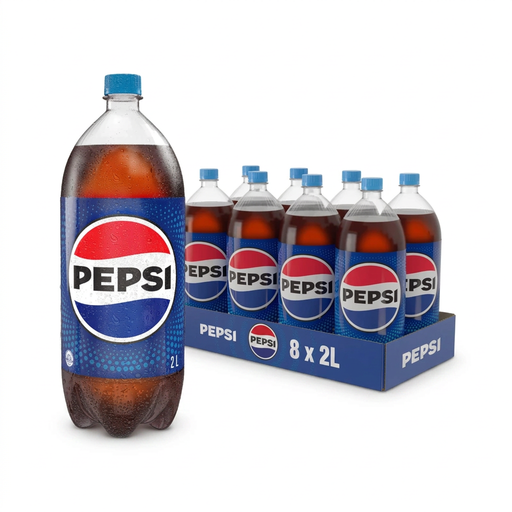
Pepsi Regular, eight 2-litre bottles

Pepsi Regular 8 × 2L

Eight 2-litre bottles for an event that calls for regular Pepsi. This regular-cola choice contains sugar and caffeine; check the delivered bottle's ingredient information.

Joybuy
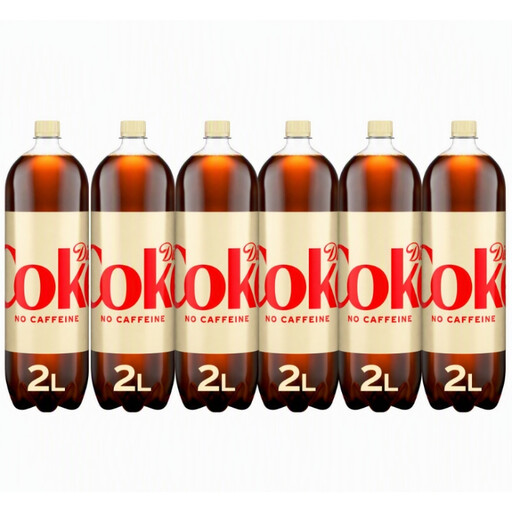
Diet Coke Caffeine Free, six 2-litre bottles

Diet Coke Caffeine Free 2L × 6

Six 2-litre bottles labelled as a caffeine-free Diet Coke variant. The accompanying caffeine statements conflict, so check the exact bottle label before choosing it for a caffeine-avoidance requirement.

Joybuy

Conference cola questions

How many servings should I plan from a 2-litre bottle?

Plan around up to eight 250 ml servings: Tesco Groceries gives that figure for its 2-litre Coca-Cola bottle, and Sainsbury's and ASDA also describe eight servings for the cited own-label bottles. Allow extra bottles if guests may pour larger measures or spills are likely.

Should a conference offer both regular and zero-sugar cola?

Offer both when the event brief calls for a choice of formulations. Tesco Groceries lists 10.6 g sugars per 100 ml for Coca-Cola Original Taste 2L, while Coca-Cola GB lists 0 g for Coca-Cola Zero Sugar; neither figure establishes what every attendee will prefer.

Is zero-sugar cola necessarily caffeine-free?

No. Pepsi UK lists caffeine in Pepsi Max. If avoiding caffeine is a requirement, select a variant explicitly labelled caffeine-free and confirm that wording on the bottle being served.

How should opened bottles be handled during service?

Open chilled bottles as they are needed rather than opening the whole supply at once. The cited Tesco, Sainsbury's and ASDA own-label product pages give post-opening guidance of up to three days; follow the instructions on the particular bottle and refrigerate where its label requires it.

What should staff check before answering ingredient enquiries?

Use the current labels on the bottles being served and the caterer's process for providing allergen information. GOV.UK's food-business guidance says retail and catering operators must provide consumers with allergen information for prepacked and non-prepacked food and drink; an older online listing should not replace the delivered product's label.