Households sharing one breakfast bottle
A 2-litre bottle can be divided into eight 250ml glasses. If some will be left after breakfast, check the bottle’s instructions for refrigeration and use after opening.


For a shared weekend breakfast, choose a 2-litre cola by checking its sugar, caffeine and sweetener labels alongside the number of bottles in the pack. Pepsi Max and Coca-Cola Zero Sugar are labelled 0g sugars per 100ml but contain caffeine; if caffeine avoidance matters too, check that the bottle is specifically the caffeine-free variant. Standard and supermarket-own-label colas have different recipes, so compare the serving information and plan how you will use an opened bottle.
A 2-litre bottle can be divided into eight 250ml glasses. If some will be left after breakfast, check the bottle’s instructions for refrigeration and use after opening.
Recipes differ: PepsiCo UK labels Pepsi Max at 0g sugars per 100ml, while The Coca-Cola Company lists 10.6g per 100ml for Coca-Cola Original Taste. Compare the same serving size when choosing what to pour.
Zero sugar does not necessarily mean caffeine-free. PepsiCo UK lists caffeine in standard Pepsi Max but describes Pepsi Max Caffeine-Free as containing no caffeine; check the exact variant before buying.
Start with the recipe, then check the serving information and whether a single bottle or a multipack fits the breakfast you are planning.
| Priority | What to check | When it matters to me |
|---|---|---|
| Sugar and servings | Compare ‘of which sugars’ per 100ml and per serving. Check the stated serving size: several 2-litre listings describe eight 250ml servings. | I want to know what is in a glass at breakfast, not just what is in the whole bottle. Tesco’s Coca-Cola Original Taste 2L listing gives 27g sugars per 250ml; PepsiCo UK labels Pepsi Max at 0g per 100ml. |
| Caffeine | Check the exact variant name and ingredient list for caffeine or caffeine flavouring. Where a serving amount is stated, compare it on the same basis. | If we are avoiding caffeine, a zero-sugar label alone is not enough. PepsiCo UK lists caffeine in Pepsi Max and describes Pepsi Max Caffeine-Free as containing no caffeine. |
| Sweeteners | Read the ingredients and any phenylalanine-source statement on the specific bottle. Do not assume that a cola containing sugar has no sweeteners. | I want to recognise the ingredients before choosing: PepsiCo UK lists sweeteners in standard Pepsi as well as Pepsi Max, while Sainsbury’s and ASDA list them in their regular own-label colas. |
| Bottle quantity | Distinguish one 2-litre bottle from a pack of several 2-litre bottles. Check how many bottles the product title says are included. | One bottle may be enough for our breakfast; a six- or eight-bottle pack is a different purchase even though each bottle is 2 litres. |
| After opening | Check the bottle’s refrigeration and use-after-opening instructions. Sainsbury’s Cola 2L says to use it within 3 days; ASDA Classic Cola advises best use within 3 days. | If we will not finish the bottle at breakfast, I need a plan for the remainder that follows its own label. |
The Coca-Cola Company lists 10.6g sugars per 100ml for Original Taste, while PepsiCo UK lists 0g per 100ml for Pepsi Max. Bottle size alone does not describe the recipe.
Compare the ‘of which sugars’ line per 100ml, then check the serving size you expect to pour.
PepsiCo UK lists caffeine in standard Pepsi Max, and the Coca-Cola Zero Sugar ingredients listed by Joybuy include caffeine flavouring.
If caffeine avoidance matters, choose a variant explicitly labelled caffeine-free and check its bottle label.
Sainsbury’s Cola 2L and ASDA Classic Cola 2 Litres both list sugar, caffeine and sweeteners. Their after-opening instructions also matter if the bottle will last beyond breakfast.
Read the ingredients, serving panel and storage instructions for the particular bottle you choose.
The bottle is the practical reference for the ingredients and instructions that apply to the product in hand.
Check its label when selecting a specific variant, particularly if caffeine, sweeteners or a phenylalanine-source statement matter to you.
Original Taste and Zero Sugar offer different sugar profiles in 2-litre listings.
PepsiCo UK lists standard Pepsi, Pepsi Max and Pepsi Max Caffeine-Free with distinct sugar and caffeine information.
Its own-label Cola 2L has a stated serving count and after-opening instructions.
ASDA Classic Cola 2 Litres gives both sugar and caffeine information for its recipe.
Tesco lists several 2-litre cola variants, including Classic, Diet and Xero own-label bottles.
These Joybuy options contain 2-litre bottles in six- or eight-bottle packs. Check the pack quantity if you only need one bottle for weekend breakfast.
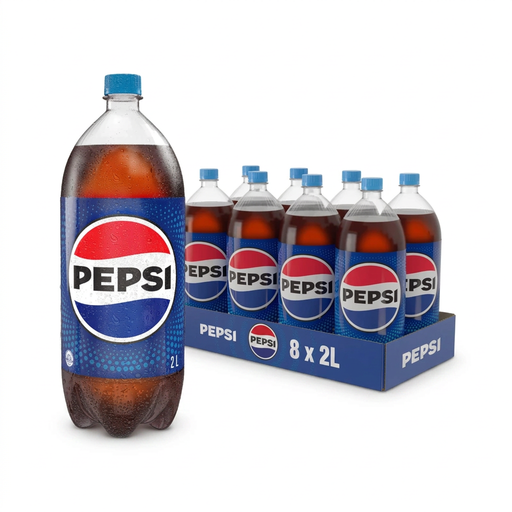 No image available
For a shared breakfast when standard Pepsi is the intended choice; this is eight 2-litre bottles, not one. The product description lists 4.5g sugars per 100ml and 11g per 250ml, plus caffeine and the sweeteners acesulfame K and sucralose.
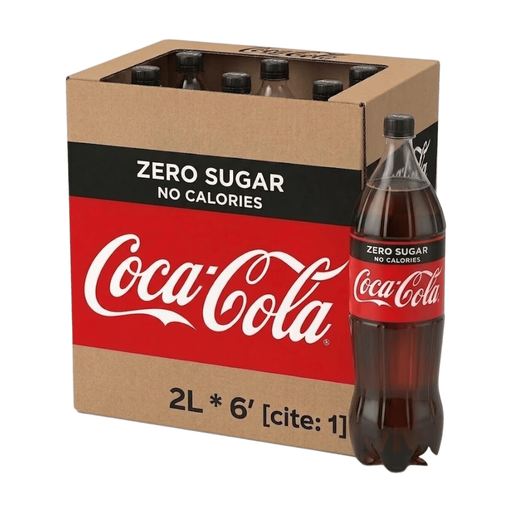 No image available
Six 2-litre bottles for shoppers choosing a zero-sugar cola and for whom caffeine is acceptable. The product description states 0g sugars per 100ml and lists caffeine and sweeteners, including aspartame; it also identifies a phenylalanine source.
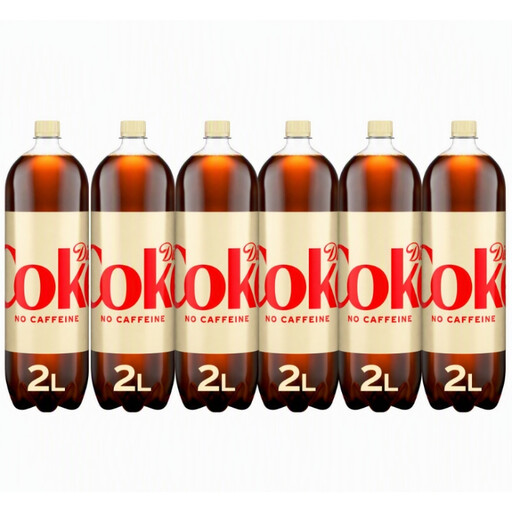 No image available
This pack contains six 2-litre bottles, and its product description states 0g sugars per 100ml and lists sweeteners and a phenylalanine source. Although the title says Caffeine Free, conflicting caffeine statements mean you should check the specific bottle label before relying on it for caffeine avoidance.
A 2-litre bottle makes eight 250ml glasses. Tesco’s Coca-Cola Original Taste listing and the checked Sainsbury’s Cola and Pepsi Max listings use that serving size; check the serving shown on your chosen bottle when comparing nutrition information.
No. PepsiCo UK lists caffeine in standard Pepsi Max, and the checked Coca-Cola Zero Sugar ingredients include caffeine flavouring. For caffeine avoidance, check that the exact variant and its bottle label say caffeine-free.
Follow that bottle’s storage instructions. Sainsbury’s Cola 2L says to refrigerate after opening and use within 3 days; ASDA Classic Cola also advises refrigeration and best use within 3 days.
No. The sugar amount on the bottle is unchanged by serving it with a meal. The NHS identifies sugars in fizzy drinks as free sugars; if you are comparing recipes, read the ‘of which sugars’ figure per 100ml and for the amount you plan to pour.