Students organising a shared first shop
A single bottle can serve a move-in meal or gathering without committing the household to storing a multipack.


For a shared student move-in, choose a single 2-litre bottle if the group is likely to finish it within the time stated on its label after opening; a multipack makes more sense only if you have room for the extra bottles. Decide between regular, zero-sugar and explicitly caffeine-free cola by checking the exact variant: the regular and zero-sugar bottles compared here have different sugar figures, and “zero sugar” does not mean caffeine-free.
A 2-litre bottle is worth considering when several people will share it, provided the group can follow its storage instructions once opened.
A single bottle can serve a move-in meal or gathering without committing the household to storing a multipack.
Regular, diet and zero-sugar colas have different stated sugar amounts. Compare the same serving size on the bottles you are considering.
Check for an explicitly caffeine-free variant rather than relying on “diet” or “zero sugar” in the name.
Start with how many people will share the cola, then compare the exact bottles’ nutrition and ingredient labels.
| Priority | What to check | Your needs |
|---|---|---|
| Amount to share | A 2-litre bottle contains eight 250 ml servings, as stated on the Coca-Cola Original Taste listing at ASDA. Check the bottle’s instructions for storage after opening. | We are sharing cola at move-in, but I would rather choose one bottle than store several if we will not use a multipack. |
| Sugar per serving | Compare sugars using the same 250 ml serving size. ASDA lists 27 g for Coca-Cola Original Taste and 11 g for Pepsi Regular; its Diet Cola listing states below 0.5 g. | I want to know how much sugar is listed for the amount I plan to pour, not judge by the words “regular” or “diet” alone. |
| Caffeine and ingredients | Read the exact variant name and ingredients. Tesco describes its Diet Cola as containing caffeine and sweeteners; the Joybuy Pepsi Max Caffeine Free 2L listing explicitly names a caffeine-free variant. | If I am avoiding caffeine or a particular ingredient, I need the label for the bottle we will actually buy. |
| Shared taste preference | Agree on a regular, diet or zero-sugar recipe before choosing a brand. Check the full variant name: Pepsi Regular and Pepsi Max, for example, are different products. | The people sharing the bottle may prefer a familiar regular cola, while others may want a zero-sugar option. |
ASDA lists 27 g sugars per 250 ml for Coca-Cola Original Taste and 11 g for Pepsi Regular, while its Diet Cola listing states below 0.5 g per 250 ml. The variant changes what is in the glass.
Compare the nutrition panels at the same serving size before choosing for a group.
A zero-sugar name describes sugar, not caffeine. Tesco’s Diet Cola listing, for instance, identifies caffeine despite stating no added sugar.
If caffeine matters to your choice, look for an explicitly caffeine-free variant and check its bottle label.
Sainsbury’s Cola Zero 2L instructs shoppers to refrigerate it after opening and use it within three days. That matters if only one person expects to drink it occasionally.
Check the chosen bottle’s instructions and consider a smaller pack if the group will not finish it in time.
These examples show why the exact recipe matters more than the brand name alone; they do not imply that every variant is stocked by the same retailer.
Coca-Cola Original Taste and Coca-Cola Zero Sugar are distinct 2-litre options on the ASDA listings.
Pepsi Regular, Pepsi Max and Pepsi Max Caffeine Free are separately named cola variants.
RC Cola International describes an international beverage business.
Tesco Diet Cola is an own-label 2-litre option alongside the branded bottles in its range.
Sainsbury's Cola Zero is an own-label 2-litre bottle.
ASDA lists both Diet Cola and Classic Cola in 2-litre bottles.
These Joybuy options contain multiple 2-litre bottles for a shared household. If you only need one bottle for move-in day, account for the extra bottles before choosing a pack.
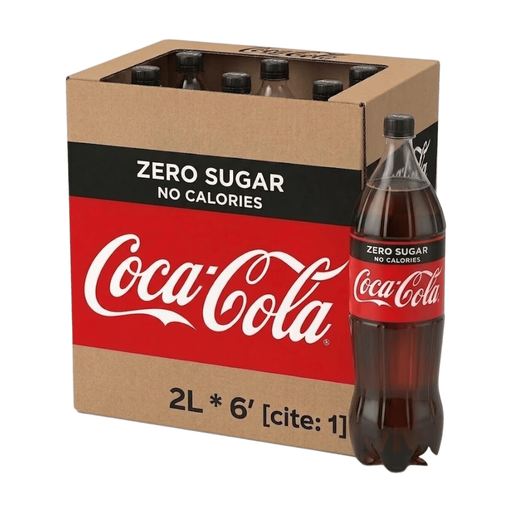 No image available
Six 2-litre bottles give a group several bottles to share, but require space beyond a single-bottle shop. Check the exact bottles’ ingredients if caffeine, sweeteners or a source of phenylalanine matters to your choice.
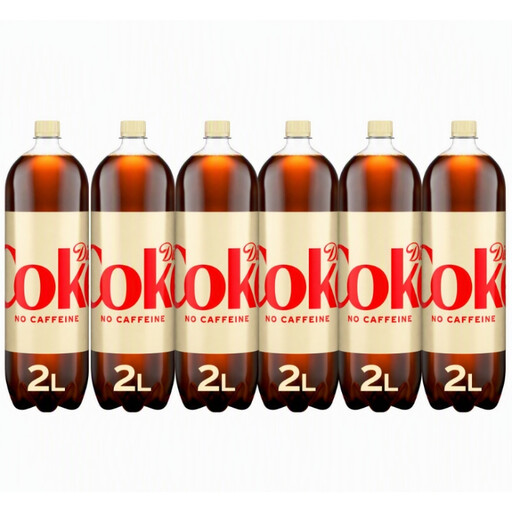 No image available
This six-bottle, 2-litre pack is sized for sharing and needs storage space. Although its title says Caffeine Free, the listing also contains a conflicting caffeine statement: check the exact bottle label before relying on it to avoid caffeine.
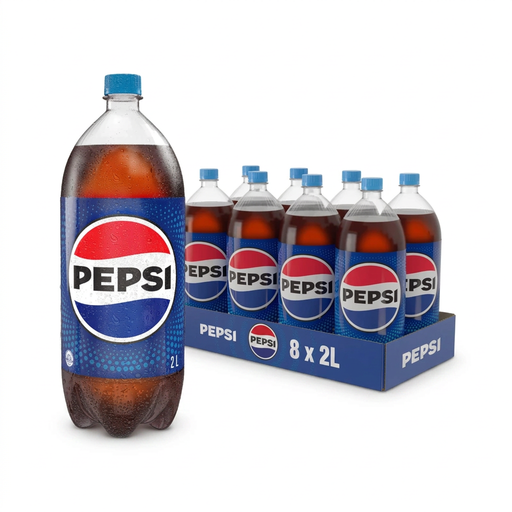 No image available
Eight 2-litre bottles may suit a household planning to share regular cola over several occasions, provided there is room to store them. Compare the exact bottles’ per-serving sugar figure and ingredients with any zero-sugar option under consideration.
A 2-litre bottle holds eight 250 ml servings, the serving count shown on ASDA’s Coca-Cola Original Taste listing. Compare nutrition figures using the amount you expect to pour.
No. ASDA lists 27 g sugars per 250 ml for Coca-Cola Original Taste and 11 g for Pepsi Regular, while Tesco lists 0 g per 250 ml for Pepsi Max. Read the nutrition panel for the exact variant you buy.
No. Sugar and caffeine are separate things to check. Look for an explicitly caffeine-free variant and confirm the exact bottle label; the Diet Coke Caffeine Free multipack shown above has conflicting caffeine wording in its listing.
Follow that bottle’s storage instructions. Sainsbury’s Cola Zero 2L, for example, instructs shoppers to refrigerate it after opening and use it within three days.
Check the ingredients, including any allergens, and the bottle volume. UK guidance from the Department for Environment, Food & Rural Affairs and the Food Standards Agency identifies these as food-labelling information; the exact bottle’s nutrition and ingredient details help you distinguish the cola variants discussed here.