Hosts serving a shared meal
If cola will sit alongside food for a group, use the number and size of expected pours to work out how many bottles to bring. Several 2-litre listings describe eight 250ml servings per bottle.


For a shared festival-food table, choose 2-litre colas by the sugar and caffeine options guests need, then plan how many bottles to bring. The Coca-Cola Original Taste, Sainsbury’s Cola and ASDA Classic Cola listings each describe a 2-litre bottle as eight 250ml servings; larger pours will mean fewer servings per bottle.
If cola will sit alongside food for a group, use the number and size of expected pours to work out how many bottles to bring. Several 2-litre listings describe eight 250ml servings per bottle.
Regular and zero-sugar bottles have different ingredient and sugar listings. If caffeine matters to guests, check that separately rather than treating a zero-sugar name as a caffeine-free claim.
Work out the required number of 2-litre bottles before choosing a single bottle or multipack, especially if guests may pour more than 250ml at a time.
Start with the number of servings, then compare the exact variants you might put on the table. Sugar content and caffeine status are separate checks.
| Priority | What to check | Your needs |
|---|---|---|
| Servings | Several listed 2-litre bottles give eight 250ml servings. Count the bottles in a multipack and allow for larger pours. | I need enough cola for a shared table, without assuming every guest will take the labelled serving size. |
| Sugar and sweeteners | Compare sugars using the same labelled quantity, such as per 250ml. Read the ingredients when choosing between regular and zero-sugar variants. | Some guests may prefer a zero-sugar option alongside regular cola; I want to know which bottle is which before serving. |
| Caffeine | Check the exact variant name and bottle label. A zero-sugar name alone does not establish that a cola is caffeine-free. | If caffeine avoidance matters to anyone at the table, I need a bottle whose caffeine status I can confirm. |
| Flavour choice | Identify whether guests expect a particular original-taste brand or would accept a different regular or zero-sugar cola. Do not treat those formulations as identical. | I may want to offer more than one flavour or formulation rather than make a single choice for the whole group. |
These names address different characteristics. Sainsbury’s Cola Zero lists less than 0.5g sugars per 250ml but also lists caffeine-containing flavourings.
Check sugars, sweeteners and caffeine on each exact bottle before deciding which variants to serve.
Eight 250ml servings use the full 2 litres. Larger cups or pours reduce the number of servings available from each bottle.
Plan quantities around the pours you expect, and check how many 2-litre bottles a multipack contains.
A pack of cans will not follow the same bottle count or 250ml serving plan as a 2-litre bottle.
Confirm the container size and pack quantity if changing product or brand for the event.
These brand references describe particular listed products and ranges, not every cola made by each brand or the products in the Joybuy selection below.
ASDA Groceries lists Coca-Cola Original Taste in a 2-litre bottle, while Sainsbury’s lists a 2-litre Coca-Cola Zero Sugar variant.
Tesco lists Pepsi Max No Sugar in a 2-litre bottle; Sainsbury’s also lists a separately named Pepsi Max No Caffeine No Sugar 2-litre variant.
Tesco Groceries lists 2-litre Classic Cola, Diet Cola, Xero Cola and Caffeine Free Diet Cola variants.
Sainsbury’s lists regular Cola and Cola Zero in 2-litre bottles.
ASDA Groceries lists Classic Cola in a 2-litre bottle alongside branded 2-litre colas.
RC Cola International describes its cola brand, while an Amazon UK listing shows a can multipack.
These multipacks offer regular and zero-sugar cola in 2-litre bottles for a shared festival-food table. Check the Diet Coke pack’s physical label before relying on it for a caffeine-free choice.
 No image available
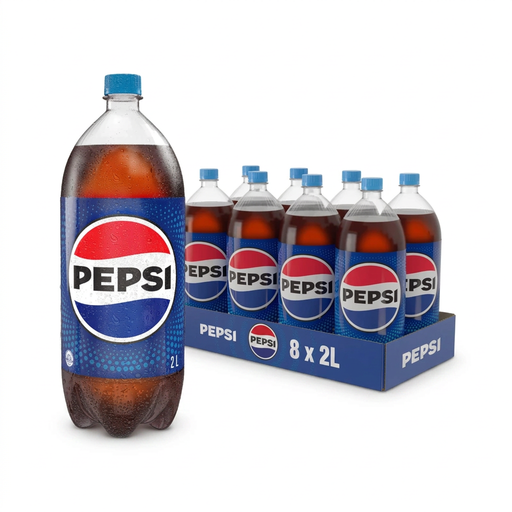
An eight-bottle pack for serving regular cola to a group. Each bottle is 2 litres; the product information lists sugar, sweeteners and caffeine, so this is neither a zero-sugar nor a caffeine-free choice.
 No image available
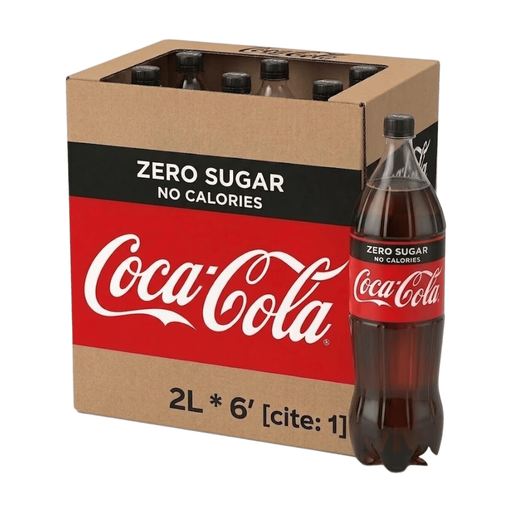
A six-bottle pack when the shared table needs a zero-sugar cola option. The product information lists 0g sugars per 100ml and includes caffeine and sweeteners, including aspartame; it is not a caffeine-free choice.
 No image available
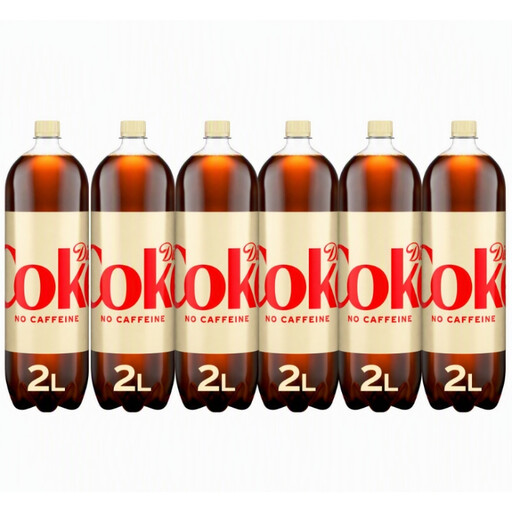
This six-bottle pack lists 0g sugars per 250ml. Although the name says Caffeine Free, the product information contains conflicting caffeine statements: check the physical bottle before relying on it for caffeine avoidance. It contains aspartame, a source of phenylalanine, and the product description says it is unsuitable for people with PKU.
Plan on eight 250ml servings if pouring that size: Coca-Cola Original Taste, Sainsbury’s Cola and ASDA Classic Cola listings each use an eight-serving basis for a 2-litre bottle. Larger pours will give you fewer servings, so use your expected cup size when counting bottles.
Not necessarily. Zero-sugar refers to sugar, while caffeine needs a separate check. Look for the exact no-caffeine variant and confirm its bottle label; the Diet Coke Caffeine Free multipack shown here has conflicting caffeine statements in its product information.
Check the exact variant’s ingredients, allergen information where applicable, nutrition values and caffeine wording on the physical bottle. That matters when guests are choosing between regular, zero-sugar and caffeine-free colas, or when a product description and label need reconciling.