Someone buying a drink with one desk lunch
A single can makes the amount of drink—and the caffeine stated for that serving—easier to identify than an open large container.


If you need 2 litres for several desk lunches or for sharing, a multipack of separately sealed cans meets the total-volume requirement without being a single 2-litre bottle. Tesco and Sainsbury’s list formats such as 4 × 500ml and 8 × 250ml; their listings do not establish whether a single 2-litre energy-drink bottle is available elsewhere. For one lunch, choose a serving by checking its caffeine and sugar label, and plan food separately from the drink.
A single can makes the amount of drink—and the caffeine stated for that serving—easier to identify than an open large container.
If 2 litres means total stock rather than one container, individually sealed cans can be used on separate occasions or shared.
Sainsbury’s lists a 900ml Lucozade Energy bottle. Check its own label rather than assuming it has the same ingredients or caffeine content as a high-caffeine can.
Decide whether 2 litres means one container or several servings, then compare the label for the amount you intend to drink at lunch.
| Priority | What to check | Your needs |
|---|---|---|
| Pack format | Check the container count and volume. Tesco and Sainsbury’s list 4 × 500ml packs; Tesco also lists an 8 × 250ml pack. Each format totals 2 litres, but none is one bottle. | If I need drinks for several lunches, separate cans work. If I need one 2-litre container, the pack total does not meet that requirement. |
| Caffeine | Read the amount for the exact can and count caffeine from other drinks. Red Bull UK states 80mg per 250ml Red Bull Energy Drink can; Monster Energy UK states 160mg per 500ml Original Green can. The European Food Safety Authority’s 2015 assessment discusses daily intake from all sources, not just energy drinks. | I want to know how much caffeine comes with the serving I choose for lunch, especially if I also drink coffee or tea. |
| Sugar and variant | Compare the exact variant’s nutrition panel, including the stated serving size. Monster Energy UK states 55g sugar for a 500ml Original Green can and 0g for a 500ml Absolutely Zero can; both product pages state 160mg caffeine. | A zero-sugar choice may matter to me, but I would still check its caffeine rather than assume it is caffeine-free. |
| Lunch food | Choose food for lunch independently of the drink. The NHS Eatwell Guide describes food-group balance across a day or week; a can is not a way to assess the food in a meal. | When lunch is rushed, I still need to decide what to eat, whether or not I buy an energy drink. |
Four 500ml cans or eight 250ml cans add up to 2 litres, but neither pack contains a 2-litre bottle.
Check both the number of containers and the volume of each before choosing a pack for sharing or separate lunches.
Caffeine adds up across cans and other drinks. Red Bull UK states 80mg per 250ml Red Bull Energy Drink can, while Monster Energy UK states 160mg per 500ml Original Green can; those figures apply to those named products.
Check the exact variant’s label and decide how many cans you intend to drink on an occasion.
Monster Energy UK lists different sugar amounts for its 500ml Original Green and Absolutely Zero cans, even though both pages state 160mg caffeine.
Compare the named variant and its nutrition panel, not just the brand or can size.
An energy drink does not answer the separate question of what food to have at lunch. The NHS Eatwell Guide considers food groups across a day or week.
Plan something to eat first, then decide whether you want a drink alongside it.
These references help distinguish pack formats and named variants; they are not a list of products available on Joybuy.
Tesco lists Red Bull Energy Drink in an 8 × 250ml format, totalling 2 litres across cans.
Tesco and Sainsbury’s list Monster 4 × 500ml packs, providing 2 litres in four cans.
Tesco and Sainsbury’s list Relentless Origin in 4 × 500ml packs.
Sainsbury’s lists a 900ml Lucozade Energy bottle; Lucozade describes its Energy range as drinks containing glucose.
Sainsbury’s lists Blue Bolt in a 6 × 250ml format, totalling 1.5 litres.
Tesco is a retailer reference for comparing listed energy-drink pack formats, rather than a named drink variant here.
These energy-drink multipacks each contain 2 litres across separate cans, for keeping over several desk lunches or sharing. They are alternatives when total stock matters, not substitutes for a single 2-litre bottle.
 No image available
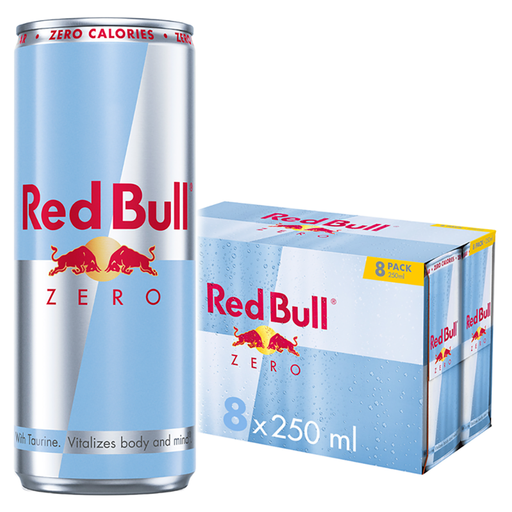
Eight separate 250ml cans total 2 litres for separate lunch occasions or sharing. This is the Zero variant, not one large bottle; check the can’s caffeine and nutrition label when choosing a serving.
 No image available
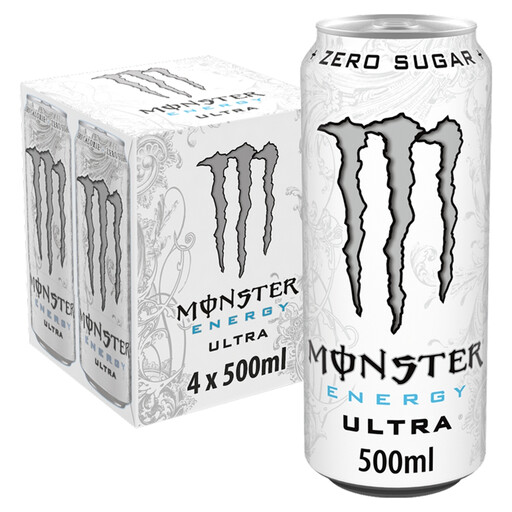
Four separate 500ml cans total 2 litres if you need stock for several occasions. This is the Ultra Zero Sugar variant, not the Original Green or Absolutely Zero variants described above; check its own label for caffeine per can.
 No image available
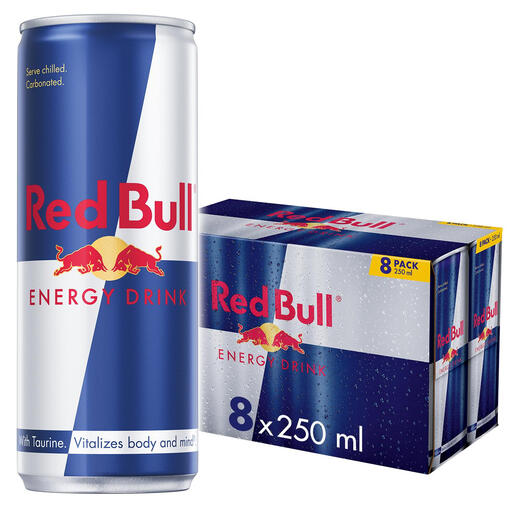
Eight separate 250ml cans total 2 litres, rather than forming one bottle. Red Bull UK states 80mg caffeine per 250ml can of Red Bull Energy Drink; check the can label when planning a serving alongside other caffeine sources.
No. A 4 × 500ml pack or an 8 × 250ml pack totals 2 litres in separate cans. Check the container count if one bottle, rather than total stock, is what you need.
No. The Tesco and Sainsbury’s listings cited here show cans and multipacks, while Sainsbury’s also lists a 900ml Lucozade Energy bottle. Those listings do not establish what every other retailer sells, so check the container size on any bottle you consider.
Read the exact can’s caffeine label and include caffeine from coffee, tea and other sources that day. Red Bull UK states 80mg for a 250ml Red Bull Energy Drink can, and Monster Energy UK states 160mg for a 500ml Original Green can; neither figure should be applied to a different variant without checking.
Treat food and the drink as separate choices. The NHS Eatwell Guide describes food-group balance across a day or week, so plan what you will eat at lunch rather than relying on the drink as the meal.
The Department of Health and Social Care announced a ban on sales of high-caffeine energy drinks to under-16s in England from April 2027. That is a future England measure as of October 2026, not a basis for assuming the same rule or start date applies across the UK; an individual retailer may also have its own sales policy.