People replacing fluid after exercise
If you have been sweating and mainly want a drink, water is the NHS-recommended choice for replacing lost fluid. A large container or added caffeine does not answer that need by itself.


Choose by what you want from the drink, not by bottle size: the NHS recommends water for replacing fluid lost through exercise, while a sports drink is worth considering if you specifically want to compare carbohydrate and electrolyte content. An energy drink is a separate caffeine choice, not a substitute for fluid replacement. The examined Tesco listings do not establish a single 2-litre energy-drink bottle; a pack of smaller bottles is a different format.
If you have been sweating and mainly want a drink, water is the NHS-recommended choice for replacing lost fluid. A large container or added caffeine does not answer that need by itself.
If carbohydrate and electrolytes matter to your choice, compare the formulation and serving size on a sports-drink label. Lucozade describes its Sport range as designed for adults taking part in exercise or sport.
If alertness is your reason for considering an energy drink, check caffeine from the drink alongside other sources. Compare sugar and caffeine separately: Monster Energy UK lists the same caffeine amount for the Original and Zero-Sugar products described below.
Decide whether you primarily want to replace fluid, compare a sports-drink formulation or have caffeine. Then check the exact container size and label.
Choose when: Replacing fluid lost through ordinary exercise is the main aim; the NHS recommends water for this purpose.
Trade-off: Plain water does not offer the added ingredients you may be looking for in a formulated sports drink.
Consider when: You specifically want to compare carbohydrate and electrolytes in a drink intended for exercise.
Trade-off: Check the nutrition label and bottle size rather than assuming every sports drink has the same formulation or comes in a 2-litre bottle.
Consider when: Caffeine, rather than post-exercise fluid replacement, is the reason for buying it.
Trade-off: Caffeine and sugar vary by product; a zero-sugar version need not contain less caffeine.
| Priority | What to check | Your needs |
|---|---|---|
| Fluid replacement | Decide whether a drink alone meets your aim. The NHS recommends water for replacing fluid lost through physical activity. | After sweating, I mainly want to replace fluid rather than choose a drink for its caffeine. |
| Sports-drink ingredients | Check carbohydrate and electrolyte information on the exact label, including the stated serving size. | I want to compare a drink formulated for exercise, not assume an energy drink serves the same purpose. |
| Caffeine and sugar | Read caffeine and sugar amounts for the exact variant and container; account for caffeine from other drinks or products too. | Keeping track of caffeine matters to me, even if I choose a zero-sugar version. |
| Container format | Distinguish a single bottle from a multipack and check the volume of each container. Tesco lists sports-drink bottles including 750ml and 900ml formats. | I need to know whether I am buying one large bottle or several smaller drinks that add up to 2 litres. |
Volume does not tell you whether a drink matches your reason for buying it. The NHS recommends water for replacing fluid lost through exercise; a sports drink and an energy drink are different choices.
Start with the need—fluid, particular sports-drink ingredients or caffeine—then check the product type and container size.
An energy drink adds to caffeine consumed in coffee, tea or other products. Red Bull UK lists 80mg in a 250ml can; Monster Energy UK lists 160mg in a 500ml can of Original.
Check the amount for the exact drink and serving you plan to have, alongside other caffeine you consume.
Monster Energy UK lists 160mg caffeine per 500ml for both Original and Zero-Sugar, although their stated sugar amounts are 55g and 0g respectively.
Compare sugar and caffeine as separate label entries on the exact variant.
Four 500ml bottles total 2 litres but are not one 2-litre container. Likewise, a 900ml sports-drink bottle is neither that format nor an energy drink.
Check the number of containers, volume per container and drink type before ordering.
These examples help distinguish the drink types and label details; they do not indicate which brands are available in the Joybuy selection below.
An energy-drink reference for checking caffeine in a 250ml can.
An energy-drink reference for comparing regular and zero-sugar variants.
Lucozade describes Sport as a range designed for adults taking part in exercise or sport.
An energy-drink example listed by Tesco in a 500ml format.
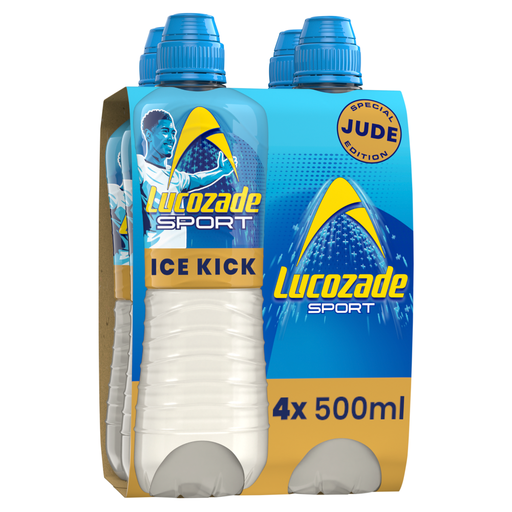
This option is a sports-drink multipack for someone considering a drink for exercise. Its four bottles total 2 litres, but it is neither an energy drink nor a single 2-litre bottle.
 No image available
For a sports-drink option after exercise, this pack provides four separate 500ml bottles rather than one 2-litre energy-drink bottle. Check the exact pack label for the ingredient and nutrition details relevant to your choice.
Bottle size alone is not a reason to choose an energy drink for fluid replacement. The NHS recommends water for replacing fluid lost through physical activity; consider a sports drink separately if you want to compare its exercise-focused ingredients.
No. Four 500ml bottles add up to 2 litres, but remain four separate containers. Check both the pack total and the volume of each bottle if the single-container format matters to you.
Not necessarily. Monster Energy UK lists 160mg caffeine per 500ml for both Original and Zero-Sugar, despite stating 55g and 0g sugar respectively. Check both figures on the exact variant.
Read the caffeine amount for the container or serving you intend to drink, then consider other caffeine sources you use that day. An energy drink’s caffeine content is a separate consideration from replacing fluid lost through exercise.