What should you check before buying?
Decide first whether the drink is for carrying on a ride or opening afterwards. Then compare the exact bottle label and the pack size.
| Priority |
What to check |
Your needs |
| Carbohydrate |
Compare carbohydrate per 100 ml on the exact bottle. ASDA lists 10.6 g for Coca-Cola Original Taste 2L; Tesco lists 4.5 g for Fanta Orange 2L and 4.4 g for Sprite 2L. Pepsi UK lists 0 g for Pepsi Max. |
If I want carbohydrate in a drink, a zero-sugar option will not serve that purpose. For an occasional stop, I can work out a portion from the label rather than treating the whole 2-litre bottle as a serving. |
| Ride fluids |
Check what water you can carry or obtain and whether your plan includes electrolytes. British Cycling discusses water alongside an electrolyte-containing drink for longer cycling events and notes that electrolytes are lost in sweat. |
On a longer ride, especially when I expect to sweat, I need a practical way to carry or refill drinks; a family bottle at home does not answer that question. |
| Sugar and acidity |
Read the sugars figure as well as the carbohydrate figure. Oxford Health NHS Foundation Trust explains that sugars are relevant to tooth decay and acidic fizzy drinks to enamel erosion; a sugar-free label does not settle the acidity question. |
If I often have fizzy drinks around rides, I want to consider how frequently I drink them, whether or not I choose a sugary version. |
| Exact bottle |
Check the current pack size, nutrition panel and ingredients, including sweeteners or caffeine where relevant. Do not assume that regular, diet and zero-sugar versions have the same formulation. |
I may be buying one bottle for a shared drink or a multipack for home. I want the version and quantity on the listing to match what I intend to use. |
Which brand examples are relevant?
These are references for comparing particular 2-litre drinks, not a claim that every version of each brand has the same nutrition profile.
Coca-Cola
Coca-Cola Original Taste 2L is a carbohydrate-containing option to compare if the drink is for an occasional shared stop or after a ride.
- ASDA lists 10.6 g carbohydrate and 10.6 g sugars per 100 ml, with 27 g of each per 250 ml serving.
- Its carbohydrate figure alone does not make it a complete drink plan for a prolonged ride.
Pepsi
Pepsi Max is a cola option when the purchase is for flavour rather than carbohydrate during a ride.
- Pepsi UK lists 0 g carbohydrate and 0 g sugars per 100 ml for Pepsi Max.
- That figure means Pepsi Max is not a carbohydrate source; its ingredients also list caffeine flavouring.
Fanta
Fanta Orange 2L offers an orange-flavoured comparison with the regular cola example.
- Tesco lists 4.5 g carbohydrate and 4.4 g sugars per 100 ml for Fanta Orange 2L.
- It contributes less carbohydrate per 100 ml than the Coca-Cola Original Taste 2L figure listed by ASDA; check the version rather than generalising across Fanta drinks.
Sprite
Sprite 2L is a lemon-lime option when comparing the carbohydrate on individual bottles.
- Tesco lists 4.4 g carbohydrate and 4.4 g sugars per 100 ml for Sprite 2L.
- Its ingredients include citric and tartaric acids; the carbohydrate figure does not establish an electrolyte formulation.
Tesco
Tesco Sparkling Diet Lemonade 2L is an own-label option for a fizzy drink outside a carbohydrate-fuelling plan.
- Tesco lists less than 0.1 g available carbohydrate and less than 0.1 g sugars per 100 ml.
- It is not a practical carbohydrate source; the ingredients include citric acid.
Joybuy options for sharing after a ride
These 2-litre multipacks suit a drink kept at home or shared after cycling: one regular cola and two options named for avoiding sugar or caffeine. Choose separately what you will carry if you need drinks during a ride.
 No image available
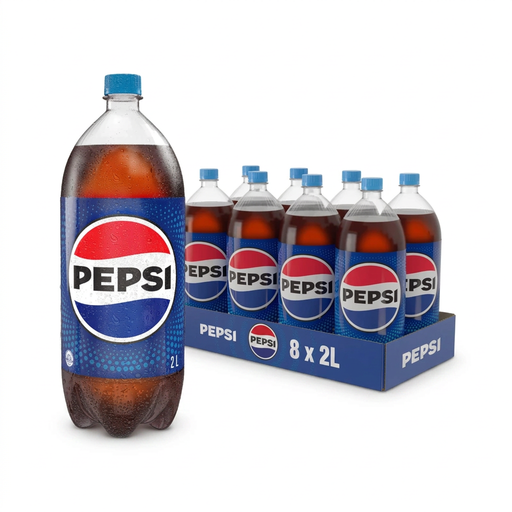
PEPSI Regular 8x2L
An eight-bottle pack for home or shared drinks after a ride. Check the carbohydrate and sugars on the bottles if either figure matters to your choice; plan on-bike water and other drinks separately for a prolonged ride.
View on Joybuy
 No image available
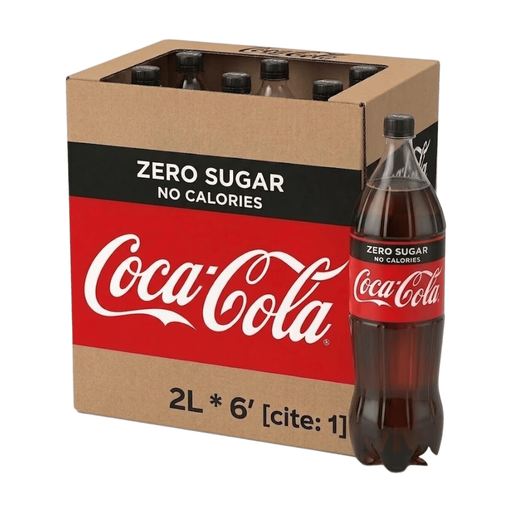
Coca-Cola Zero Sugar 2L x 6
A six-bottle, zero-sugar cola pack for sharing outside a ride-fuelling plan. Check the exact bottle label for its carbohydrate figure and ingredients; do not choose it as a carbohydrate source on the strength of the pack name.
View on Joybuy
 No image available
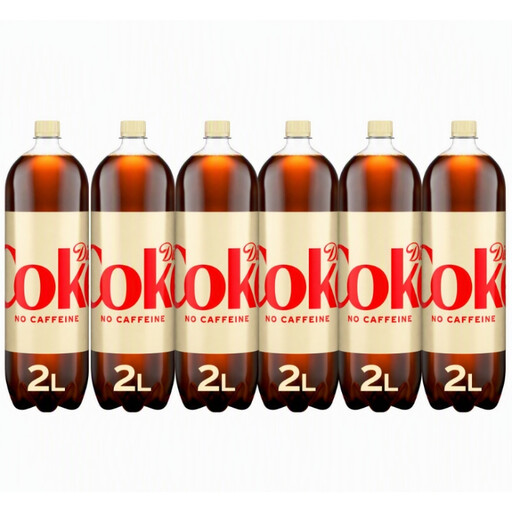
Diet Coke Caffeine Free 2L x 6
A six-bottle option for home sharing when a caffeine-free cola is the preference. Check the current bottle label for carbohydrate and ingredients rather than treating the multipack as an on-bike drink plan.
View on Joybuy
Questions about fizzy drinks and cycling
Can a 2-litre fizzy drink replace the drinks planned for a long ride?
Do not rely on one as the whole plan. A sugary fizzy drink can contain carbohydrate, but British Cycling discusses water alongside an electrolyte-containing drink for longer cycling events; you also need to consider how you will carry or refill drinks on your route.
Which of these fizzy drinks contains the most carbohydrate per 100 ml?
Among the named examples with figures here, Coca-Cola Original Taste 2L has the highest listed amount: ASDA gives 10.6 g per 100 ml. Tesco lists 4.5 g for Fanta Orange 2L and 4.4 g for Sprite 2L, while Coca-Cola GB lists 4.3 g for Dr Pepper. This compares those particular formulations, not every drink or variant.
Is a zero-sugar fizzy drink a source of carbohydrate for a ride?
The examples here are not useful carbohydrate sources: Pepsi UK lists 0 g per 100 ml for Pepsi Max, and Tesco lists less than 0.1 g available carbohydrate per 100 ml for Sparkling Diet Lemonade. If carbohydrate is your purpose, check the exact drink and portion.
Does choosing sugar free remove the dental considerations?
No. Oxford Health NHS Foundation Trust explains that sugars are relevant to tooth decay, while acidic drinks, including fizzy drinks, can contribute to enamel erosion. Those are separate considerations when deciding how often to have a fizzy drink.
What should I read on a 2-litre bottle before buying?
Check the variant and pack size, then compare carbohydrate and sugars per 100 ml and read the ingredients for sweeteners or caffeine where relevant. Use the label on the bottle you buy when working out what a serving contains.


