What should you check?
Settle on the flavours and number of bottles first, then compare nutrition and ingredients on the variants you are considering.
| Priority | What to check | Your needs |
|---|
| Flavour mix |
Check the exact flavour and whether it is regular or zero sugar. Do not assume variants within one brand have the same ingredients. |
Different people in my household prefer different drinks, so several bottles of one cola may not suit the whole shop. |
| Sugars |
Compare sugars per 100ml, then check the stated serving size against the glass you expect to pour. Pepsi UK lists 0g per 100ml for Pepsi MAX and 4.5g per 100ml for regular Pepsi; Tesco lists 27g per 250ml for Coca-Cola Original Taste. |
I want to tell the regular and zero-sugar bottles apart before buying enough for several servings. |
| Caffeine |
Read the ingredients on the exact bottle. Pepsi MAX lists caffeine, whereas Pepsi has a separate MAX No Caffeine product line; confirm both the variant and bottle format. |
Someone at home needs a drink selected without relying on the words ‘zero sugar’ to mean caffeine free. |
| Sweeteners and warnings |
Check the sweeteners and any phenylalanine notice on the label. Pepsi UK lists sweeteners and a source of phenylalanine for Pepsi MAX. |
If a label warning matters in our household, I need to check the specific flavour and variant, not just its brand. |
| Bottle quantity |
Check both the 2-litre bottle size and the number of bottles in a pack. Plan where a multipack will be stored. |
For a large shop, I want enough bottles for the occasion without buying a pack that is awkward to store. |
Brand and range references
These examples show why the variant name and label matter; a brand name alone does not establish the sugar or caffeine content of every bottle in its range.
Coca-Cola
Original Taste and Zero Sugar are distinct cola choices.
- Tesco’s Coca-Cola Original Taste listing describes a 2-litre bottle as eight 250ml glasses.
- The same listing declares 27g sugars per 250ml for Original Taste; check the nutrition panel when choosing between variants.
Pepsi
The range includes regular Pepsi, Pepsi MAX and a separate Pepsi MAX No Caffeine line.
- Pepsi UK lists 4.5g sugars per 100ml for regular Pepsi and 0g per 100ml for Pepsi MAX.
- Pepsi MAX lists caffeine and a source of phenylalanine; check the precise variant if either matters.
Fanta
Fruit-flavoured alternatives to cola include regular and zero-sugar variants.
- Coca-Cola GB lists 4.5g sugars per 100ml for Fanta Orange and 0.4g per 100ml for Fanta Fruit Twist Zero.
- Those figures describe different flavours as well as different variants; check the label of the bottle selected.
Sprite
Lemon-and-lime choices include regular Sprite and Sprite Zero.
- Coca-Cola GB lists 4.4g sugars per 100ml for regular Sprite and 0g for Sprite Zero.
- The sugar figure does not replace an ingredients check for the chosen variant.
Dr Pepper
A fruit-flavoured fizzy drink with regular and zero-sugar versions.
- Tesco’s 2-litre regular Dr Pepper listing declares 11g sugars per 250ml.
- The regular listing includes caffeine and a phenylalanine notice; check the exact bottle rather than applying one variant’s details to another.
Tesco
Tesco lists own-label 2-litre fizzy drinks alongside branded options.
- Its grocery listings include Tesco Xero Cola in a 2-litre bottle.
- Check the individual product’s flavour, ingredients and nutrition panel when comparing it with a branded bottle.
Joybuy bottle packs
These multipacks cover zero-sugar and regular cola in 2-litre bottles. Compare the number of bottles and the exact label details before choosing one for a family shop.
 No image available
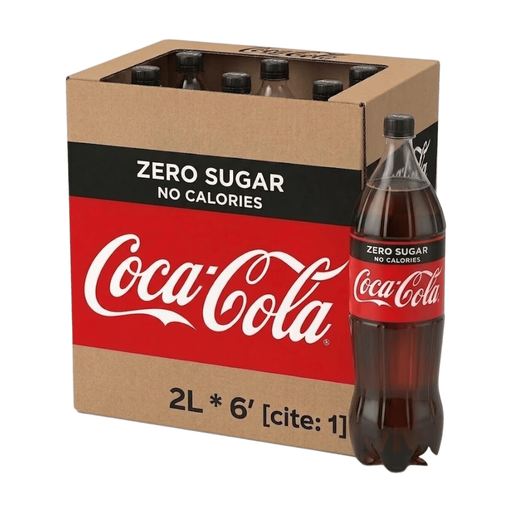
Coca-Cola Zero Sugar 2L × 6
A six-bottle cola pack for a household choosing a zero-sugar variant. The stated nutrition is 0g sugars per 100ml; the product information also identifies caffeine, sweeteners and a phenylalanine warning. Check the bottles’ labels if those ingredients or warnings matter to your household.
View on Joybuy
 No image available
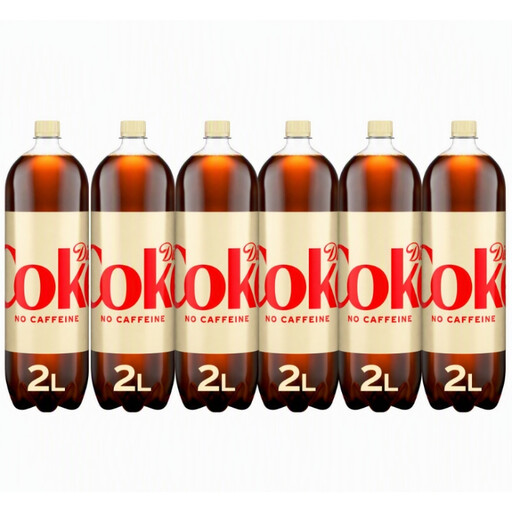
Diet Coke Caffeine Free 2L × 6
This six-bottle cola pack declares 0g sugars per 100ml and lists sweeteners and a source of phenylalanine. Although the variant is named Caffeine Free, its product information contains conflicting caffeine statements. If avoiding caffeine matters, check the ingredients on the exact bottles before relying on the name.
View on Joybuy
 No image available
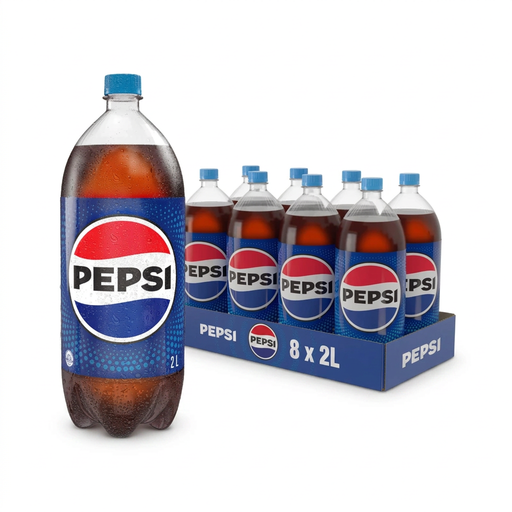
Pepsi Regular 8 × 2L
An eight-bottle pack for a household choosing regular cola and able to store the bottles. Pepsi UK lists 4.5g sugars per 100ml for regular Pepsi; the product information also identifies caffeine and sweeteners. Check the bottle label and the portion you expect to serve.
View on Joybuy
Frequently asked questions
How many glasses can you pour from a 2-litre bottle?
A 2-litre bottle fills eight 250ml glasses. Tesco uses that serving guide for Coca-Cola Original Taste; the number of glasses will change if you pour different amounts.
Does zero sugar mean caffeine free?
No. Pepsi MAX lists caffeine despite declaring 0g sugars per 100ml, and Dr Pepper Zero also lists caffeine. Look for a specifically caffeine-free variant and check its ingredients; Pepsi MAX No Caffeine is a separate product line.
Why does a fizzy-drink label mention phenylalanine?
The notice appears on drinks containing aspartame. Pepsi UK lists a source of phenylalanine for Pepsi MAX. If that warning matters to someone in your household, check the label of the exact bottle before serving it.
Should every bottle for a family shop be zero sugar?
Not necessarily: choose a mix that reflects the household’s flavour preferences and the portions you expect to pour. Compare sugars per 100ml on each regular and zero-sugar variant, and check caffeine, sweeteners and warnings separately.
Is the online nutrition panel enough to choose a bottle?
Use it to compare options, then read the bottle when it arrives or is picked up. Ingredients and nutrition information can change with reformulation, so the label is the practical check for the drink you will serve.


