Hosts serving a mixed group
A 2-litre bottle divides into eight 250ml glasses. If not everyone wants cola, consider whether a second flavour or water would give guests a choice.


Choose a zero-sugar cola if guests want cola without sugar, or a regular cola if they specifically prefer that recipe. Sprite Lemon Lime and Fanta Orange offer non-cola flavours, but their listed 2-litre versions contain both sugar and sweeteners. A 2-litre bottle provides eight 250ml glasses by volume; check how many guests will drink it and whether anyone needs to avoid caffeine or aspartame.
For a shared Chinese takeaway, guest numbers, flavour preferences and label requirements matter more than bottle size alone.
A 2-litre bottle divides into eight 250ml glasses. If not everyone wants cola, consider whether a second flavour or water would give guests a choice.
Check sugars per 100ml on each bottle. Tesco lists Coca-Cola Original Taste 2L at 10.6g and Pepsi Max 2L and Coca-Cola Zero Sugar 2L at 0g on that basis.
Read the exact variant’s ingredients and warnings rather than relying on a cola or zero-sugar name. The NHS states that aspartame is unsuitable for people with phenylketonuria (PKU).
Choose the flavour route first, then compare servings and the details on the bottle that matter to your guests.
| Priority | What to check | Your needs |
|---|---|---|
| Servings | Divide 2 litres into the glass sizes you plan to serve. Tesco lists eight 250ml glasses for Coca-Cola Original Taste 2L; its Pepsi Max 2L listing also identifies eight servings. | I’m serving several guests and want to judge whether one bottle will cover the meal, especially if water or another drink is on the table. |
| Flavour and sugars | Compare sugars per 100ml on the same basis. Tesco lists 10.6g for Coca-Cola Original Taste and 0g for Pepsi Max and Coca-Cola Zero Sugar; ASDA lists 4.4g for both Sprite Lemon Lime and Fanta Orange. | Some guests prefer cola, while others want lemon-lime or orange. I want to know whether the flavour I choose also contains sugar. |
| Aspartame | Check the ingredients for aspartame and the label for a phenylalanine warning. The NHS states that aspartame is unsuitable for people with PKU. | If someone has PKU, I need to check the exact bottle rather than assuming a zero-sugar or fruit-flavoured drink will suit them. |
| Caffeine | Look for caffeine information on the exact variant; do not treat every zero-sugar cola as caffeine-free. Tesco lists caffeine flavouring in its Coca-Cola Zero Sugar and Pepsi Max 2L ingredients. | For a later meal, I may want a drink specifically labelled caffeine-free, but I still need to check the bottle being served. |
| Acidity | Do not treat a zero-sugar label as an answer to every dental concern. The NHS notes that acidic carbonated drinks are associated with dental erosion, including sugar-free versions. | I want water available alongside fizzy drinks rather than making the bottle the only drink for the evening. |
Tesco lists 0g sugars per 100ml for Pepsi Max and Coca-Cola Zero Sugar, against 10.6g for Coca-Cola Original Taste. The same bottle volume does not mean the same sugar content.
Compare the sugars-per-100ml line, then use the serving information to understand what is in a glass.
The NHS says acidic carbonated drinks can contribute to dental erosion even when they are sugar-free.
Keep water available with the meal, particularly if guests would otherwise sip a fizzy drink throughout the evening.
The NHS states that aspartame is unsuitable for people with PKU. The listed Pepsi Max, Coca-Cola Zero Sugar, Sprite and Dr Pepper products include aspartame or a phenylalanine warning.
For someone with PKU, check the ingredients and warning on the bottle received before serving it.
Ingredients and nutrition information can differ between variants or change over time, so a familiar brand name is not enough when a specific ingredient matters.
Check the received bottle’s nutrition panel, ingredients, warnings and best-before marking.
These named 2-litre products illustrate different flavour and label choices; the figures apply to the specified listings, not every drink from each brand.
The 2-litre Original Taste and Zero Sugar products offer different sugar profiles under the same brand.
Pepsi Max No Sugar Cola 2L is a zero-sugar cola option for guests who want that flavour route.
Sprite Lemon Lime 2L offers a non-cola flavour for the table.
Fanta Orange 2L is an orange-flavoured alternative when guests do not all want cola.
Dr Pepper 2L is another flavour choice for guests who already prefer it.
These cola multipacks offer 2-litre bottles for a larger gathering or more than one occasion. Check the pack quantity before choosing one for a single takeaway night.
 No image available
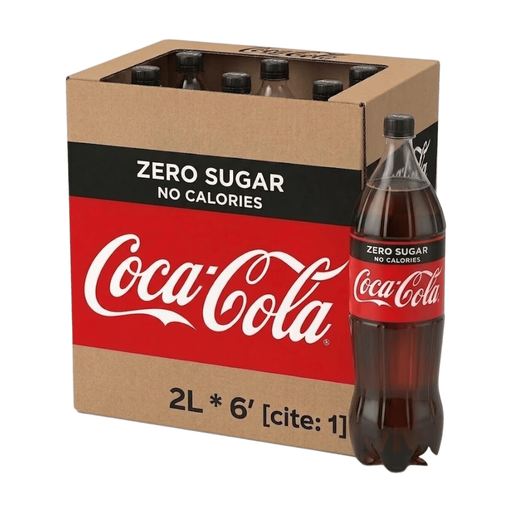
A zero-sugar cola choice if several 2-litre bottles suit your guest numbers or future meals. This is a six-bottle pack, not one bottle; check storage space and the received bottles’ caffeine and aspartame information if either matters to a guest.
 No image available
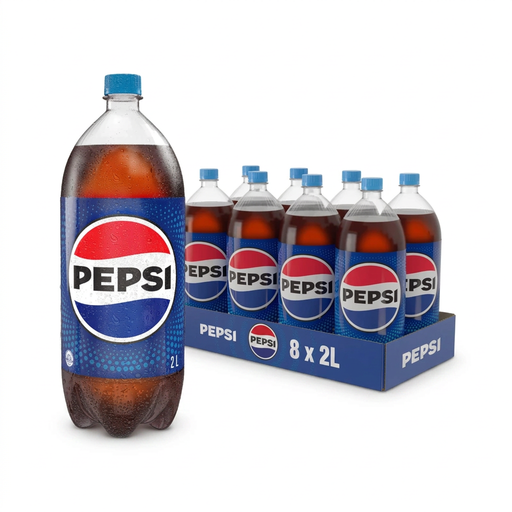
A regular-cola route for a group that prefers it, supplied as eight 2-litre bottles. Consider whether that quantity suits the occasion and your storage space; check the bottle’s sugar, sweetener and caffeine details before serving.
 No image available
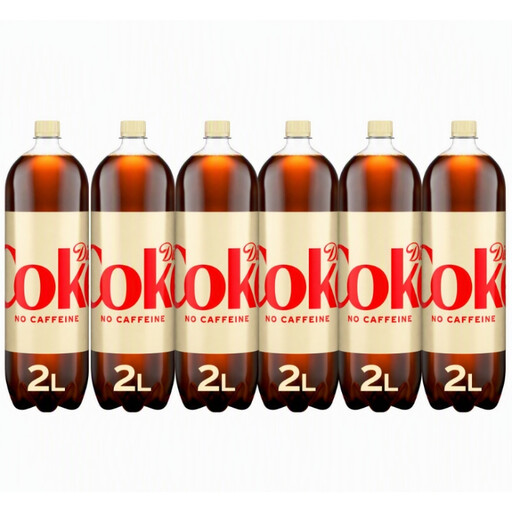
This six-bottle cola pack may suit more than one meal. Although the title says Caffeine Free, the product information also contains a caffeine-related warning: check the exact bottle before choosing it for someone avoiding caffeine. Its ingredient information also identifies aspartame, which matters for guests with PKU.
It provides eight 250ml glasses by volume. Tesco identifies eight servings for its Coca-Cola Original Taste and Pepsi Max 2L listings; if guests use larger glasses or want different flavours, plan the drinks accordingly.
No. ASDA lists 4.4g sugars per 100ml for both Sprite Lemon Lime 2L and Fanta Orange 2L, and both listings identify sweeteners. Check the nutrition panel rather than judging sugar content by flavour.
No. Tesco lists caffeine flavouring in its Pepsi Max and Coca-Cola Zero Sugar 2L ingredients. If caffeine matters, look for the exact caffeine-free variant and check the bottle label.
Check for aspartame in the ingredients and a phenylalanine warning on the actual bottle. The NHS states that aspartame is unsuitable for people with PKU; a zero-sugar label does not establish suitability.
No. The NHS says acidic carbonated drinks are associated with dental erosion, including sugar-free drinks. Sugar content and acidity are separate considerations when choosing what to serve.