Households sharing a snack at home
A 2-litre bottle can be poured into several glasses. The useful comparison is the drink’s label alongside the portion you intend to serve, rather than the bottle size alone.


For a school-holiday snack at home, compare sugars per 100ml and the amount you plan to pour before choosing a regular or zero-sugar drink: Coca-Cola GB lists 10.6g sugars per 100ml for Coca-Cola Original Taste, while Tesco lists 0g for Pepsi Max 2L. Zero sugar does not tell you whether a drink contains caffeine or sweeteners, so check the exact bottle label and any child-related cautions before serving.
A 2-litre bottle can be poured into several glasses. The useful comparison is the drink’s label alongside the portion you intend to serve, rather than the bottle size alone.
If cola flavour is the preference, compare the sugars per 100ml on regular and zero-sugar variants. Check sweeteners and label warnings on the particular bottle too.
Look for an explicit caffeine-free designation and check the ingredients. A zero-sugar cola can still contain caffeine, and variants from the same brand need not have the same formulation.
Start with the intended glass size, then check the exact variant’s sugar, caffeine and ingredient information before deciding how many bottles to buy.
| Priority | What to check | Your needs |
|---|---|---|
| Sugar per glass | Read sugars per 100ml and apply that figure to the amount poured. Coca-Cola GB lists 10.6g per 100ml for Original Taste: a 250ml glass contains 26.5g. | I want to know what is in a child’s glass, not just what is in the bottle. For context, the NHS states a maximum recommended daily sugar amount of 24g for children aged 7 to 10. |
| Caffeine | Check the exact variant’s ingredients and any explicit caffeine-free wording. Tesco’s Pepsi Max 2L ingredient listing includes caffeine despite listing 0g sugars per 100ml. | For a later snack, I may want a drink labelled caffeine free; a zero-sugar label alone does not settle that question. |
| Ingredients and warnings | Read the sweeteners and warnings on the bottle you are buying, including any statement that it contains a source of phenylalanine. | I need to check the particular formulation when an ingredient or label warning matters to someone in the household. |
| Flavour | Choose between cola, orange and lemon-and-lime by the named variant, then compare its own nutrition and ingredient label rather than applying another flavour’s figures. | We may prefer a fruit flavour to cola, but I do not want the flavour name to stand in for a sugar or caffeine check. |
| Pack quantity | Distinguish one 2-litre bottle from a multipack of 2-litre bottles. Check the bottle count as well as the size of each bottle. | One bottle may suit a single occasion; a six-bottle pack is a different quantity to bring home and store. |
Coca-Cola GB lists 10.6g sugars per 100ml for Original Taste, which works out to 26.5g in a 250ml glass. The NHS states a maximum recommended daily sugar amount of 24g for children aged 7 to 10.
Decide how much you intend to pour, then calculate the sugars from the per-100ml label before choosing a regular drink for a child’s snack.
Tesco lists 0g sugars per 100ml for Pepsi Max 2L, but its ingredient listing includes caffeine. Sugar and caffeine are separate label checks.
If avoiding caffeine matters, check the exact variant for an explicit caffeine-free designation and review its ingredients.
Coca-Cola GB lists 4.4g sugars per 100ml for Sprite, while Sprite Zero lists 0g. The names refer to different formulations.
Compare the sugars per 100ml on the specific orange or lemon-and-lime bottle you intend to buy.
Department for Education guidance on school food concerns food and drink provided in state-funded schools in England. It does not describe a family snack at home during the holidays.
For food provided at school, check the relevant nation, setting and school policy. For a home snack, use the product label and the household’s requirements to make the choice.
These examples show why the variant name matters; figures and ingredient statements for one drink should not be applied to every drink from the same brand.
Regular and zero-sugar cola variants give households different sugar and caffeine labels to compare.
Pepsi Max is a 2-litre zero-sugar cola example listed by Tesco.
An orange-flavoured alternative for households choosing a fruit flavour rather than cola.
Lemon-and-lime variants with different listed sugar amounts.
A differently flavoured option for households looking beyond cola or citrus.
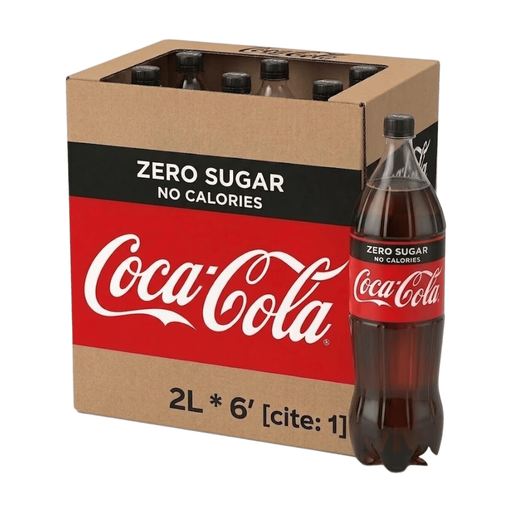
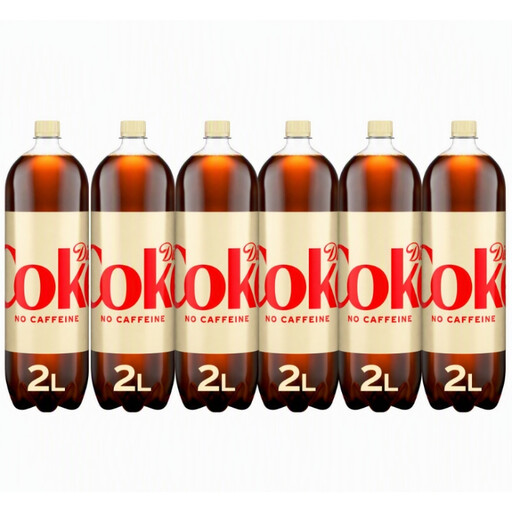
These options are six-packs of 2-litre zero-sugar cola bottles, rather than single bottles or a selection of every fizzy-drink flavour. Check their child-related cautions and caffeine information before considering them for a family snack.
 No image available
This six-bottle pack is a zero-sugar cola option for home sharing, not a single 2-litre bottle. Its product information lists 0g sugars per 100ml, says it contains caffeine and a source of phenylalanine, and states that it is not recommended for children. Read the bottle label before considering it for a school-holiday snack.
 No image available
This is a six-pack of 2-litre bottles, with 0g sugars per 100ml listed in its product information. Although the name says Caffeine Free, the safety wording also refers to caffeine; check the exact bottle label before choosing it to avoid caffeine. The product information also mentions a source of phenylalanine and cautions against using it as a primary drink for very young children.
The Department for Education guidance on school food covers food and drink provided in state-funded schools in England, not a family snack consumed at home. For a home occasion, compare the exact drink’s label with the portion you intend to serve.
Coca-Cola GB lists 10.6g sugars per 100ml, so 250ml contains 26.5g. The NHS states a maximum recommended daily sugar amount of 24g for children aged 7 to 10; check the intended glass size rather than judging by the 2-litre bottle alone.
No. Tesco’s Pepsi Max 2L listing gives 0g sugars per 100ml but includes caffeine in the ingredients. If caffeine avoidance matters, check the exact variant’s label for an explicit caffeine-free designation.
Read the warning on the exact bottle before buying, particularly where phenylalanine is relevant to someone in the household. A zero-sugar description alone does not tell you which sweeteners or warnings appear on that variant.
No. Department for Education guidance concerns food and drink provided in state-funded schools in England; that scope does not establish a UK-wide rule for home snacks or every school setting. Check the relevant nation and school policy when choosing food or drink to provide at school.