Choose a no-sugar 2-litre drink if sugar content is your main consideration, but check caffeine and sweeteners separately: no-sugar does not mean caffeine-free. If your household prefers a regular cola or a particular fruit flavour, compare the labels per 100 ml and stock only as many large bottles as you are likely to use within their dates and after-opening instructions.
Who is stocking the pantry?
The useful choice depends on who will drink the bottles, which flavours they want and how quickly a 2-litre bottle will be finished once opened.
Households sharing large bottles
For meals, gatherings or everyday use, check the best-before dates before stocking several bottles. Follow each drink’s storage directions and consider whether the household will finish an opened bottle within its stated instructions.
Shoppers comparing sugar content
Regular and no-sugar versions of a familiar flavour need separate label checks. Compare sugars per 100 ml, then look at the ingredients if sweeteners matter to your choice.
Cola drinkers avoiding caffeine
A no-sugar cola is not necessarily caffeine-free. Look for a specifically named caffeine-free variant and check the current bottle label rather than relying on its sugar designation.
What should you check before choosing?
Start with sugar, caffeine and flavour, then check whether the bottle size and storage instructions suit the way your household will use it.
| Priority |
What to check |
Your needs |
| Sugar and serving size |
Compare sugars per 100 ml on the nutrition labels. Check the stated serving size before comparing what a glass contains; a 2-litre bottle holds multiple servings. |
I want to distinguish a regular drink from a no-sugar version before stocking several bottles, without assuming that all drinks of the same size have the same composition. |
| Caffeine and sweeteners |
Read the variant name and ingredients separately from the sugar declaration. If avoiding caffeine, check for a caffeine-free designation; check any phenylalanine-source statement where relevant. |
A no-sugar cola could suit us, but I also need to know whether it contains caffeine or particular sweeteners. |
| Flavour |
Choose between cola, orange, lemon-lime and other fruit-flavour drinks. Check the exact variant: regular and no-sugar versions need not have the same ingredients. |
There is little point stocking several bottles of a flavour the household is unlikely to finish. |
| Storage and use rate |
Check each bottle’s best-before date and unopened-storage directions. Follow the exact product’s instructions after opening rather than applying another brand’s timeframe. |
If we open a 2-litre bottle only occasionally, I would rather plan around how quickly we use it than stock more than we can manage. |
Common stocking mistakes
-
Treating all 2-litre bottles as nutritionally alike
The size tells you how much drink is in the bottle, not its sugar content. Tesco Groceries lists Coca-Cola Original Taste at 10.6 g sugars per 100 ml, while Pepsi UK lists Pepsi Max at 0 g sugars per 100 ml.
Compare nutrition information on the same per-100-ml basis, then check the serving size if you want to compare individual glasses.
-
Assuming no sugar also means no caffeine
Pepsi UK lists caffeine in Pepsi Max. Its separately named Pepsi Max No Caffeine is the variant intended for shoppers seeking both no sugar and no caffeine.
Check the exact variant and ingredients before buying for someone who avoids caffeine. Review sweetener and phenylalanine-source statements separately where relevant.
-
Buying several bottles without checking dates and opening instructions
A pantry stock can outlast a household’s use rate, and after-opening directions differ by product. Tesco Groceries instructs buyers to consume Tesco Classic Cola within 3 days of opening; that timeframe should not be applied to every fizzy drink.
Check dates before stocking up, rotate older bottles forward and follow the storage and after-opening instructions on each bottle.
Brand and product-line references
These named variants illustrate why flavour, sugar and caffeine need separate checks; a brand name alone does not identify the bottle’s formulation.
Coca-Cola
Its 2-litre cola variants include Original Taste, Zero Sugar and the separately named Zero Sugar Zero Caffeine.
- Tesco Groceries lists Original Taste at 10.6 g sugars per 100 ml and identifies Zero Sugar Zero Caffeine as a no-sugar, caffeine-free variant.
- Do not treat Zero Sugar and Zero Sugar Zero Caffeine as the same variant; check the bottle when caffeine avoidance matters.
Pepsi
Pepsi Max and Pepsi Max No Caffeine offer distinct no-sugar cola choices.
- Pepsi UK lists 0 g sugars per 100 ml for both variants and identifies No Caffeine separately.
- Standard Pepsi Max contains caffeine. Pepsi UK states that these variants contain a source of phenylalanine.
Fanta
Fanta Zero Orange provides an orange-flavour alternative to cola in a 2-litre bottle.
- Tesco Groceries lists Fanta Zero Orange at 0.4 g sugars per 100 ml and labels the product no sugar.
- It contains sweeteners; check the exact variant’s label rather than applying its details to other orange drinks.
Sprite
Its lemon-lime 2-litre range includes regular Sprite and Sprite Zero Sugar.
- Tesco Groceries lists regular Sprite at 4.4 g sugars per 100 ml and Sprite Zero Sugar at 0 g sugars per 100 ml.
- Both listings include sweeteners; the Zero Sugar listing also carries a phenylalanine-source warning.
Dr Pepper
Its 2-litre fruit-flavour drink is an option for households choosing a flavour other than cola or citrus.
- Tesco Groceries lists the 2-litre drink at 4.3 g sugars per 100 ml.
- The listing describes a drink with sugar and sweeteners and includes caffeine; it is not a no-sugar or caffeine-free variant.
Tesco
Tesco Classic Cola is a 2-litre own-brand cola with its own formulation and storage directions.
- Tesco Groceries lists 4.4 g sugars per 100 ml and instructs shoppers to keep unopened bottles cool and out of sunlight.
- It contains caffeine and sweeteners. Tesco instructs buyers to consume it within 3 days once opened.
Joybuy 2-litre multipacks
These multipacks cover regular cola and Zero Sugar cola for shared pantry use. Compare the number of bottles with your household’s use rate, and check the exact label for ingredients and after-opening directions.
 No image available
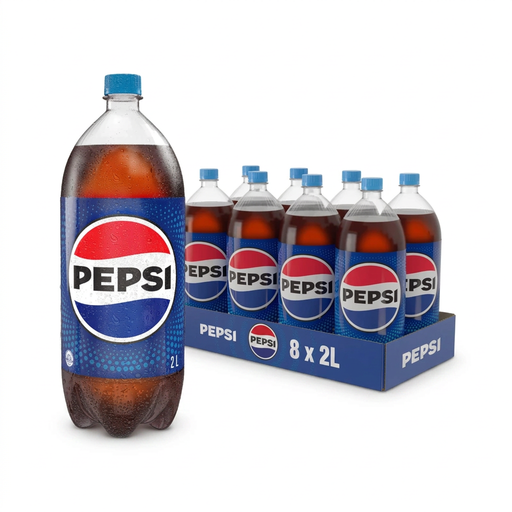
PEPSI Regular 8 × 2L
Eight 2-litre bottles suit a household planning to share regular cola across several occasions. Check the bottle’s sugar, caffeine and sweetener information, and follow its instructions after opening.
View on Joybuy
 No image available
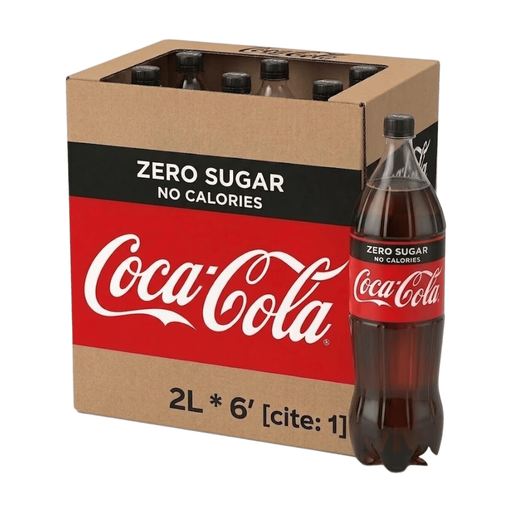
Coca-Cola Zero Sugar 2L × 6
Six 2-litre bottles provide a multipack of Zero Sugar cola for shared use. Zero Sugar does not by itself mean caffeine-free; check the ingredients and the bottle’s after-opening instructions.
View on Joybuy
 No image available
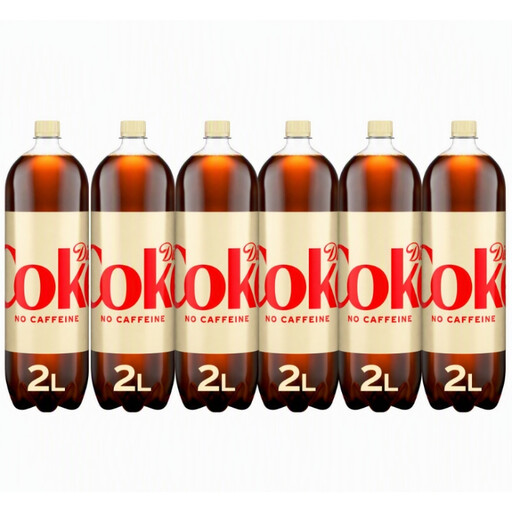
Diet Coke Caffeine Free 2L × 6
This six-bottle 2-litre pack is labelled Caffeine Free, but its caffeine information conflicts. If avoiding caffeine matters, check the current bottle label before relying on that designation. Check the sweeteners and phenylalanine-source warning where relevant.
View on Joybuy
Questions about storing and choosing drinks
How should I store unopened 2-litre fizzy drinks?
Follow each bottle’s directions and check its best-before date before adding it to your pantry. Tesco Groceries lists cool, dry storage for Coca-Cola Original Taste, Sprite and Dr Pepper, while its Tesco Classic Cola directions say to keep the bottle cool and out of sunlight.
Does no sugar mean a fizzy drink is caffeine-free?
No. Pepsi UK lists caffeine in Pepsi Max and identifies Pepsi Max No Caffeine as a separate variant. When caffeine avoidance matters, check that the exact bottle is designated caffeine-free and read its current ingredients.
How long can I keep a 2-litre bottle after opening?
Follow the timeframe and storage directions on the bottle you buy. Tesco Groceries says to consume Tesco Classic Cola within 3 days once opened, but that instruction does not establish the opened life of other brands.


