Casual 5k runners buying water for home
A 2-litre bottle can be kept for drinking before or after a run. It makes more sense as a home or finish-area supply than as a bottle to hold throughout the route.


A 2-litre bottle is a practical still-water supply for drinking before or after a 5k, or for sharing, but a smaller container is easier to take on the route. Water provides fluid, not carbohydrate fuel. The British Nutrition Foundation says drinks with added carbohydrate and electrolytes may be advisable for higher levels of activity lasting more than an hour, so consider the whole session rather than assuming every 5k calls for a sports drink.
The useful bottle size depends on where you plan to drink the water, not just how much the pack contains.
A 2-litre bottle can be kept for drinking before or after a run. It makes more sense as a home or finish-area supply than as a bottle to hold throughout the route.
A multipack may reduce how often you need to replenish your supply, but check its total volume and whether you have space to store it.
Think about access to water during the session as well as what you leave at home. In hot weather, England Athletics advises runners to drink to thirst and seek help if they feel unwell.
Decide whether you need a supply to leave at home or water you can access while running. Then consider separately whether the wider session calls for carbohydrate as well as fluid.
| Priority | What to check | Your needs |
|---|---|---|
| Plain water | Check that the label identifies still water. If considering a flavoured drink instead, read its ingredients and nutrition information rather than assuming it is plain water. | I want water for drinking around my run without choosing a flavoured or carbohydrate-containing drink. |
| Fluid or fuel | Distinguish water from food or drinks containing carbohydrate. The British Nutrition Foundation identifies carbohydrate as exercise fuel and says added carbohydrate and electrolytes may be advisable for higher levels of activity lasting more than an hour. | Is this just a 5k, or part of a longer, demanding session? I can choose water for fluid without expecting it to supply carbohydrate. |
| Bottle format | Check the volume of each container, the number in the pack and the total amount to store. A 2-litre bottle serves a different purpose from a smaller container taken on the route. | For water before or after the run, I can leave a large bottle at home or at the finish. If I need access while moving, I would rather carry a smaller container. |
| Hot conditions | Plan where water will be accessible, not just how much is in a bottle. England Athletics advises runners in hot weather to drink to thirst and seek help if they feel unwell. | On a hot run, I need a way to reach water when I want it; a 2-litre bottle left elsewhere will not provide access along the route. |
Plain water supplies fluid but not carbohydrate. The British Nutrition Foundation identifies carbohydrate as a fuel for the brain and muscles during exercise.
Choose water when fluid is what you need. If the 5k is part of a longer, demanding session, consider food or a carbohydrate-containing drink as a separate decision.
A large bottle can be useful at home or at a finish area while being awkward to hold during a run.
Keep the 2-litre bottle as your supply and choose a smaller container or an accessible refill point if you want water on the route.
Six 2-litre bottles provide considerably more water to store than one bottle.
Check both the volume per bottle and the pack total against your available storage space and intended use.
A 2-litre label describes the container, not how much any individual should drink. University Hospitals Plymouth NHS Trust notes that general fluid guidance may not apply in heart failure or renal failure.
If you have an individual fluid plan from a clinician, use that plan rather than the bottle size to set your intake.
Brand names alone do not settle the 2-litre question: check the size of the particular product you are considering.
Tesco Groceries lists its own still natural mineral water as both a single 2-litre bottle and a six-pack of 2-litre bottles.
Highland Spring provides mineral information for shoppers comparing named water sources.
Volvic UK lists its natural mineral water in 500ml, 1L and 1.5L sizes.
Tesco Groceries lists Evian natural mineral water in a 1.5L bottle.
Tesco Groceries lists Buxton still natural mineral water in a 6 x 1.5L multipack.
These options cover two different uses: 2-litre bottles to keep as a still-water supply, and smaller resealable containers if you want water accessible on the move.
 No image available
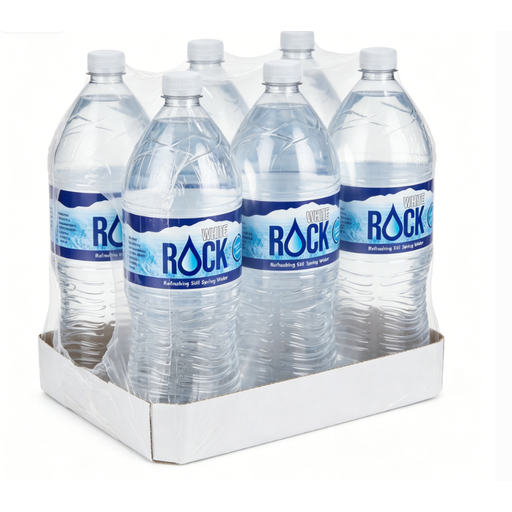
Six 2-litre bottles suit a still-water supply for before or after a 5k, or for sharing. Allow space for the pack, and choose a smaller container if you need water while running.
 No image available
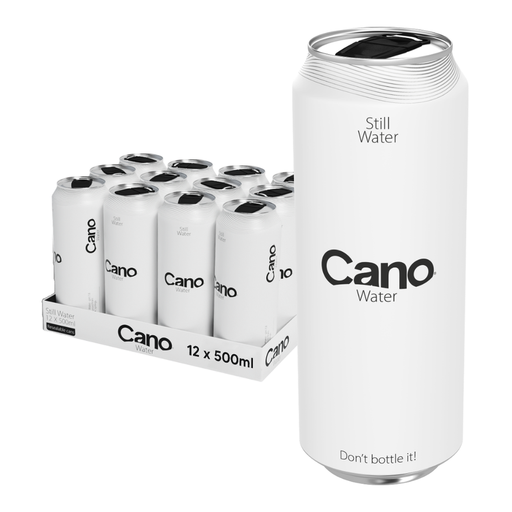
The resealable 500ml cans offer smaller portions for water on the move instead of a 2-litre household bottle. They provide water rather than carbohydrate fuel.
No: water supplies fluid, not carbohydrate. The British Nutrition Foundation identifies carbohydrate as exercise fuel and says drinks with added carbohydrate and electrolytes may be advisable for higher levels of activity lasting more than an hour. Consider whether you are preparing for a short run or a longer overall session.
A 2-litre bottle is more practical as a supply before or after the run than as something to hold throughout it. If you want water on the route, consider a smaller container or an accessible refill point. In hot weather, England Athletics advises runners to drink to thirst and seek help if they feel unwell.
Department for Environment, Food & Rural Affairs guidance says water described as spring water must come from an underground source. That description does not, by itself, tell you whether a particular bottle size suits your run or whether the water provides carbohydrate.
No. Two litres describes the bottle’s capacity, not an individual target. University Hospitals Plymouth NHS Trust notes that general fluid guidance may not apply to people with heart failure or renal failure; any individual fluid plan from a clinician takes precedence over an assumption based on bottle size.