Leisure cyclists preparing for a ride
If you want plain water before setting off, a 2-litre bottle can supply the smaller bottle you carry. The NHS notes that people active for long periods may need more fluids.


A 2-litre still-water bottle makes sense as a supply for filling smaller cycling bottles at home, in a vehicle or at a ride start; choose a separate bottle suited to drinking on the bike. Plain water supplies fluid, but mineral water should not be mistaken for a formulated electrolyte drink when substantial sweating makes salt loss a consideration.
The large bottle is most useful when you have somewhere to keep it and a smaller bottle to fill for the ride.
If you want plain water before setting off, a 2-litre bottle can supply the smaller bottle you carry. The NHS notes that people active for long periods may need more fluids.
You may need to think about both access to water and salt lost through substantial sweating. The Health and Safety Executive notes that replacing fluid alone may not address salt loss when sweating increases significantly.
A 2-litre still-water bottle can stay at home or at a ride start while smaller bottles go on the bike. Tesco Groceries and Sainsbury's Groceries both list individual 2-litre still-water formats.
Decide where you will keep the large bottle, then plan how you will carry water and drink during the ride.
| Priority | What to check | When it matters |
|---|---|---|
| Refill format | Check that the bottle is 2 litres and still water if that is the format you want. Plan to decant it into a cycling bottle rather than assuming the retail bottle fits your bike. | I can leave the large bottle at home or at the start point and take a smaller bottle on the ride. |
| Water on the ride | Check the capacity of the bottle you will carry and where you can refill it. A full 2-litre bottle contains roughly 2 kg of water before packaging. | If refill points are uncertain, I need a carrying and refill plan before setting off. |
| Sweat and salts | Consider the ride conditions separately from the water label. Health and Safety Executive guidance for substantial sweating notes that replacing fluid alone can leave salts unreplaced. | On a hot or particularly sweaty ride, I do not want to assume that plain mineral water has the composition of an electrolyte drink. |
| Mineral label | Read any stated composition in mg per litre, including sodium, and keep the product and bottle size in view. A mineral listing does not establish a sports-drink formulation. | I want to know what the bottle contains without treating naturally occurring minerals as a cycling nutrition plan. |
| Storage | Check the bottle's storage directions, particularly what to do after opening; instructions can differ between products. | If I will refill bottles over several days, I need to follow the directions on the water I actually buy. |
A full bottle is bulky and contains roughly 2 kg of water before packaging; its label does not establish that it fits a cycle bottle cage.
Use it to fill a smaller bottle at home, in a vehicle or at the start point, and check that the bottle you carry suits your bike.
A mineral label describes the water's listed composition, not a formulation for a particular ride. The Health and Safety Executive notes that substantial sweating can involve salt loss as well as fluid loss.
Check the water label for its stated mineral content, and consider ride conditions separately before choosing any electrolyte product.
These brand references help distinguish water types and bottle sizes; a brand's wider range does not establish that every format suits a 2-litre refill plan.
Tesco Groceries lists own-label British Natural Mineral Water Still in an individual 2L bottle and a 6 × 2L pack.
Sainsbury's Groceries lists British Bottled Spring Water Still in a 2L bottle.
Tesco Groceries lists Evian Natural Mineral Water in a 2-litre bottle.
Highland Spring describes its water as lightly mineralised. A separate Joybuy listing is for still water in a 6 × 1.5L pack.
Volvic UK lists natural mineral water in 500 ml, 1L and 1.5L formats.
Buxton describes its natural mineral water as originating in the Derbyshire Peak District.
This still spring-water pack contains 2-litre bottles suited to keeping as a refill supply; take water onto the bike in a separate cycling bottle.
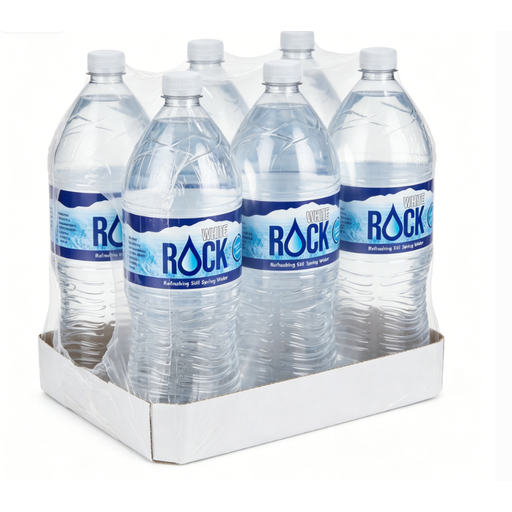 Image unavailable
The six 2-litre bottles provide still water for filling a smaller cycling bottle at home or before a ride. Check the pack label for storage directions and mineral composition if those details matter to your plans; do not assume the retail bottles fit a cycle bottle cage.
Treat a 2-litre retail bottle as a refill supply unless you have checked how you can carry and use it safely. Two litres of water weighs roughly 2 kg before packaging; a smaller bottle suited to your bike is a more practical way to keep water accessible while riding.
Plain water supplies fluid, and the NHS notes that people active for long periods may need more fluids. For conditions involving substantial sweating, the Health and Safety Executive notes that replacing fluid alone can leave salts unreplaced, so do not assume the same drink choice covers every ride.
No: a mineral composition label does not make bottled water a formulated electrolyte drink. Sainsbury's Groceries lists sodium at 8 mg per litre for its 2L still spring water, while Tesco Groceries lists 6.5 mg per litre for its 2-litre Evian natural mineral water; neither figure alone establishes what to use for a particular ride.
Follow the instructions on the bottle you buy. For example, Joybuy's Highland Spring 6 × 1.5L listing says to refrigerate it after opening and use it within seven days; that instruction belongs to that product, not every 2-litre bottle.