
24/7 全天候客户支持

免费退货

当日/次日达

品质保障

开启新人专享福利: 全场免邮 | 低至 2 折 | 免费试用 30 天 JoyPlus 会员
下载 Joybuy
As a Joybuy Product Recommendation Officer, my role is to help you navigate the crowded market of outdoor gear. A 2 person pop up tent promises the ultimate convenience for weekend getaways and festivals, but not all are created equal. Before you buy, it's worth understanding the common issues that can turn a dream trip into a damp squib.
Many buyers find themselves caught out by three main pitfalls:
instant tent is lost if the mechanism is fragile. Many cheaper models use brittle poles or weak joints that snap or bend after just one or two uses, especially when being packed away.To avoid these problems, focus on a few core specifications rather than marketing hype. Understanding these will help you select a durable and practical easy set up tent.
This is the single most important measure of how waterproof a tent's fabric is. It indicates the pressure of water it can withstand before it starts to leak. For typical UK summer camping, where you can expect anything from a light drizzle to a heavy downpour, look for a minimum HH rating of 1500mm. Anything higher, such as 3000mm, provides excellent protection and greater peace of mind. A tent with a low HH rating might be fine in a brief, light shower but is unlikely to keep you dry during prolonged rain.
For a festival tent or a lightweight tent for camping, packed size and weight are critical. However, don't sacrifice liveable space. Always check the tent's floor dimensions (length and width) in centimetres, not just the "person" rating. As a rule of thumb, for two people to camp comfortably with bags, a width of at least 150cm is advisable. If you see a 4 person pop up tent, it's often a more comfortable option for two or three people who value extra room.
A common issue in the UK's humid climate is internal condensation, which can make the inside of your tent feel damp even if it isn't raining. A good automatic tent should have features to combat this. Look for designs with multiple vents, mesh inner doors or windows. Tents with two doors offer superior cross-ventilation, helping to keep the air flowing and reduce moisture build-up overnight.
Based on these practical criteria, we've identified models that offer a reliable balance of convenience, durability and weather protection.
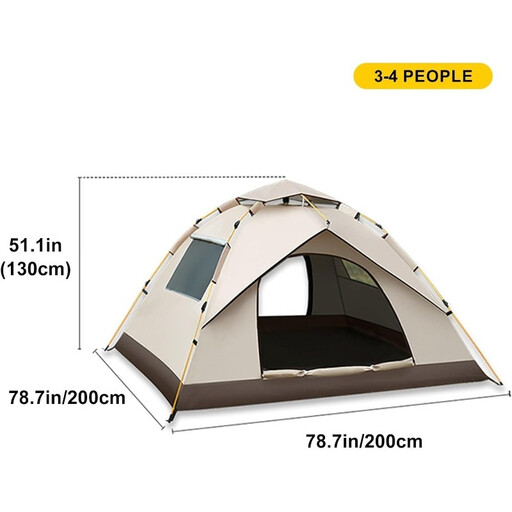
Why This Fits Their Persona: Ideal for those who prioritise a rapid, stress-free setup. Its automatic system means you can have your shelter ready in minutes, leaving more time to enjoy the festival or your weekend trip without the hassle of traditional pole assembly.
It directly addresses the waterproofing concern with a 210T polyester fabric rated to 3,000mm HH, offering robust protection against rain. Its generous floor plan (210x200cm) also avoids the "two-person squeeze," providing ample room for two adults and their gear.
The primary benefit is its automatic hydraulic system for a near-instant setup. The unique dual-door design provides excellent cross-ventilation, significantly reducing condensation.
We have compiled a complete, real-time list of products that fully satisfy these strict selection criteria and UK safety regulations.
For summer use in the UK, a Hydrostatic Head (HH) rating of 1500mm is a sensible minimum. This will handle most light to moderate rain showers. For more reliable, all-weather protection against heavy or persistent rain, we recommend choosing a waterproof camping tent with a rating of 2000mm to 3000mm.
Yes, most modern pop-up and automatic tent models can be set up in just a few minutes. The main structure often unfolds or 'pops' into shape in seconds. The remaining time is spent pegging out the guylines to ensure it is stable and secure, a process that is typically quick and straightforward.
This is often the trickiest part. While each model is different, the general technique involves a 'twist and fold' motion. It is highly recommended to practise folding it at home once or twice before your first trip. Following the manufacturer's instructions carefully will prevent damage to the poles and ensure the tent fits back into its carry bag. Rushing this step is the most common cause of a broken frame.