
24/7 Customer Support

Free returns

Same-day & Next-day Delivery

Quality Guaranteed

Unlock Your Welcome Offers: FREE Delivery | Up to 80% OFF | Free 30-day JoyPlus trial
Download the APP
A 2-slice toaster is often the practical choice for couples, students, small households and kitchens with limited worktop space. However, comparing models by appearance or wattage alone can lead to disappointing results. A narrow slot may struggle with crumpets, a difficult-to-clean design can collect crumbs, and extra digital controls may add cost without improving your daily routine.
This guide explains the specifications that matter, the common buying traps to avoid and which toaster styles suit different UK households.
A compact toaster may look convenient but still have slots that are too narrow for thick-cut bread. If you regularly eat bagels and crumpets, farmhouse loaves or chunky bakery slices, check for wide slots rather than relying on the product’s overall appearance.
Slot length also matters. Standard slots are generally suitable for ordinary sliced bread, while long-slot designs can accommodate larger or elongated slices. Always check the listed dimensions and product description before buying.
An adjustable browning toaster gives you more control, but the number of settings does not alone determine how evenly bread is toasted. Look for a combination of browning control and self-centring guides, which help position slices closer to the heating elements.
Seven settings are common across many current models. They allow adjustment from a lighter golden finish to a darker, crisper result, although actual results can vary with bread thickness, moisture and whether the bread is frozen.
Crumbs accumulate inside every toaster. A model without a removable crumb tray can be awkward to clean and may allow debris to build up around the base. Empty the tray regularly and unplug the appliance before cleaning.
Do not operate a toaster under cupboards, close to curtains or beside water. Never use a knife, fork or other metal object to remove stuck bread. If bread becomes jammed, switch off and unplug the appliance, then follow the manufacturer’s instructions.
For everyday sliced bread, standard slots may be sufficient. If you need a toaster for thick bread, look for wide slots and self-centring functionality. These are also useful for crumpets, muffins and bagels, provided the food is suitable for the appliance and prepared according to its instructions.
A high-lift lever is useful for retrieving smaller items without reaching into the slots. Some models include an anti-jam function, but this should not replace safe operation.
A practical toaster with defrost and reheat functions can make breakfast easier:
A conventional dial is simple to operate and easy to understand. A digital toaster may add an LED display, countdown timer or touchscreen controls, which can appeal to households that prefer a more visual interface.
Measure the available worktop area, including clearance around the toaster for ventilation. A small 2-slice toaster may be around 28cm wide, while a 4-slice toaster or long-slot model generally needs more room.
Power ratings in the supplied selection range from around 800W to 930W for several 2-slice models. Higher wattage does not automatically mean lower running costs or more even results. To estimate electricity use, multiply the appliance’s kilowatt rating by the hours used, then multiply by your electricity tariff.
For UK use, check that the appliance is supplied for the local 220–240V mains supply, has a suitable UK plug and includes the required conformity and safety information. Keep the manual and warranty documentation, and check whether extended warranty cover requires product registration.
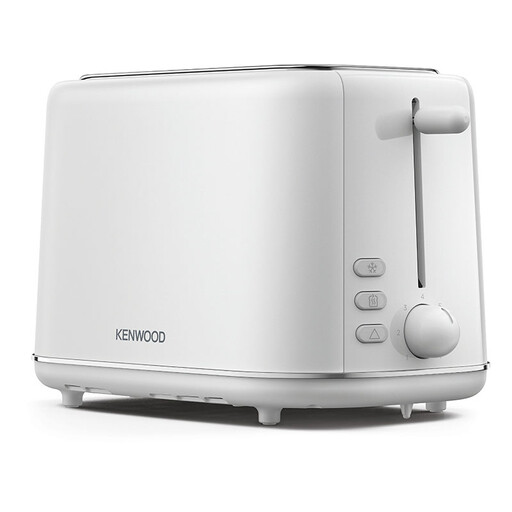
Why This Fits Their Persona: Its 2-slice format and approximately 28cm width suit students, couples and smaller UK kitchens where worktop space matters.
Seven browning settings, automatic bread-centring and defrost and reheat buttons provide practical control without a digital interface.
800W power, cool-touch exterior, removable crumb tray and integrated cord storage.

Why This Fits Their Persona: Households wanting a modern stainless-steel appliance with visual controls and capacity for different bread types may prefer this larger format.
The extra-wide long slots address the limitation of narrow openings, while the removable crumb tray supports routine cleaning.
Digital touchscreen with LED display, defrost, reheat and cancel functions, plus a stated two-year manufacturer’s warranty when registered as specified.
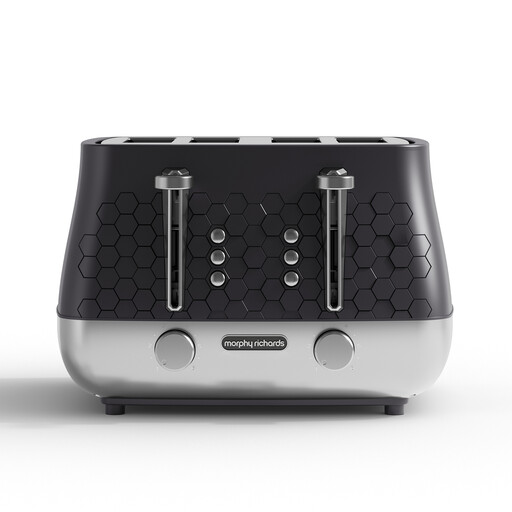
Why This Fits Their Persona: Families and shared kitchens can toast two or four slices, making the capacity more suitable for different serving sizes.
Wide slots accommodate thick bread, crumpets and bagels, while dual independent controls avoid running all four slots when only two are needed.
Four wide slots, variable browning control, high-lift levers and removable crumb trays.
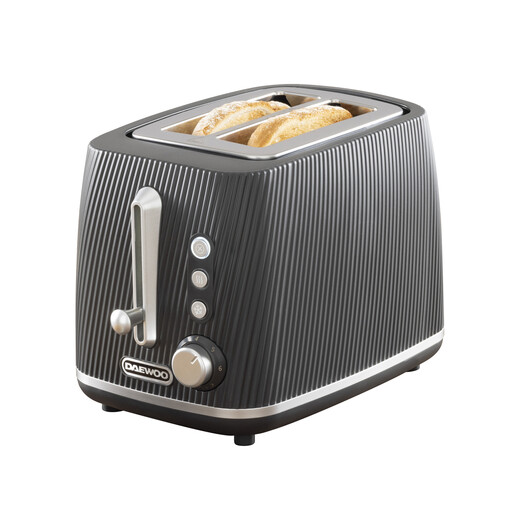
Why This Fits Their Persona: Its textured black finish and compact footprint suit shoppers coordinating a modern kitchen without moving to a larger four-slot appliance.
Extra-wide self-centring slots make the design practical for thicker bakery items, while the crumb tray helps limit worktop mess.
Seven browning levels, 850W power, cool-touch exterior, anti-slip feet and integrated cord storage.
We have compiled a complete, real-time list of products that fully satisfy these strict selection criteria and UK safety regulations.
It can suit a small family if toast is prepared in batches, but a 4-slice toaster is more convenient when several people need breakfast at once. A four-slot model also usually occupies more worktop space and may use more electricity per cycle, depending on how many slots are operated.
Wide slots are useful for thicker items, but check the product instructions for bagel guidance. A high-lift lever can also make crumpets and smaller slices easier to remove safely.
Lifespan depends on frequency of use, cleaning, storage and build quality. Regular crumb removal, careful handling and avoiding unsuitable foods can help maintain the appliance. Keep proof of purchase and check the manufacturer’s warranty conditions, including any registration deadline for extended cover.