
24/7 Customer Support

Free returns

Same-day & Next-day Delivery

Quality Guaranteed

Unlock Your Welcome Offers: FREE Delivery | Up to 80% OFF | Free 30-day JoyPlus trial
Download the APP
A 2-slice toaster is a small appliance, but choosing the wrong one can quickly become frustrating. Thin supermarket bread may toast unevenly, thick crumpets can become difficult to retrieve and a smart-looking exterior does not always mean convenient cleaning or practical slot space.
Before buying a two-slice toaster, look beyond colour and promotional wording. The most useful comparison points are slot width, browning control, everyday functions, cleaning access and how well the dimensions suit your worktop.
Some products describe their slots as wide without clearly explaining what they accommodate. If you regularly toast thick-cut bread, bagels or crumpets, check that the product specification specifically mentions wide or extra-wide slots. A standard slot may be suitable for ordinary sliced bread but less convenient for larger baked goods.
A toaster with seven settings offers more adjustment than one with two or three, but the numbers are not an industry-wide browning scale. Setting 4 on one model may not produce the same result as setting 4 on another. The practical benefit is the ability to fine-tune the appliance for your preferred bread and make small adjustments between batches.
Crumbs collect inside every toaster. A model without a removable crumb tray can be more awkward to maintain, particularly when used daily. Similarly, trailing cables can take up valuable space in kitchens with a small footprint, student accommodation or office kitchens. Integrated cord storage is a useful feature when the toaster remains on the worktop.
For standard sliced bread, two regular slots may be sufficient. For a toaster for bread, bagels and crumpets, look for wide slots and a self-centring function. Self-centring guides help position food between the heating elements, which can support more consistent browning across different slice thicknesses.
Also check whether the toaster has a high-lift or lift-up lever. This is useful for retrieving smaller items without reaching towards hot slots.
An adjustable browning toaster lets different household members choose lighter or darker toast. Seven settings are common among the models featured here, while some compact toasters use six.
The most useful additional controls are:
These functions are conveniences rather than substitutes for correct use. Always follow the supplied instructions, particularly when toasting food other than ordinary sliced bread.
Many 2-slice models are around 28cm wide, making them suitable for smaller worktops, flats, caravans and offices. Measure the available depth and the clearance beneath cupboards before ordering. The toaster should sit on a stable, heat-resistant surface, away from curtains, paper, wall cupboards and water sources.
Power ratings in this selection range from 800W to 930W, with the Daewoo Cascade listed at 850W. Wattage alone does not determine the shade or texture of toast, so it should be considered alongside controls and slot design.
For UK use, check the product information for a suitable mains rating, supplied UK plug and the manufacturer’s safety instructions. Look for relevant conformity marking, such as UKCA or CE where applicable, and retain the manual and purchase documentation. Never place metal utensils into the slots and unplug the appliance before cleaning or attempting to move it.
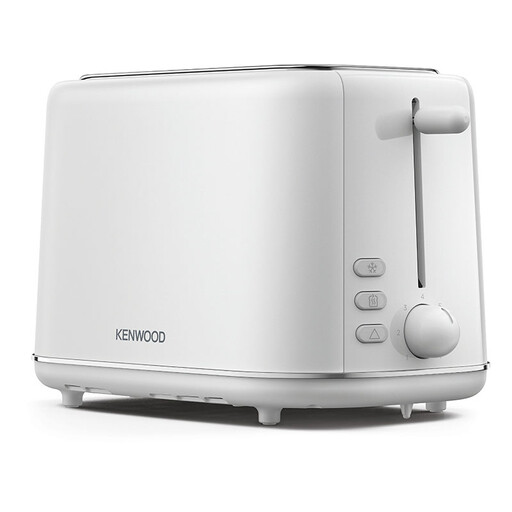
Why This Fits Their Persona: A straightforward option for students, couples and smaller households wanting everyday controls without taking up excessive worktop space.
The specification clearly lists seven browning settings, defrost, reheat, automatic bread-centring and a removable crumb tray, rather than focusing on appearance alone.
800W power, cool-touch housing, cord storage and approximate dimensions of 17.5cm wide by 28cm deep.
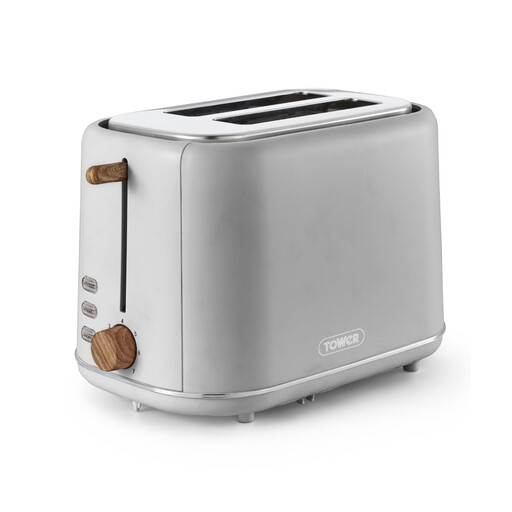
Why This Fits Their Persona: Suitable for households that want a coordinated, stylish kitchen toaster with practical functions for varied breakfast routines.
Its wide self-centring slots address the common mismatch between decorative styling and useful capacity. The removable tray also supports regular crumb management.
Seven browning levels, defrost, reheat and cancel functions, plus integrated cord storage and a lift-up function.
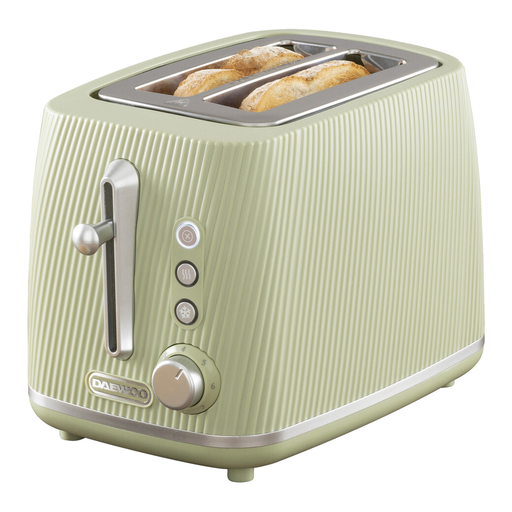
Why This Fits Their Persona: A practical match for people who regularly prepare thick artisan bread, bagels and crumpets, including busy family kitchens and shared homes.
Extra-wide, self-centring slots are specified for larger baked goods, while the high-level control dial avoids relying on a single preset.
850W power, seven browning positions, defrost, reheat and cancel functions, cool-touch exterior, anti-slip feet and integrated cord storage.
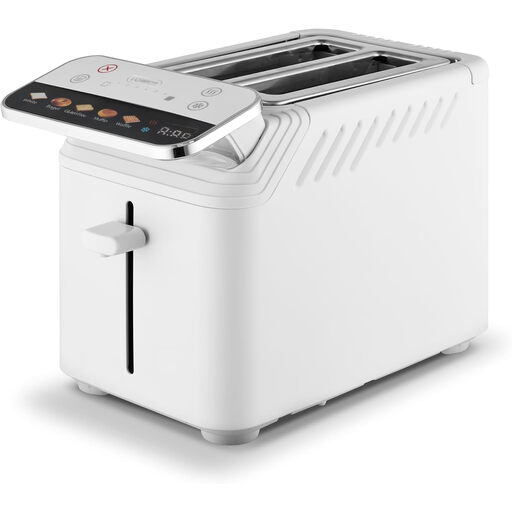
Why This Fits Their Persona: A suitable choice for users who prefer a digital interface and frequently switch between ordinary bread, thick slices and frozen items.
The wide slots and clearly listed defrost, reheat and cancel controls make its intended flexibility easier to assess than design-led descriptions alone.
Digital control panel, removable crumb tray, automatic pop-up and non-slip feet.
We have compiled a complete, real-time list of products that fully satisfy these strict selection criteria and UK safety regulations.
Regular crumb removal is particularly important for households using the toaster several times each day. Wipe the exterior with a soft, damp cloth and do not immerse the appliance, plug or cable in water.
It can suit a smaller family or a household that prepares toast in one or two batches. For several people eating breakfast at the same time, a four-slice model may reduce waiting, but it will usually require more worktop space. A two-slice toaster is often more practical for couples, students, single occupants and office kitchens.
Wide slots are useful when you regularly toast thick bread, crumpets or bagels. However, food must still fit within the manufacturer’s guidance. Do not force oversized items into the slots and use a high-lift feature when available to retrieve smaller pieces safely.
Lifespan varies according to construction, frequency of use, cleaning and storage. Regularly emptying the crumb tray, keeping liquids away and avoiding unsuitable foods can help maintain normal operation. Stop using the toaster if the cable, plug or housing becomes damaged, or if it develops an unusual smell, sound or heating pattern.