
24/7 Customer Support

Free returns

Same-day & Next-day Delivery

Quality Guaranteed

Unlock Your Welcome Offers: FREE Delivery | Up to 80% OFF | Free 30-day JoyPlus trial
Download the APP
A 2-slice toaster can be a practical choice for couples, students, renters, small households and offices. It takes up less worktop space than a four-slot model, uses fewer controls and usually suits everyday breakfast routines.
However, toaster listings often focus on appearance and headline features rather than the details that affect daily use. A stylish kitchen toaster may have narrow slots, a difficult-to-clean base or controls that are less intuitive than they appear. Before buying, check the points below to avoid paying for features that do not match your bread, worktop or routine.
Wide slots are useful for crumpets, bagels and thick-cut bread, but width is not the only consideration. Check whether the toaster also has self-centring guides, which help position a smaller or uneven slice near the heating elements.
Some products described as compact may prioritise a small footprint over slot depth or width. If you regularly buy artisan bread, compare the stated slot design rather than relying on the phrase “wide slot toaster”.
An adjustable browning toaster lets you select a setting, but the result can still vary according to bread thickness, moisture and whether the slice is frozen. Seven settings provide useful control, yet they do not mean that every bread type will toast identically on the same number.
A clear dial or digital display can make repeat use easier, particularly when two people prefer different levels. A digital toaster may show settings more precisely, while a traditional dial is often quicker to adjust.
Crumbs collect around the heating elements and base. A toaster with no accessible tray can be inconvenient to maintain, especially in shared kitchens. Look for a toaster with removable crumb tray and empty it regularly.
Position the appliance on a stable, heat-resistant worktop away from curtains, wall cupboards and water. Never use a knife or another metal object to remove stuck bread. Unplug the toaster first and follow the manufacturer’s instructions.
For standard sliced bread, two conventional slots may be sufficient. If you use thick bread, muffins, crumpets or bagels, choose wide slots and check whether the product description specifically mentions those foods.
Households making several slices at once may prefer a 4-slice long-slot toaster. This format normally uses two extra-long slots and can accommodate four standard slices or larger pieces of bread, but it needs more worktop depth and width.
For everyday flexibility, consider these functions:
Check how the controls operate. A rotary dial is simple and familiar, while a digital interface may offer a clearer display. Neither option removes the need to monitor the toaster during use.
Measure the available worktop before ordering. A compact toaster is useful for a small kitchen, student accommodation or office, but leave sufficient space around it for safe operation and ventilation.
Power ratings vary between models. For example, the Kenwood Abbey Lux listed below is rated at 800W, while the Morphy Richards four-slice long-slot model is rated at 1800W. Wattage can influence heating performance and running cost, but actual energy use depends on toasting time and frequency.
A removable tray, non-slip feet, cord storage and a cool-touch housing are practical features. Always check the supplied instructions, voltage information and warranty terms rather than assuming that a particular finish or feature indicates a specific safety standard.
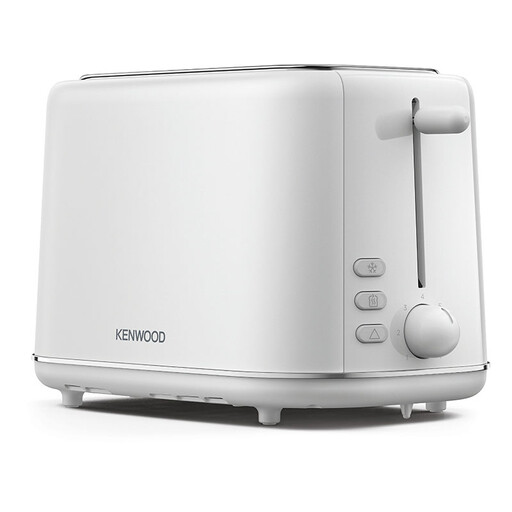
Why This Fits Their Persona: Its two-slice format and straightforward dial controls suit individuals, couples and renters who want everyday functions without a larger appliance.
It provides seven browning settings, defrost, reheat and cancel functions, plus a removable crumb tray rather than focusing only on exterior styling.
800W power, automatic bread-centring, cool-touch housing and integrated cord storage.
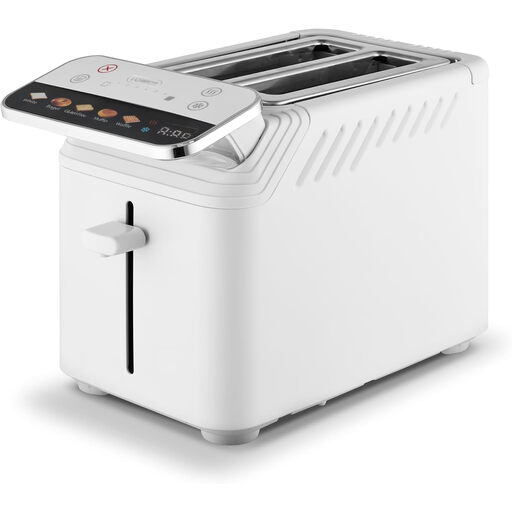
Why This Fits Their Persona: The digital control panel and white finish with chrome trim suit users who want a clearly presented appliance for a contemporary kitchen.
Its wide slots are specified for thick and thin bread, while the removable tray addresses the cleaning issue often missed in appearance-led listings.
Digital controls, extra-wide slots, defrost, reheat and cancel functions, with a registration-based three-year warranty.
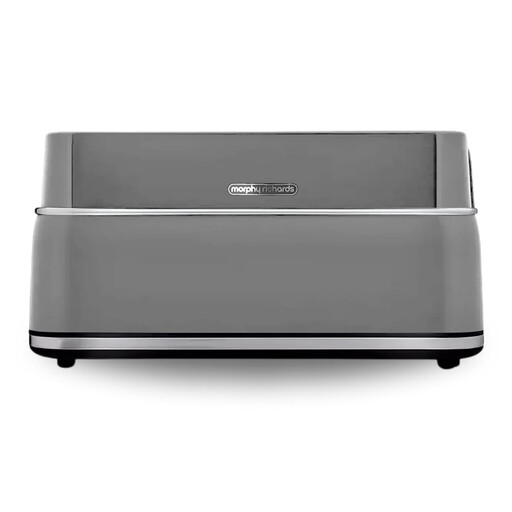
Why This Fits Their Persona: Two extra-long slots make it suitable for busy households, shared offices and anyone who regularly toasts larger bread or several slices in succession.
Its long-slot design is more adaptable than a standard narrow two-slot body, and removable crumb trays make repeated use easier to manage.
Four-slice capacity, variable browning control, high-lift lever, defrost, reheat and cancel functions.
We have compiled a complete, real-time list of products that fully satisfy these strict selection criteria and UK safety regulations.
Usually, yes. Many two-slot models have a footprint of roughly 28–30cm in width, although dimensions vary. Measure your worktop and check the cable position before buying. Cord storage can also help reduce clutter in a small kitchen or office.
There is no guaranteed lifespan. It depends on frequency of use, cleaning, bread type and how carefully the appliance is handled. Regularly removing crumbs, avoiding unsuitable foods and following the manufacturer’s instructions can help maintain safe operation. Keep proof of purchase and check the warranty registration deadline where an extended warranty is offered.
Potentially, but wattage alone does not determine total electricity cost. A simple calculation is: power in kilowatts × operating time in hours × your electricity tariff. A toaster rated at 800W uses 0.8kW while heating, but the actual cost depends on how long each cycle runs and how often you use it.