
24/7 Customer Support

Free returns

Same-day & Next-day Delivery

Quality Guaranteed

Unlock Your Welcome Offers: FREE Delivery | Up to 80% OFF | Free 30-day JoyPlus trial
Download the APP
A 2 slice toaster is a daily-use appliance, but attractive styling and bold packaging can distract from the details that affect convenience. A toaster may look compact on the worktop yet struggle with thick bread, leave crumbs difficult to remove or offer controls that are awkward to use.
For UK households, renters and style-conscious homeowners, the right choice usually comes down to slot size, browning control, cleaning access and how well the appliance fits the available worktop. Below are the common buying traps to avoid, followed by practical specifications and our top recommendations.
Standard slots may be suitable for ordinary sliced bread, but they can be restrictive if you regularly eat crumpets, bagels, farmhouse loaves or thick artisan bread. Forcing oversized slices into a narrow toaster can result in uneven browning or food becoming difficult to remove.
A wide slot toaster gives you more flexibility. Self-centring holders are also useful because they help position a slice closer to the heating elements, rather than leaving one side noticeably paler.
A long list of buttons does not necessarily make a toaster easier to use. The important point is whether the adjustable browning control offers enough practical range for everyone in the household.
A seven-position dial, for example, gives users a clear way to move from lightly warmed bread to a darker, crispier finish. Defrost and reheat functions can also be useful, but they serve different purposes:
Crumbs collect inside a toaster and can become difficult to remove if there is no accessible tray. A toaster with removable crumb tray allows routine cleaning without turning the appliance upside down over the sink.
Also check for a stable base, sensible cord storage and sufficient space around the appliance. Keep a toaster on a level, heat-resistant surface, away from curtains and other flammable materials. Unplug it before cleaning or attempting to remove trapped food, and never insert metal objects into the slots.
Measure the worktop area before choosing a toaster. A compact kitchen toaster should leave room around the appliance for safe operation and should not obstruct cupboards or nearby cooking equipment.
Slot width matters just as much as external size. A small toaster with extra-wide slots may be more useful than a larger model with narrow openings. If your household mainly uses standard bread, a conventional two-slot design may be sufficient. For varied bread types, choose wide, self-centring slots.
Look for clearly marked controls that can be adjusted without guesswork. A seven-position browning dial is a practical format because it gives several incremental settings rather than only a light, medium or dark choice.
A useful toaster with defrost and reheat functions should make these controls easy to identify. A high-lift feature can also help remove smaller slices without placing fingers close to the hot slots.
A textured toaster can add visual interest and may coordinate with other kitchen appliances, but the finish should not be the only selection factor. Check whether the outer surface is described as cool-touch, whether the feet help keep the appliance stable and whether the crumb tray can be removed easily.
Power ratings such as 850W indicate the appliance’s electrical input, but they do not alone determine how users will experience the toast. Slot design, bread thickness, starting temperature and browning setting also affect results. To estimate running cost, multiply the appliance’s kilowatt rating by the time used in hours and by your electricity tariff.
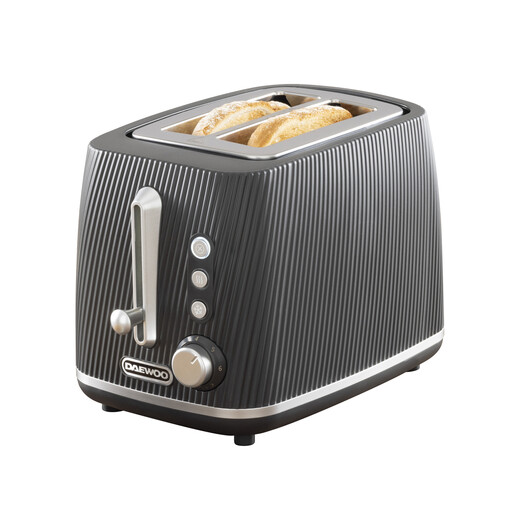
Why This Fits Their Persona: A practical choice for first homes, rented flats and households wanting a coordinated black appliance without taking up excessive worktop space.
Extra-wide, self-centring slots help avoid the limitations of narrow openings, while the removable crumb tray addresses routine cleaning.
Wide slots, adjustable browning control, defrost, reheat and cancel functions, plus integrated cord storage.
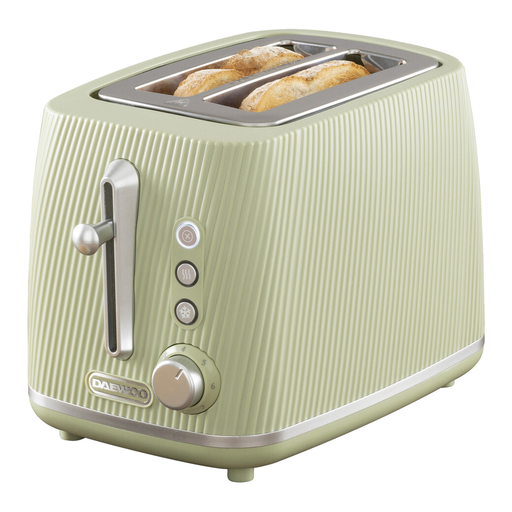
Why This Fits Their Persona: The sage green finish suits homeowners who want a more considered kitchen colour scheme, particularly when paired with a matching kettle.
The textured appearance is supported by practical features, including wide self-centring slots, a seven-position browning dial and a removable crumb tray.
850W power, cool-touch exterior, anti-slip feet and cord storage in a compact two-slice format.
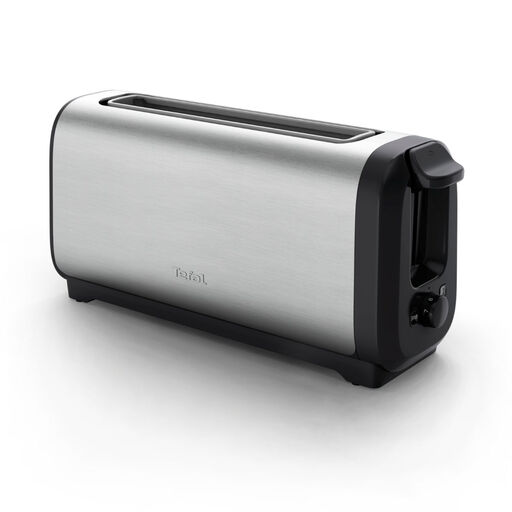
Why This Fits Their Persona: The long-slot layout is suited to households that toast varied bread sizes or want more flexibility than two short, narrow slots provide.
The long-slot design accommodates different bread shapes, while high-lift eject and mid-cycle cancel help with everyday handling.
Seven browning levels, defrost and reheat functions, removable crumb tray and cool sidewalls.
To help maintain a 2 slice toaster:
A toaster should not be left unattended while operating. If smoke appears, switch off and unplug it safely. Do not pour water onto an electrical appliance.
We have compiled a complete, real-time list of products that fully satisfy these strict selection criteria and UK safety regulations.
Yes. Wide slots can accommodate standard bread while also allowing room for thicker slices, crumpets and some bagels. Self-centring guides are useful for positioning thinner slices more evenly.
Lifespan depends on frequency of use, cleaning, storage and the appliance’s construction. Regularly removing crumbs, avoiding misuse and following the manufacturer’s instructions can help reduce avoidable wear. Check the individual product listing for warranty information before purchase.
The electricity used depends on the toaster’s power rating and how long each function operates. Defrost typically runs for a longer cycle than ordinary toasting, while reheat is designed to warm an already toasted slice. For lower consumption, use the shortest suitable cycle and avoid repeatedly reheating the same slice.