
24/7 Customer Support

Free returns

Same-day & Next-day Delivery

Quality Guaranteed

Unlock Your Welcome Offers: FREE Delivery | Up to 80% OFF | Free 30-day JoyPlus trial
Download the APP
A 20-inch kids’ mountain bike can be a useful step between a smaller children’s cycle and an adult-sized bicycle. However, wheel size alone does not tell you whether a bike will suit your child, your local routes or your storage space.
Parents often encounter three avoidable buying traps:
The right choice depends on fit, intended terrain, braking equipment and how the bicycle will be maintained in typical UK weather.
A 20-inch bicycle for boys and girls should allow the rider to place both feet securely on the ground when stopped, while maintaining a comfortable bend in the knees when pedalling. Check the manufacturer’s recommended height and inside-leg range rather than relying on age guidance alone.
Look at:
A steel frame can provide robust construction, but it may weigh more than an aluminium alternative. This matters if your child needs to carry the bike up steps or if an adult regularly loads it into a car.
Standard mountain bike tyres are generally suitable for pavements, cycle paths, parks and compact gravel. A kids’ fat-tyre bike with 4.0-inch tyres is intended for greater contact with surfaces such as gravel, mud, sand or snow.
That extra width is not automatically useful for every family. Fat tyres can create more rolling resistance on tarmac and may add weight. Check whether the tread, tyre pressure range and wheel clearance match the routes your child will actually use.
For mixed road and trail riding, mudguards can help reduce spray, while a water bottle holder is a practical addition for longer outings.
A junior mountain bike with several gears can help children manage changes in gradient, but the shifter should be simple enough to operate while riding. A Shimano 7-speed kids’ bike may offer a useful range, although parents should still check the derailleur, shifter type and maintenance instructions.
For braking, compare the actual system rather than relying on broad advertising terms:
Before use, inspect the brakes, tightenings, reflectors, tyres and pedals. Children should wear a correctly fitted cycle helmet, and any protective equipment should be suitable for their age and activity.
The following options are arranged by practical use rather than by broad marketing claims. Always confirm sizing, stock, delivery information and the latest product specification on the product page before ordering.
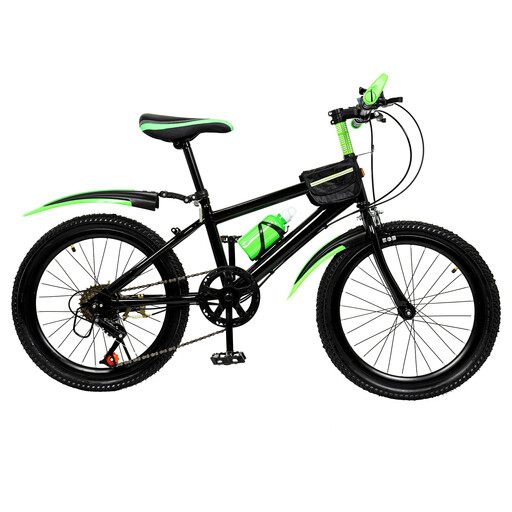
Why This Fits Their Persona: A practical green kids’ bicycle for families wanting one cycle for local roads, parks and occasional mountain routes, with useful everyday fittings included.
The listing identifies a carbon steel frame, mudguards and a water cup holder, so buyers can assess practical equipment instead of relying on wheel-size advertising alone.
Carbon steel frame; mudguards and water cup holder listed as included features.
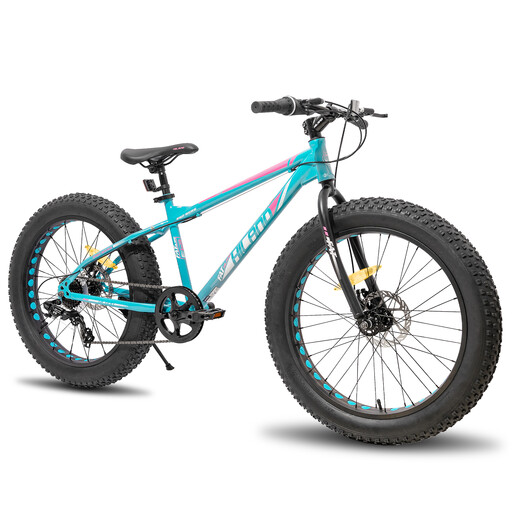
Why This Fits Their Persona: Suited to families prioritising wide tyres, multiple gears and dual mechanical disc brakes for varied off-road riding.
The specification states 4.0-inch fat tyres, seven speeds and dual mechanical disc brakes, making the main performance features clear for comparison.
Hi-ten steel frame; 20 x 4.0-inch tyres; Shimano TY300D seven-speed derailleur; approximate weight of 16.8 kg.
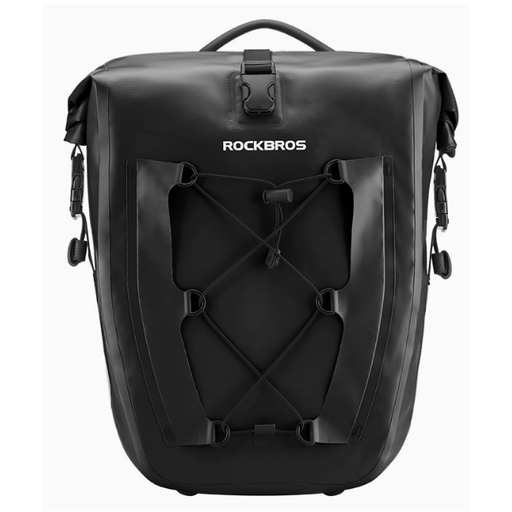
Why This Fits Their Persona: Useful for families carrying spare layers, snacks or cycling essentials during longer rides, provided the child’s bicycle has a compatible rear rack.
Checking rack compatibility first avoids buying a large pannier bag that cannot be securely fitted to a small-frame bicycle.
30-litre stated capacity; waterproof design listed for MTB, road bikes and e-bikes.
A bicycle storage rack can prevent a family bike from being left against a wall or on a damp floor. The ROCKBROS freestanding rack measures 54 x 40.5 x 20.5 cm, uses ABS construction and has adjustable width stated as 30–50 mm. Confirm that the bicycle’s tyre and wheel dimensions fit before purchase. View the ROCKBROS freestanding bicycle storage rack.
For small items such as keys or snacks, a water-resistant top tube bag may be more suitable than a rear bag, but check that it does not interfere with steering or cable movement.
The listed MTB protective trousers are adult motorcycle-style protective trousers in size M. They include hard-shell and foam pads for hips, thighs and knees, but they should not be treated as children’s cycling equipment without checking the size, fit and intended use. A properly fitted helmet, visible clothing and suitable gloves remain important parts of a child’s riding kit.
We have compiled a complete, real-time list of products that fully satisfy these strict selection criteria and UK safety regulations.
No. Height, inside-leg length, reach and confidence are more useful than age alone. Check the seller’s sizing guidance and ensure the child can control the brakes and place their feet securely when stopped.
They can be used on roads when the bicycle is correctly equipped and maintained, but 4.0-inch tyres may feel slower and heavier on tarmac. They are more relevant when the intended routes include loose gravel, mud, sand or snow.
Check tyre pressure, brake operation, chain condition, pedals and fasteners before rides. After wet or muddy use, clean and dry the bicycle, then lubricate the chain according to the manufacturer’s instructions. A periodic professional service is sensible if gears or brakes remain difficult to adjust.