For a day of navigation, photographs, calls and email, start by judging how much usable energy your phone needs, rather than choosing the largest printed mAh figure. A 20,000mAh USB-C power bank is a starting point for phone-heavy work, but its recharge count will vary; choose higher output only when your device and cable can use it, and check shared output if you will charge several devices.
Who this is for
Phone-first field workers
If your phone handles navigation, photographs, notes, calls and email away from a socket, usable energy matters more than the capacity figure alone. Anker’s explanation of power-bank capacity distinguishes the rated figure from the energy available at USB output.
People charging during short breaks
If you have little time to plug in, check your device’s wired-charging support against the bank’s individual-port output and your cable’s power capability. USB Implementers Forum guidance explains the roles of USB Power Delivery and USB-C cable ratings.
Workers carrying several devices
If you may charge a phone alongside a tablet or another USB device, look at the total output with multiple ports active. Belkin’s published specifications show why port count alone does not establish the power available to each device.
What to check before buying
Work out the phone’s energy needs first, then check charging compatibility and the arrangement you will carry through the day.
| Concern |
What to check |
Who this matters to |
| Usable energy |
Compare watt-hours (Wh) where stated and allow for conversion losses; treat claimed phone recharges as conditional. |
If navigation and calls must last until the working day ends, I need enough reserve energy without relying on the printed mAh as delivered output. About 36% of consumers put usable energy first. |
| Charging compatibility |
Match the phone’s wired-charging standard to the chosen port’s output and a suitably rated cable. |
With only short breaks to plug in, I want the available charging time to be useful, not a wattage my phone cannot accept. Charging compatibility is the primary need for about 29% of consumers. |
| Cable and carrying convenience |
Check connector type and whether an integrated cable suits your devices; consider the stated weight if you carry the bank all day. |
When moving between jobs, I would rather not discover that my lead is missing or has the wrong connector. About 21% of consumers prioritise a setup that is straightforward to carry and use. |
| Several devices at once |
Read the output rating for simultaneous use, not just the number of ports or the single-port maximum. |
If my phone and another device need charging together, I need to know how their available power is shared. For about 14% of consumers, simultaneous charging is the main concern. |
Common buying mistakes
-
Assuming the printed mAh reaches the phone unchanged
A bank’s rated capacity and its USB output are not the same measure. Voltage conversion and charging losses affect how many times it can recharge a particular phone; Anker’s capacity guidance describes this distinction.
Compare Wh where available, consider the phone’s battery energy and leave a margin rather than planning around an exact recharge count.
-
Treating maximum wattage as a charging-speed promise
The device, charging mode, individual port and cable all affect the power that can be used. Belkin’s published ratings also show that a bank’s output can change when several ports are active.
Check the device maker’s wired-charging specification against both the bank’s single-port rating and its simultaneous-use rating.
-
Overlooking the exact model when checking recalls
The UK Office for Product Safety and Standards identifies Anker A1647, A1681 and A1689 in a recall concerning an overheating and fire risk. A product family name alone is not enough to establish whether a particular unit is affected.
Keep the model number and proof of purchase, check official recall information and stop using any unit identified as affected. Electrical Safety First also advises buying from a reputable retailer.
-
Assuming the same bank can go in checked baggage
Field-work suitability does not establish suitability for a later flight. The UK Civil Aviation Authority says power banks must travel in cabin baggage and be individually protected when not in use.
If you plan to fly, check the bank’s labelled Wh rating and your airline’s current requirements before packing it; do not put it in checked baggage.
Brands to consider for these needs
Belkin
Belkin’s cited 20,000mAh models offer USB-C and multi-port arrangements relevant to phone-led work. Their published output ratings need to be read model by model.
- Belkin specifies up to 20W with one port active on BPB028hqBK.
- Belkin specifies 15W total with all BPB028hqBK ports active; BPB012 has a 15W maximum shared across its three ports. Neither figure describes every Belkin bank.
UGREEN
UGREEN’s cited Nexode 20,000mAh model combines a built-in USB-C cable with USB-C and USB-A charging paths.
- UGREEN states a 45W maximum output for the cited model’s built-in cable and USB-C port, subject to device compatibility.
- UGREEN lists its weight as 468g. Check whether that carrying weight and the available charging modes suit your working day.
Anker
Anker has phone-focused and higher-output power banks, but the precise model identity matters when choosing one.
- Anker’s capacity guidance explains why a rated mAh figure should not be treated as the amount delivered at USB output.
- The UK Office for Product Safety and Standards and Anker identify A1647, A1681 and A1689 in recall information. Check an exact unit’s model and recall status rather than relying on its product-family name.
Joybuy power-bank selections
These power banks cover higher-output USB-C charging and built-in-cable options for phone-led work away from mains power. Compare their stated capacities with your energy needs, and confirm charging compatibility before choosing.
 No image available
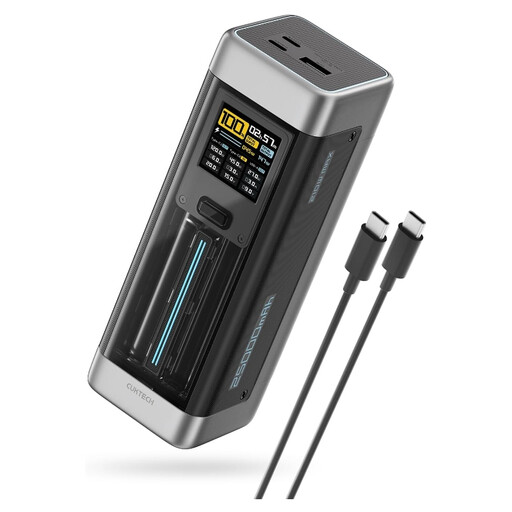
CUKTECH NO.20 25,000mAh 140W USB-C power bank, grey
Consider this for a working day that calls for a larger stated capacity and charging a compatible higher-output device. The title specifies 25,000mAh, 140W, PD3.1 and three ports; check the output available to your device when other ports are in use, as well as the bank’s charging input and carrying weight.
View on Joybuy
 No image available
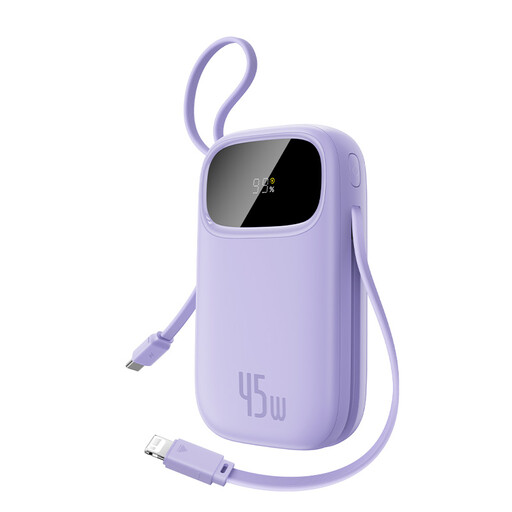
Baseus EnerFill FC31 Qpow 3 10,000mAh 45W, Nebula Purple
This built-in-cable option may suit short charging breaks when its connectors match the devices you carry. Its title states USB-C and iP cables, 10,000mAh and 45W; check your device’s charging mode, usable-energy needs and the output available when charging more than one device.
View on Joybuy
 No image available
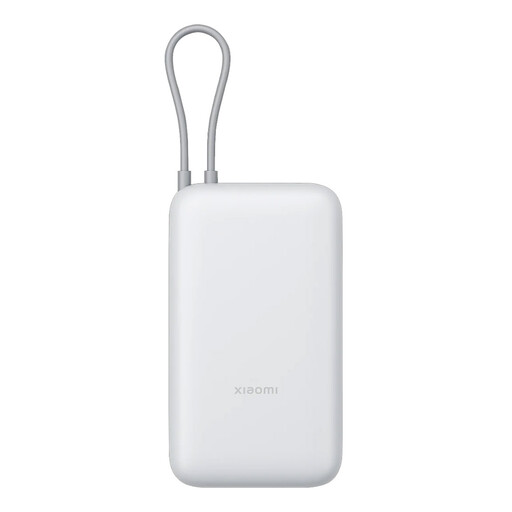
Xiaomi 20000mAh Integrated Cable GL, Light Gray
This is a 20,000mAh option if keeping a cable with the bank would simplify phone charging while you move between jobs. Confirm the integrated connector suits your phone, then check charging compatibility, carrying weight and any simultaneous-output requirements.
View on Joybuy
 No image available
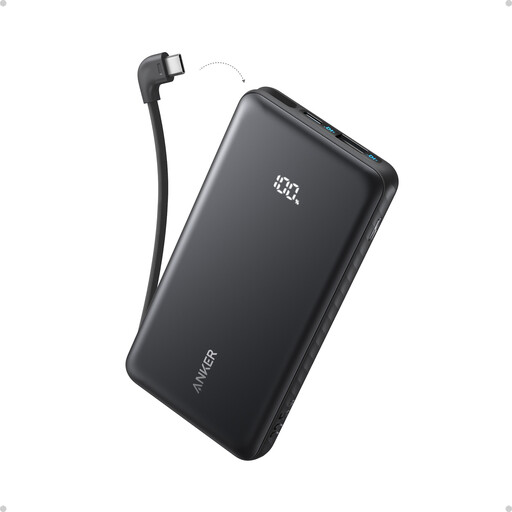
Anker Zolo 10,000mAh 22.5W power bank with USB-C cable
The built-in USB-C cable may help if remembering a separate lead is your main concern. The title states 10,000mAh and 22.5W; compare its energy reserve and charging mode with your phone’s needs. Check the exact model identifier against Anker’s recall information before use: the UK Office for Product Safety and Standards identifies A1647, A1681 and A1689 as recalled models.
View on Joybuy
 No image available
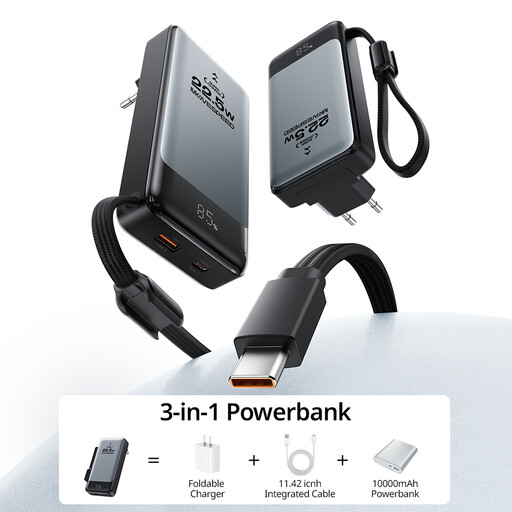
MOVESPEED 3-in-1 10,000mAh 15W power bank
This integrated-Type C-cable model may suit a phone top-up when you want a lead attached to the bank. The title states three outputs and 10,000mAh, but its 15W figure does not establish what each connected device receives. Confirm the per-port and shared-output ratings, along with whether its capacity covers your day.
View on Joybuy
Frequently asked questions
Will a 20,000mAh power bank give my phone four full charges?
Not necessarily: the printed capacity refers to the bank’s cells, while conversion to USB output and charging the phone involve losses. Compare Wh where available and treat recharge counts as conditional on the phone and charging conditions. Anker’s UK capacity guidance gives a broad usable-output estimate of roughly 60% to 75% of rated mAh when expressed as 5V-equivalent output, not a guaranteed number of charges.
When is a 30W or 45W power bank worth considering?
Consider higher output when your exact device supports a compatible wired-charging mode and you have a suitable cable. Check the chosen port’s rating rather than assuming the bank’s maximum applies everywhere. USB Implementers Forum guidance explains USB Power Delivery and states that USB-C-to-USB-C cables in its compliance programme carry 60W or 240W power-capability markings.
Can several devices charge at each port’s maximum speed?
Only if the bank’s simultaneous-output specifications allow it. Belkin states that BPB028hqBK provides up to 20W with one port active but 15W total when all ports are active; its BPB012 has a 15W maximum shared across three ports. Read the figures for the exact model and port combination you intend to use.
What if I later take my power bank on a flight?
Check its labelled Wh rating and your airline’s current requirements before travel. The UK Civil Aviation Authority says power banks must be carried in cabin baggage, not checked baggage, and individually protected when not in use. Flight requirements are a separate check from choosing a bank for field work.
What should I do if my power bank is recalled?
Stop using an affected unit and follow the official recall instructions for its exact model. The UK Office for Product Safety and Standards identifies Anker A1647, A1681 and A1689 in its product recall; keep your bank’s model identifier and proof of purchase so you can check whether it is affected.


