
24/7 全天候客户支持

免费退货

当日/次日达

品质保障

开启新人专享福利: 全场免邮 | 低至 2 折 | 免费试用 30 天 JoyPlus 会员
下载 Joybuy
Powering your life away from the mains socket presents a unique challenge. Whether you're fitting out a motorhome for a cross-country tour, need to run power tools on a remote job site or are preparing a reliable emergency power backup for your home, a dependable source of AC electricity is essential. However, not all power is created equal. Using the wrong type of inverter can risk damaging your sensitive and expensive electronics.
This guide is designed to help you understand the key features of a high-quality 2000W pure sine wave inverter. We will explain what to look for when choosing a model and provide our recommendations to help you find a suitable unit for your specific needs, from running a coffee machine in your caravan to powering a circular saw on site.
Before selecting a unit, it's important to understand a few core concepts. Getting these right will ensure your equipment runs safely and efficiently.
You will often see two power ratings on an inverter: rated and peak.
A pure sine wave inverter produces clean, stable electricity that is identical to what you get from a standard wall socket. This is critical for modern electronics like laptops, televisions, digital clocks and medical equipment. A lower-cost 'modified sine wave' inverter produces a choppier, stepped waveform that can cause some devices to run hot, make buzzing noises or fail to work altogether. For a reliable off-grid inverter or power inverter for motorhome use, pure sine wave is the recommended standard for protecting your gear. It also contributes to a quiet sine wave inverter operation, which is a significant benefit in a confined space like a caravan.
A heavy duty power inverter must be connected correctly to function safely. For any unit rated above 150-200W, you must connect it directly to your 12V battery terminals using the thick-gauge cables provided. A car's cigarette lighter socket is not designed to handle the high current draw. Look for models with built-in protections like overload, over-temperature, short-circuit and low-voltage shutdown. These features protect both the inverter and your battery system. This device is essentially a 12V to 220V converter, and handling the connection with care is paramount.
Here are our recommendations for power inverters that serve a range of needs, from heavy-duty applications to on-the-go convenience.
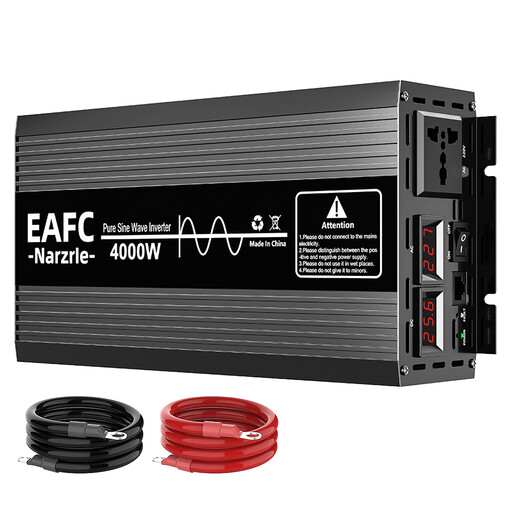
Why It Stands Out This EAFC model is a powerful and robust unit designed for serious applications. Its 2000W continuous rated power and 4000W peak capacity mean it can handle demanding appliances and multiple devices at once. The dual digital displays provide real-time monitoring of both battery input voltage and AC output voltage, giving you a clear picture of your power system's status. The dual intelligent cooling fans only activate under load, keeping the unit cool during heavy use while remaining quiet during lighter tasks.
Pros
Who is it for? This is an excellent choice for caravan power inverter installations, tradespeople who need a reliable 12V inverter for tools and homeowners setting up a substantial emergency power backup system. Its high output can comfortably run items like microwaves, coffee makers, refrigerators and most corded power tools.
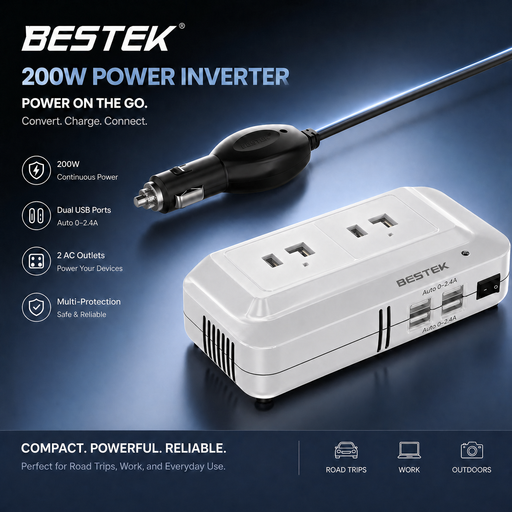
Why It Stands Out While not a heavy-duty unit, the BESTEK 200W inverter excels in convenience and portability. It plugs directly into your car's cigarette lighter socket and is designed for charging personal electronics. With two AC outlets and four smart USB ports, it can power up to six devices simultaneously. Its compact, lightweight design makes it easy to store in a glove box, making it a practical accessory for road trips, camping or working from your vehicle.
Pros
Who is it for? This inverter is ideal for commuters, families on road trips or anyone who needs to charge laptops, phones, tablets and cameras on the move. It is not suitable for high-power appliances like kettles or tools but is a great solution for light-duty power needs.
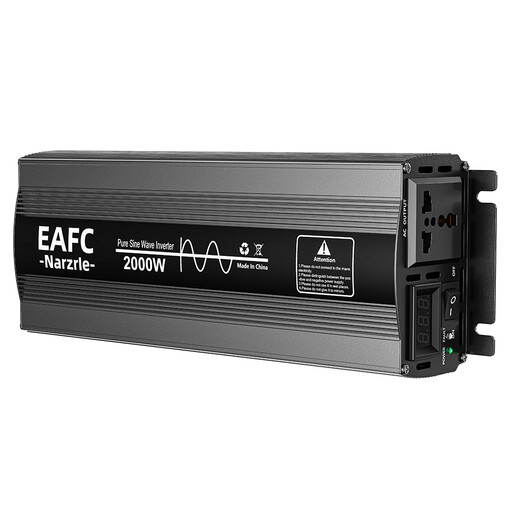
Why It Stands Out This model offers a great balance of performance and capacity for moderate power needs. It provides the same clean pure sine wave electricity as its larger counterpart but with a continuous rated output of 1000W and a peak of 2000W. This is more than enough for many off-grid and mobile applications. It includes a clear digital display for input voltage, a quiet, intelligent cooling fan and a full suite of safety features, making it a reliable and efficient mid-range choice.
Pros
Who is it for? This is a solid option for campervan owners, weekend adventurers or for a home backup system intended to run essentials like lights, a TV, a router and charge personal devices. It can handle smaller kitchen appliances and some power tools, offering a versatile solution for those who don't require the full 2000W continuous output.
If these specific models don't quite match your requirements, or if you're looking for different wattage capacities or specialised adapters, there are many other options available. For a wider selection of power solutions, we invite you to explore our full range of AC adapter powered devices.
1. What can you run on a 2000W pure sine wave inverter? A 2000W inverter can run a wide variety of household appliances. This includes a microwave (typically 800-1200W), a coffee maker (around 1000W), a small refrigerator (150-250W running), a television, laptops and most corded power tools like drills and saws. Always check the wattage label on your appliance to ensure its continuous power draw does not exceed 2000W.
2. Do I need a pure sine wave inverter for my motorhome? For any modern motorhome or caravan, a pure sine wave inverter is highly recommended. Many onboard systems and personal gadgets, including flat-screen TVs, laptops, modern kitchen appliances with digital controls and sensitive medical equipment (like CPAP machines), require clean power to function correctly and avoid damage. A modified sine wave inverter can cause these devices to malfunction or shorten their lifespan.
3. How long will a 12V battery last with a 2000W inverter? This depends entirely on two factors: the capacity of your battery (measured in Amp-hours, Ah) and the power of the appliance you are running (the load). As a rough guide, a 100Ah 12V battery can supply 1200 Watt-hours of energy (12V x 100Ah). Running a 1200W microwave would, in theory, drain it in one hour. However, due to efficiency losses and the fact you should not fully discharge a lead-acid battery, the actual run time will be less. For a heavy duty power inverter setup, a large capacity battery bank (200Ah or more) is recommended for extended use.