
24/7 Customer Support

Free returns

Same-day & Next-day Delivery

Quality Guaranteed

Unlock Your Welcome Offers: FREE Delivery | Up to 80% OFF | Free 30-day JoyPlus trial
Download the APP
A 20L trail running backpack can carry enough clothing, food, water and safety equipment for a long outing without the bulk of a larger hiking pack. However, volume alone does not determine whether a pack will feel comfortable on a muddy trail, fast cycle route or exposed fell path.
Marketing descriptions often focus on capacity and “ultra-light” construction while overlooking the details that affect everyday use. Before buying, check the fit system, fabric, pocket layout and weather protection rather than relying on headline claims.
A pack labelled 20L may include several compartments, pockets and harness storage within that total. The main compartment may therefore hold less than expected. Consider what you actually carry: a waterproof jacket, spare layer, food, first-aid kit, phone, keys, tools and hydration equipment can use space quickly.
For short runs, a smaller pack may be more suitable. A 20L trail running backpack is more useful when you need additional layers or equipment for changing UK weather.
A breathable running backpack usually uses mesh or ventilated padding to allow some airflow between your back and the pack. This can reduce the enclosed feel during high-intensity activity, but it will not prevent sweating during a hard climb or warm-weather run.
Check the contact areas, shoulder padding and adjustment points. A pack that moves around can feel hotter and heavier because you are repeatedly correcting its position.
Abrasion-resistant fabric is useful when passing branches, rocks and rough ground, but it does not automatically make a pack waterproof. Unless the listing gives a waterproof rating, taped seams or a rain cover, keep electronics and spare clothing in dry bags.
This distinction is particularly important in the UK, where showers can arrive quickly. Do not compare a running pack with waterproof solar pathway lights simply because both are described for outdoor use: an IP rating, such as IP65, applies to a suitable electrical product and does not describe a backpack’s performance.
A stable fit is essential for a bounce-free running pack. Measure from the prominent bone at the base of your neck to the top of your hip bones, then compare the result with the manufacturer’s sizing chart.
The PELLIOT pack is listed in two size ranges:
These measurements overlap, so consider both body size and activity. A closer-fitting size may feel more secure during fast trail running, while a larger fit can provide additional adjustment room for layered clothing.
Look for a harness that spreads load across the shoulders, chest and hips. An ergonomic hiking backpack should sit close to the body without restricting arm movement or pressing uncomfortably against the neck.
Grid polyester with an abrasion-resistant construction can be useful for cycling, fell walking and wooded trails where the pack may brush against rough surfaces. Still, fabric strength is only one part of durability. Also inspect zip quality, stitching, buckles and the way the base is reinforced.
Mesh lining and foam padding may improve comfort, but they require sensible care. The listed care instructions for the PELLIOT design advise wiping clean or hand washing with mild soap, followed by air drying. Machine washing and tumble drying are not recommended.
A multi-compartment outdoor backpack is easier to organise than a single large sack. Separate areas can keep snacks, keys, tools and spare clothing from mixing together.
For a 20L pack, useful features include:
If you carry a hydration bladder, check whether a dedicated sleeve and hose routing are included. These features are not stated in the supplied specification, so confirm the listing before purchase if they are essential to your setup.
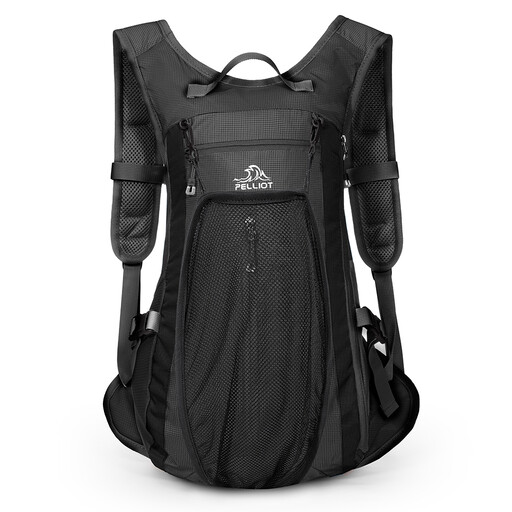
Why This Fits Their Persona: A practical starting point for UK runners and cyclists who need organised storage for layers, snacks, tools and personal items without choosing a much larger hiking pack.
Its listed S.L.F design combines a stable fit, low pack weight and quick-access storage, addressing the common problems of bouncing and difficult-to-reach essentials.
Abrasion-resistant grid polyester, breathable mesh lining and separate compartments for everyday trail equipment.
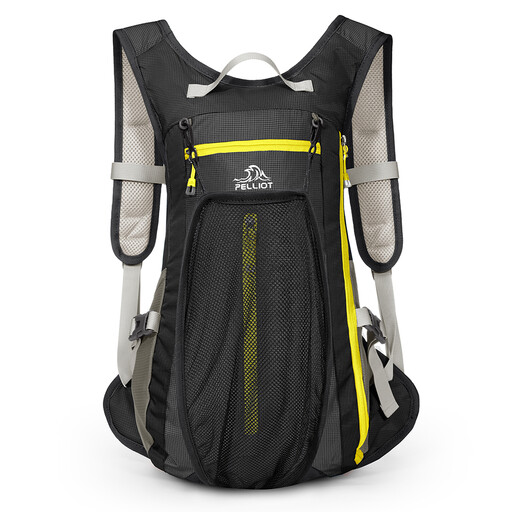
Why This Fits Their Persona: The all-black styling suits commuters who cycle to the trail, regular hikers and users wanting an understated unisex cycling backpack for mixed outdoor activities.
The size chart, adjustable harness and pressure-reducing foam provide measurable fit information instead of relying only on vague comfort wording.
The listed 15–20L L/XL range and body-hugging design are suited to carrying more equipment while maintaining an adjustable fit.
Why This Fits Their Persona: Its stated abrasion-resistant construction and organised storage suit frequent cyclists, hikers and trail users who regularly carry tools or equipment across rough terrain.
The grid polyester fabric is specified for resistance to tears and abrasion, helping address the weakness of thin fabrics on branches and rocky routes.
Main, secondary and front pockets support equipment separation, while the adjustable waist range reaches up to 120cm in L/XL.
We have compiled a complete, real-time list of products that fully satisfy these strict selection criteria and UK safety regulations.
It can be suitable if you carry compact layers, food, water and basic safety equipment. Check the actual compartment dimensions and harness fit first. For overnight trips or bulky winter equipment, a larger hiking pack may be more appropriate.
Choose the correct torso and waist size, then tighten the shoulder straps, chest strap and waist belt in that order. Load heavier items close to your back and avoid leaving loose space around small equipment. A body-hugging design can help, but fit and packing technique remain important.
Not necessarily. Breathable mesh improves airflow, while waterproofing depends on the fabric treatment, construction and seam protection. If the product listing does not state a waterproof rating or include a rain cover, use separate dry bags for valuables and spare clothing.