People buying chai in bulk
A 240-bag box may suit a household, workplace or shared tea station. If the same bags are also meant for a caffeine-avoiding bedtime routine, check the tea base rather than relying on the pack size.


Choose a 240-bag masala chai if the large pack and tea-and-spice flavour matter most, but check the exact product before treating it as a bedtime drink that avoids caffeine. If avoiding caffeine before bed is the priority, choose an explicitly caffeine-free herbal or rooibos chai-style blend instead; NHS Borders advises avoiding caffeinated drinks close to bedtime, while the cited caffeine-free examples come in smaller packs.
A 240-bag box may suit a household, workplace or shared tea station. If the same bags are also meant for a caffeine-avoiding bedtime routine, check the tea base rather than relying on the pack size.
Look for an explicit caffeine-free description on the exact blend. NHS Borders advises avoiding caffeinated drinks close to bedtime; a chai-style herbal or rooibos infusion offers a different base from conventional tea-based chai.
Decaffeinated tea may preserve a tea-based option, but it need not have chai spices. Twinings notes that decaffeinated tea can retain minor traces of caffeine, so check the particular blend if that distinction matters.
The decision is whether the 240-bag quantity or a caffeine-free bedtime drink takes priority; a decaffeinated tea is a separate option if black-tea character matters more than chai spices.
Choose when: You need 240 bags for regular or shared serving and expect to drink this tea-based chai earlier in the day.
Trade-off: Asian Dukan lists Palanquin’s 240-bag masala chai with tea among its ingredients; the listing does not describe it as caffeine-free or decaffeinated.
Choose when: Avoiding caffeine before bed matters more than buying 240 bags.
Trade-off: The cited Pukka herbal infusion comes in a 20-bag pack, and a herbal or rooibos base differs from tea-based masala chai.
Choose when: You want black-tea character and can accept a drink that is not necessarily chai-flavoured.
Trade-off: Twinings says minor traces of caffeine can remain in decaffeinated tea; its cited Everyday Decaffeinated blend is not a 240-bag chai.
| Priority | What to check | Your needs |
|---|---|---|
| Caffeine | Read the exact blend’s ingredients and caffeine description. Distinguish tea-based, decaffeinated and explicitly caffeine-free products. | I want a spiced drink before bed without assuming that the word “chai” means caffeine-free. NHS Borders advises avoiding caffeinated drinks close to bedtime. |
| Pack size | Confirm the bag count on the listing. Asian Dukan lists a 240-bag Palanquin masala chai; Sainsbury’s lists Pukka Vanilla Chai in a 20-bag pack. | A large box is useful for regular shared serving, but my bedtime choice also has to fit my caffeine preference. |
| Blend | Compare the base ingredient and spice list. The cited Palanquin blend contains tea and spices; the cited Pukka Vanilla Chai is a herbal infusion. | For an evening drink, I may prefer chai-style spices without requiring a conventional tea base. |
| Ingredients | Check the current packet or product listing for the full ingredients, allergen information, storage instructions and best-before date. | If I am serving other people, I need information for the exact product being offered, not a different chai blend. |
Twinings describes conventional chai as commonly containing black tea. The name alone does not identify a blend’s caffeine status.
Read the ingredients and caffeine description on the exact product. For a routine intended to avoid caffeine, look for an explicitly caffeine-free herbal or rooibos infusion.
Asian Dukan’s 240-bag Palanquin masala chai contains tea, whereas the cited caffeine-free chai-style examples use smaller packs. Quantity and bedtime preference can therefore lead to different choices.
Decide which matters most before buying a large box. If the evening drink is the priority, try a smaller caffeine-free blend to assess whether you like its ingredients and flavour.
A large pack can leave many bags unused for the intended bedtime drink if the blend does not suit that routine.
Twinings says minor traces of caffeine can remain in decaffeinated tea. A product explicitly described as naturally caffeine-free makes a different claim.
Check the exact decaf product’s caffeine information, or choose an explicitly caffeine-free blend if avoiding caffeine is essential to your routine.
Chai recipes vary: the cited tea-based, herbal and rooibos products have different ingredient lists. One product’s details cannot establish another’s allergen status.
Keep the current packet or product information available when serving others, and check it again if the product or recipe changes.
These examples show how pack size and ingredients vary; a brand’s inclusion here does not mean every product in its range fits a bedtime routine.
Asian Dukan lists Palanquin Spiced Tea Bags as a 240-bag traditional masala chai.
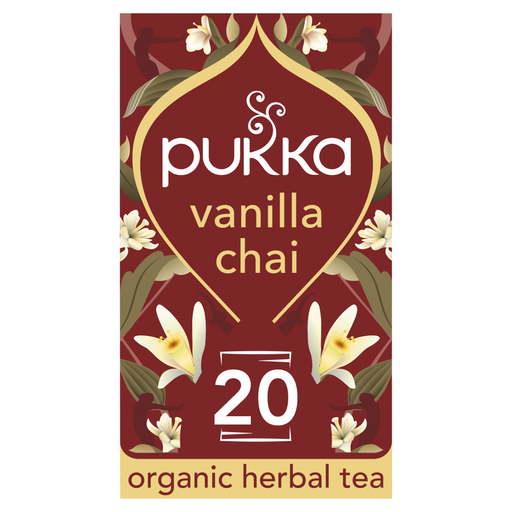
Sainsbury’s lists Pukka Vanilla Chai as a caffeine-free herbal infusion in a 20-bag pack.
Twinings describes chai as commonly based on black tea and also offers separate decaffeinated teas.
Clipper Tea Shop lists Organic Indian Chai as a 20-bag black-tea blend.
teapigs describes its Pumpkin Spiced Chai as naturally caffeine-free and sells it in a 15-tea-temple pack.
This product is a smaller, caffeine-free herbal chai-style option for shoppers prioritising an evening drink over a 240-bag box.
 No image available
This caffeine-free herbal infusion suits a chai-style drink when avoiding caffeine matters more than bulk quantity. The pack contains 20 sachets, not 240; Sainsbury’s lists cinnamon, cardamom, ginger, fennel, vanilla and liquorice root among its ingredients.
It may suit bulk serving, but do not choose it on the assumption that it avoids caffeine. Asian Dukan’s 240-bag Palanquin masala chai contains tea, and NHS Borders advises avoiding caffeinated drinks close to bedtime. Check the exact box’s caffeine description if bedtime use is the reason for buying it.
A caffeine-free chai-style infusion can use a herbal or rooibos base rather than conventional tea. Decaffeinated tea is still tea, and Twinings says minor traces of caffeine can remain. Check the exact label if avoiding caffeine is important to you.
Yes. Sainsbury’s lists Pukka Vanilla Chai as a caffeine-free herbal infusion with spices including cinnamon, cardamom and ginger; True Tea Co. Harrogate describes a caffeine-free rooibos chai with its own spice blend. Compare their ingredients with a tea-based masala chai if the base matters to you.
Check the current product’s ingredients and allergen information, along with its best-before date and storage instructions. Use the details for the exact box being served rather than assuming that another chai blend has the same ingredients.