Hosts stocking a shared kitchen
A 240-bag black-tea box can serve several guests from one cupboard, particularly when use across stays justifies keeping that many bags on hand. Check that you have a cool, dry place to store it.


A 240-bag box of everyday black tea suits a holiday cottage with a shared kitchen when guest use justifies the quantity and the tea can be kept cool and dry. For arrival trays or welcome packs, individually wrapped bags offer a more suitable presentation; a separate caffeine-free infusion can add choice without replacing the main black-tea supply.
A 240-bag black-tea box can serve several guests from one cupboard, particularly when use across stays justifies keeping that many bags on hand. Check that you have a cool, dry place to store it.
For a tray or compact welcome pack, individually wrapped bags give each guest a sealed portion. Hospitality supplier Out of Eden positions individual tea bags for self-catering welcome packs and guest accommodation.
A separate herbal infusion gives guests an alternative to the everyday black-tea box. Nisbets lists individually enveloped Twinings Camomile and Lemon & Ginger 240-packs as naturally caffeine free.
Decide where guests will find the tea first: a communal cupboard and an arrival tray call for different pack formats.
| Priority | What to check | Your needs |
|---|---|---|
| Shared-kitchen supply | Check the 240-bag count, net weight and space for cool, dry storage. Tetley and Yorkshire Tea listings state 750g; the ASDA PG Tips listing states 696g. | I want guests to be able to make black tea throughout their stay, without putting out a new small pack at every changeover. |
| Guest-facing format | Check whether bags are individually wrapped if they will go on an arrival tray or into a welcome pack. Do not assume a 240-bag count tells you how the bags are presented. | For a welcome tray, I would rather put out sealed individual bags than a shared box. |
| Tea choice | Read the tea type and current ingredients on the pack. Nisbets describes its enveloped Twinings Camomile and Lemon & Ginger options as naturally caffeine free; the listed Tetley, PG Tips and Yorkshire Tea boxes contain black tea. | Some guests may want a drink other than black tea, so I would keep the alternatives clearly identified. |
| Storage and labels | Follow the delivered pack’s storage instructions and check its ingredient, allergen and best-before information. The Yorkshire Tea listing specifies a cool, dry place away from direct sunlight. | I need to store an open box between stays and keep the current label available when giving guests product information. |
Retailer listings give 750g for the Tetley and Yorkshire Tea boxes but 696g for PG Tips Original. Bag count alone does not describe the net weight.
Compare both count and weight when choosing a box for the cottage.
A box intended for guests to use in the kitchen does not offer the same individual presentation as enveloped tea. Out of Eden markets individually wrapped bags for self-catering welcome packs.
Keep the communal supply in the kitchen and choose wrapped bags when guests need sealed portions on a tray.
The listed Tetley, PG Tips and Yorkshire Tea 240-bag products contain black tea. Nisbets describes its Twinings Camomile and Lemon & Ginger enveloped packs as naturally caffeine free.
If you want to offer that choice, label and store a separate infusion alongside the main tea supply.
Product information can change, and a guest may need details from the pack actually placed in the cottage.
Check the delivered label for ingredients, allergens, storage instructions and the best-before date before putting the tea out.
These examples cover different tea types and pack formats; a brand name alone does not establish whether a particular pack suits the shared kitchen or an arrival tray.
Tesco lists Tetley 240 Tea Bags as a 750g black-tea box for an everyday shared supply.
ASDA lists PG Tips Original as 240 bags of black tea with a stated net weight of 696g.
Retailer listings describe the 240-bag Yorkshire Tea box as 750g of black tea.
Nisbets lists 240-pack Twinings Camomile and Lemon & Ginger enveloped infusions for guest-accommodation settings.
Clipper describes its tea range as including organic and Fairtrade options.
Typhoo lists a 240 Premium Tea Bags product on its UK site and describes a trade offering for hospitality businesses.
These two 240-bag black-tea boxes are options for a holiday cottage’s shared kitchen. If tea is going on a welcome tray, check whether the individual bags have the sealed presentation you need.
 No image available
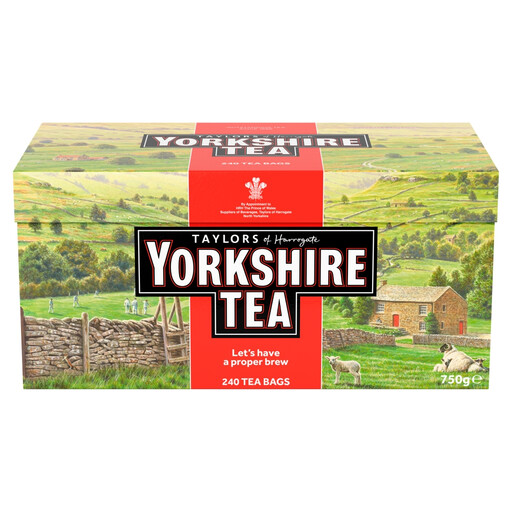
A 240-bag black-tea supply for guests using a shared kitchen. The listed net weight is 750g; store in a cool, dry place away from direct sunlight. Check the pack’s individual-bag format if sealed tea is needed for an arrival tray, and read the delivered label before putting it out.
 No image available
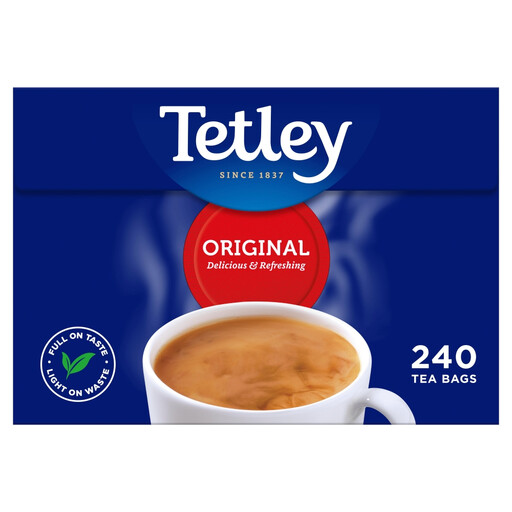
A 240-bag black-tea box for a communal tea cupboard. The listed net weight is 750g, with cool, dry storage specified. If you plan to set out sealed bags for guests, check the pack format; use the delivered label for current ingredient and storage information.
A 240-bag box is more suited to a shared kitchen than a small arrival pack. For a tray, consider individually wrapped bags: hospitality supplier Out of Eden positions them for self-catering welcome packs and guest accommodation.
Follow the delivered pack’s instructions and keep the tea cool and dry. The Yorkshire Tea 240-bag listing also specifies storage away from direct sunlight. Retain the current label so its ingredient and allergen information remains available.
Not if you want to offer a caffeine-free choice: the listed Tetley, PG Tips and Yorkshire Tea 240-bag products contain black tea. A clearly identified, separate infusion is an option; Nisbets describes its enveloped Twinings Camomile and Lemon & Ginger packs as naturally caffeine free.
GOV.UK’s Safer Food, Better Business guidance describes food-safety management procedures for small businesses in England and Wales. If the cottage activity is run as a food business, consult that guidance and ask the relevant local authority how it applies to the specific operation; providing complimentary tea alone does not establish the operation’s legal status.