Households making tea frequently
A 240-bag box is easier to justify when tea is made regularly by more than one person and there is dry cupboard space for the supply.


A 240-bag box of regular black tea makes sense when several people will use it regularly and there is a cool, dry place to keep it. For a household managing caffeine intake, a separately labelled decaf tea may suit some drinking occasions better than relying on one large regular-tea box; smaller packs are also worth considering if a 240-bag supply would go unused.
A 240-bag box is easier to justify when tea is made regularly by more than one person and there is dry cupboard space for the supply.
Regular tea needs to be considered alongside other sources of caffeine. The NHS advises no more than 200mg of caffeine a day during pregnancy and recommends the same daily limit while breastfeeding.
If reducing caffeine matters, compare clearly labelled decaf products and their pack sizes rather than assuming a large box of regular black tea will suit every cup.
Start with how often the household will use the tea and whether regular or decaf is needed. Then compare the pack details and brewing instructions for the occasions when tea is likely to be made.
| Priority | What to check | Your needs |
|---|---|---|
| Caffeine | Check whether the exact tea is regular or decaffeinated. Consider caffeine from other foods and drinks as well as tea. | If I am pregnant or breastfeeding, I need to account for my total caffeine intake. The NHS advises no more than 200mg a day during pregnancy and recommends no more than 200mg a day while breastfeeding. |
| Brewing time | Compare the stated infusion instructions: ASDA lists 1–3 minutes for PG Tips Original 240, while Tesco lists 2–3 minutes for Tetley 240. | When a break is short or interrupted, I want a brewing method that fits the time I usually have. |
| Pack size | Read both bag count and net weight: ASDA lists 240 PG Tips bags at 696g, while Tesco lists 240 Tetley bags at 750g. Check the pack’s storage instructions. | A large box works for us if we make tea often and can keep it dry; otherwise I would rather buy a smaller supply. |
| Packaging | Check claims on the exact product. ASDA describes its PG Tips bags as plant-based and biodegradable; Morrisons describes Yorkshire Tea’s bags as plant-based and compostable. Check local waste guidance for disposal. | If tea-bag materials affect my choice, I want to know what the pack says and how I can dispose of the bags locally. |
A large box of regular black tea does not remove the need to consider caffeine from repeated cups and other sources, particularly during pregnancy or breastfeeding.
Keep regular and decaf choices distinct. The NHS advises a daily caffeine limit of 200mg during pregnancy and recommends no more than 200mg a day while breastfeeding.
Boxes with 240 bags can contain different net weights: ASDA lists PG Tips at 696g, while Tesco and Morrisons list the relevant Tetley and Yorkshire Tea boxes at 750g.
Compare bag count, net weight and brewing instructions for the exact products you are considering.
Biodegradable and compostable are different product claims; neither tells you by itself which collection accepts the used bags.
Read the current pack instructions and check your local council’s waste guidance before choosing a disposal route.
Stock status can change between choosing a tea and placing an order. Typhoo’s own page showed its 240-bag box as sold out on 1 October 2026.
Before ordering, check availability, delivery details, the best-before date and the current ingredient and allergen information for the exact pack.
These examples show how particular tea products differ; a brand name alone does not establish the pack size, caffeine labelling or brewing instructions of another product in its range.
Tesco lists Tetley’s 240-bag, 750g product as regular black tea.
ASDA lists PG Tips Original as a 240-bag, 696g regular-tea pack.
Morrisons lists a 240-bag, 750g Yorkshire Tea product containing black tea.
Twinings Everyday Decaffeinated is an alternative to a large regular-tea box when decaf labelling matters more than a 240-bag count.
Clipper’s English Breakfast product is a smaller-pack option for shoppers interested in its stated sourcing attributes.
Typhoo’s own product page describes a 240-bag box of regular black tea.
These options include 240-bag regular black teas for frequent household use and smaller decaf-labelled packs for occasions when reducing caffeine is the priority.
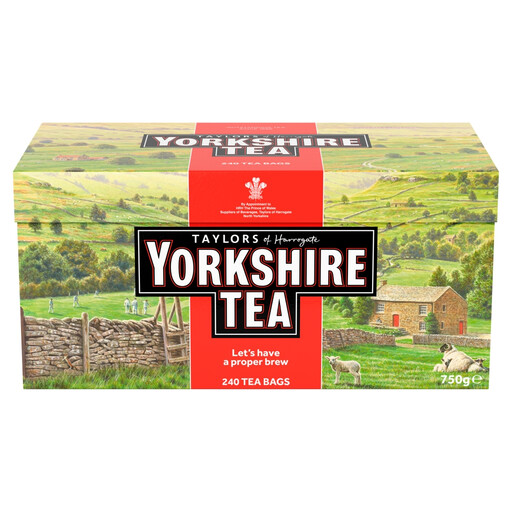 No image available
A regular black-tea box for a household that will use 240 bags and has cool, dry storage. The matching Morrisons listing states a 4–5 minute brew and describes the bags as plant-based and compostable. This is not a decaf option.
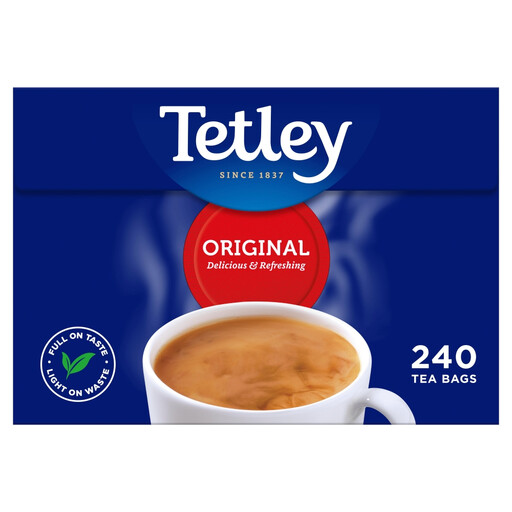 No image available
A regular black-tea box to consider when several cups are made routinely and the pack can be kept cool and dry. Tesco gives a 2–3 minute brewing instruction for the matching 240-bag product. It is not labelled decaf.
 No image available
A decaf-labelled black-tea option when a 240-bag regular-tea box does not suit every drinking occasion. This pack contains 160 bags at 500g; check the current label if its residual caffeine figure matters to your choice.
 No image available
A smaller decaf-labelled black-tea pack for a household choosing decaf over a 240-bag regular-tea supply. The product name states organic and Fairtrade attributes; check the current pack for the precise claims and any residual caffeine information you need.
It makes sense when tea is made regularly, the bags are likely to be used and there is a cool, dry place to store them. Check net weight as well as count: ASDA lists its 240-bag PG Tips pack at 696g, while Tesco and Morrisons list the relevant Tetley and Yorkshire Tea packs at 750g.
Regular tea contributes to total caffeine intake. The NHS advises no more than 200mg of caffeine a day during pregnancy, including caffeine from other sources such as coffee, cola and chocolate.
The NHS recommends no more than 200mg of caffeine a day while breastfeeding and notes that the amount in tea can vary. Consider other sources of caffeine too, and check the label when choosing between regular and decaf tea.
Not necessarily. Twinings says its Everyday Decaffeinated tea is decaffeinated to 0.02% caffeine, so check the exact product label rather than assuming decaf means none.
Keep it in a cool, dry place and follow the instructions on the exact pack. Before choosing a 240-bag box, make sure there is cupboard space where the tea can be kept dry.