Hosts serving a large group
An exact bag count makes it easier to plan how many single-bag cups you can serve. Choose brewing instructions that everyone making drinks can follow during the gathering.


For a Bonfire Night gathering, start with an exact 240-bag box if that count matters to your serving plan, then choose by bag format and the time you can allow for brewing. Tetley, PG Tips, Yorkshire Tea and Typhoo have 240-bag black-tea listings; if guests need decaf or you would prefer a different catering format, plan for a separate product that may come in a different pack count.
An exact bag count makes it easier to plan how many single-bag cups you can serve. Choose brewing instructions that everyone making drinks can follow during the gathering.
A 240-bag box can cover repeated rounds of tea made cup by cup. Compare the stated infusion times if several people will be preparing drinks.
If some guests avoid caffeine, check whether you need a separately labelled decaf choice. Check current pack information for dietary requirements, and local collection rules before planning to compost used bags.
Settle the required bag count first. Then compare preparation, net weight and guest requirements rather than assuming that every 240-bag box serves in the same way.
| Priority | What to check | Your needs |
|---|---|---|
| Bag count | Confirm the box contains exactly 240 bags. If using one bag per cup, account separately for guests who may use more or choose another drink. | I want a count I can use to plan cups for the gathering, without mistaking a larger catering pack for an exact 240-bag box. |
| Brewing and format | Compare the pack instructions: ASDA gives PG Tips 1–3 minutes, Tesco gives Tetley 2–3 minutes and Typhoo 1–5 minutes, and Sainsbury’s gives Yorkshire Tea 4–5 minutes. Check whether you prefer the PG Tips pyramid-bag format. | If several people are making tea, I need instructions that fit the way drinks will be served. A preference for pyramid bags may matter more to me than a particular brewing range. |
| Net weight | Compare total weight as well as bag count. Sainsbury’s lists PG Tips x240 at 696 g; the cited Tetley, Yorkshire Tea and Typhoo 240-bag listings state 750 g. | Equal bag counts do not tell me that boxes contain the same total weight of tea, so I want to check both figures. |
| Guest requirements | Check the current label for ingredients and dietary statements. If a guest needs decaf, choose a separately labelled product rather than treating an ordinary black-tea box as decaffeinated. | I may need a second tea option for guests avoiding caffeine, even when the main 240-bag box covers the planned number of cups. |
| Disposal | Read the current pack instructions and check local collection rules. Sainsbury’s says Yorkshire Tea’s plant-based bags are for council composting through food or garden waste. | I want to know where used bags can actually go after the event, rather than assuming a plant-based bag belongs in home compost. |
Clipper lists catering formats with other counts, while Twinings lists 300-bag black-tea products. Those packs will not match a plan based on exactly 240 bags.
Check the count on the particular product before ordering; consider a different count only if your serving plan allows it.
Listings for 240-bag boxes give different net weights and brewing ranges. The count alone cannot tell you how closely their preparation instructions match your service routine.
Compare the stated weight, bag format and infusion time alongside the count.
The listed exact-240 choices are black teas, not labelled decaf alternatives. Food Standards Scotland and the Food Standards Agency advise considering caffeine from tea alongside other sources.
If a decaf choice is needed, provide a separately labelled product and make the two options clear to guests.
Sainsbury’s directs Yorkshire Tea’s plant-based bags to food or garden waste for council composting. That instruction depends on the collection available locally.
Check the current pack and your council’s accepted waste before deciding where used bags should go.
These brand references describe particular product listings and ranges; they do not mean every tea from a brand comes in a 240-bag box.
Tesco lists Tetley Original as a 240-bag, 750 g tea product.
ASDA lists a 240-pack of PG Tips Original in the brand’s pyramid-bag format.
Sainsbury’s lists Yorkshire Tea Bags x240 as black tea.
Tesco lists Typhoo Premium Everyday as a 240-bag, 750 g tea product.
Clipper’s catering range offers formats for hosts who can use a count other than 240.
Twinings lists black-tea varieties for buyers who are flexible about pack count.
These two listed products are 240-bag everyday black teas for the main drinks supply at a Bonfire Night gathering. Compare their stated brewing times if drinks will be made throughout the event.
 No image available
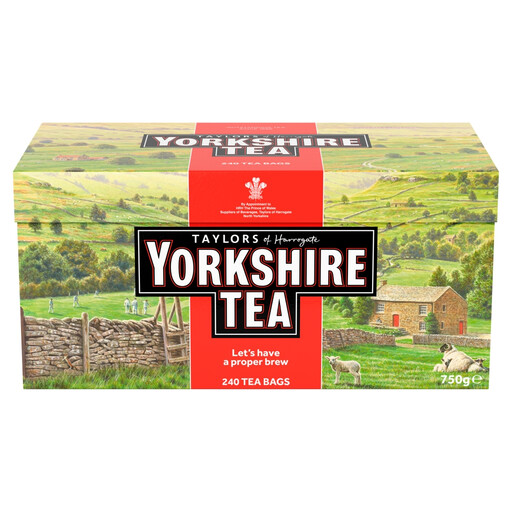
An exact 240-bag black-tea box for a group serving plan. Sainsbury’s gives Yorkshire Tea a 4–5 minute brewing instruction, so allow for that when preparing cups. Its plant-based bag guidance refers to council composting; check local collection rules. This is not a decaf option.
 No image available
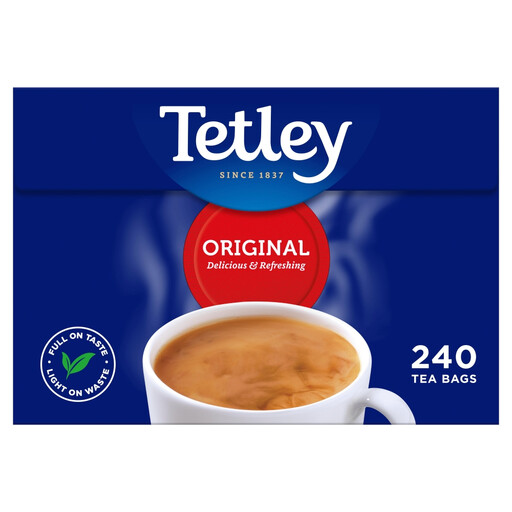
An exact 240-bag black-tea box for repeated rounds of tea. Tesco gives Tetley a 2–3 minute brewing instruction before adding milk. This is not a decaf option, so choose a separately labelled product if one is needed.
A 240-bag box allows for 240 single-bag servings. Plan for fewer cups from that box if some guests use two bags per drink or you use several bags in a pot; count any separately offered decaf tea on its own.
If guests need a decaf choice, provide a product clearly labelled as such: the exact-240 black-tea options discussed here are not decaf. The Clipper Tea Shop lists a 250-envelope decaf black tea, which is a different pack count. Food Standards Scotland and the Food Standards Agency advise considering caffeine from tea alongside other sources.
No. The cited retailer instructions give PG Tips 1–3 minutes, Tetley 2–3 minutes, Yorkshire Tea 4–5 minutes and Typhoo 1–5 minutes. Check the instructions on the particular pack you serve.
Do not assume they can. Sainsbury’s says Yorkshire Tea’s plant-based bags should go into food or garden waste for council composting. Check the current pack and your local council’s collection rules rather than treating that as a home-composting instruction.
Read the current label for ingredients, relevant dietary information, storage and brewing instructions. If you are offering both standard and decaf tea, keep their labels clear so guests can identify the option they want.