Regular hosts
For frequent family visits or guests, a known bag count makes it easier to plan replenishment. Paperstone lists a Yorkshire Tea box containing 240 bags, a format that needs no loose-leaf brewing equipment.


Choose a 240-bag box of everyday tea if the second home gets regular visitors and needs tea that can be made with just a kettle and mugs. Loose leaf makes more sense when a teapot or infuser stays at the property and its users prefer that format; compare it by weight rather than treating grams as an equivalent bag count. For either choice, match the quantity to visits and check the pack date and storage instructions before stocking the cupboard.
How often the property is used, what equipment it has and who drinks the tea matter more than finding the largest pack.
For frequent family visits or guests, a known bag count makes it easier to plan replenishment. Paperstone lists a Yorkshire Tea box containing 240 bags, a format that needs no loose-leaf brewing equipment.
If a teapot or infuser stays at the second home, leaf tea can be stocked by weight instead. Bettys lists loose-leaf options, including a 250g Yorkshire Tea pack; users will need to measure the leaves and clean the brewing equipment.
When visits are infrequent or guests want different teas, consider a smaller main supply with separate alternatives. Whittard of Chelsea and Bettys list smaller tea-bag formats, while Fortnum & Mason lists a mixed 120-bag selection.
Start with how many visits the pack must cover, then check preparation, storage and whether one type of tea will suit the people using the property.
| Priority | What to check | Your needs |
|---|---|---|
| Stock quantity | Compare bag count with expected visits. Paperstone lists 240 bags for Yorkshire Tea; Twinings lists 300 English Breakfast bags, and Ringtons lists a bundle of 4 × 50. | I want enough tea for regular visits without leaving a large opened pack at a property used only occasionally. |
| Preparation | Check whether the kitchen has only a kettle and mugs or also a teapot, infuser or strainer. Compare tea bags by count and loose leaf by weight. | Guests should be able to make a cup without looking for equipment or measuring leaves—or I want leaf tea and will keep the tools there. |
| Storage | Check the pack’s date and storage directions. Ringtons advises an airtight container and checking the expiry date; Bettys says to keep its 250g Yorkshire loose-leaf tea cool, dry and away from direct sunlight. | The cupboard may be untouched between visits, so I want a quantity I expect to use while the tea remains in good condition. |
| Caffeine | Read the exact product label to distinguish regular black tea, decaf tea and caffeine-free infusions. Fortnum & Mason says a typical cup of black tea contains 40–50mg of caffeine, with the amount varying by brew strength. | Some visitors avoid caffeine, so a separate clearly labelled option may be more useful than relying on one bulk black-tea box. |
| Variety | Decide whether one everyday tea is enough or whether smaller packs of other blends would be used. Fortnum & Mason lists a 120-bag mixed selection. | I would rather keep a manageable main supply and add other flavours only when the people staying there will drink them. |
| Delivery | Before sending a large pack to the property, check the seller’s delivery address, charge and handover options at checkout. | I need the tea to arrive when someone can receive it, or at an address from which I can take it to the second home. |
A bag count gives a fixed number of portions; a loose-leaf pack gives a weight and requires measuring and brewing equipment.
Compare each format in its own units. Make loose leaf the main stock only if a teapot or infuser will stay at the property.
Tea opened for one visit may remain in the cupboard until the next, particularly at an occasionally used home.
Choose a quantity that fits expected use, check the pack date and follow its storage directions. Ringtons advises keeping opened tea airtight.
Regular black tea contains caffeine, so one bulk box will not provide an alternative for visitors who avoid it.
If that applies to your guests, keep a separately labelled decaf tea or caffeine-free infusion alongside the main stock.
Packaging and disposal claims are product-specific. Fortnum & Mason describes its own tea bags as plastic-free and compostable; that does not establish how another product should be disposed of.
Read the instructions on the exact pack and check which materials the local collection accepts.
These ranges illustrate different pack formats; a brand’s wider range does not mean every format appears in the Joybuy options below.
An everyday black-tea option in both counted bags and loose leaf.
Bagged formats for households considering more than 240 portions.
A counted-bag alternative for an everyday tea supply.
A reference for adding different teas rather than relying on one large everyday box.
A mixed bagged-tea selection for visitors who want a choice of blends.
A reference for loose-leaf stock and smaller tea-bag packs.
These are bagged-tea options for second-home stocking: two 240-bag packs, a larger regular black-tea pack and a separate decaf option. Compare them with your expected use rather than treating the larger or decaf pack as the same choice as loose leaf.
 No image available
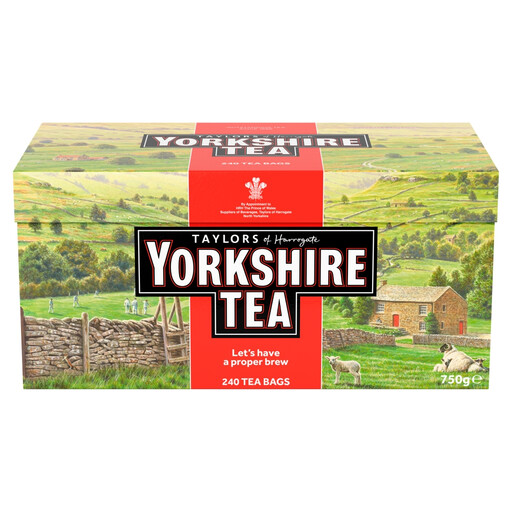
A counted, ready-portioned option for a second home with regular visitors. This is black tea rather than a mixed or decaf selection; check the date on the pack if it will be stored between visits.
 No image available
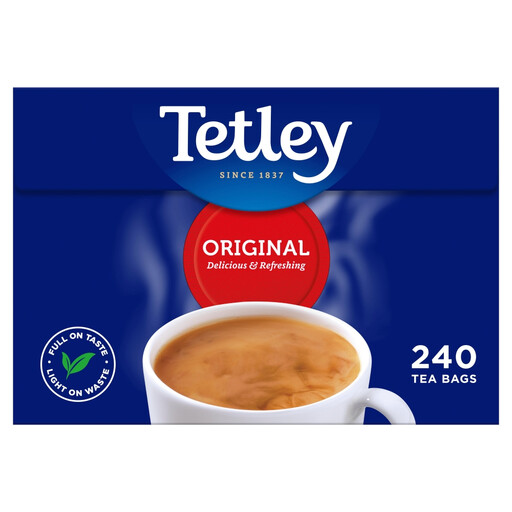
Another 240-bag black-tea option for a kitchen where visitors will use ready-portioned bags. It does not replace a separate decaf or varied selection; check the pack date before storing it for future visits.
 No image available
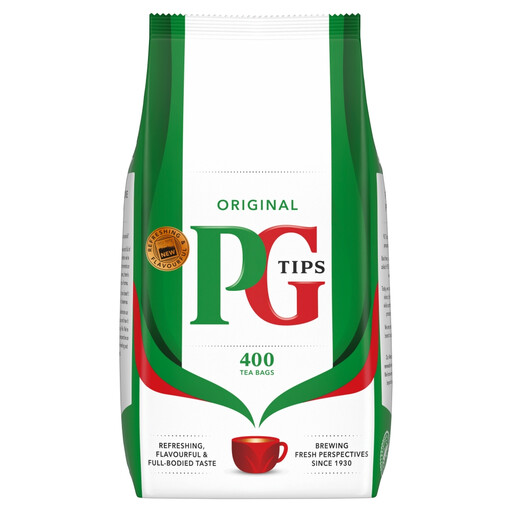
Consider this black-tea pack if the property uses tea frequently enough to justify 400 bags rather than the intended 240. Check cupboard space, the pack date and whether its packaging allows staged opening if that matters to you.
 No image available
A decaffeinated black-tea option to keep separately for guests who avoid regular black tea. Its 160-bag count is below the 240-bag main-stock target; check the pack date before leaving it between visits.
Choose tea bags if visitors need to make tea with a kettle and mugs; choose loose leaf if its regular drinkers prefer it and a teapot or infuser stays at the property. A 240-bag count and a loose-leaf pack weight are different measures, so plan each against expected visits.
Follow the directions on the pack and check its date before stocking it for an extended period. Ringtons advises an airtight container and an expiry-date check; Bettys specifies a cool, dry place away from direct sunlight for its Yorkshire loose-leaf tea.
Keep a clearly labelled decaf option if people who regularly use the property avoid caffeine but still want tea. Fortnum & Mason says a typical cup of black tea contains 40–50mg of caffeine, although brew strength affects the amount; check the label of the alternative you choose.
Check the exact pack and your local collection rules rather than assuming all tea bags use the same disposal route. Fortnum & Mason describes its own tea bags as plastic-free and compostable, but that claim does not establish the instructions for other brands or what a local collection accepts.
Confirm the delivery address, current charge and available handover arrangements at checkout, particularly if the property will be empty. Check the seller’s current returns terms separately if those matter to your purchase.