Students stocking a shared kitchen
A 240-bag box offers individually portioned tea for single mugs, without measuring leaves. Check that you have cupboard space for the pack before moving it in.


Choose a 240-bag box if you want individually portioned tea for making single mugs without measuring leaves. Choose loose leaf if adjusting the amount you brew matters more and you have a teapot, infuser or strainer. The formats are sold differently: a bag count is not a measure of how much loose tea you are buying.
A 240-bag box offers individually portioned tea for single mugs, without measuring leaves. Check that you have cupboard space for the pack before moving it in.
Loose tea lets you adjust how much you use per cup, but calls for a teapot, infuser or strainer and somewhere to keep the leaves. Ringtons advises measuring one teaspoon per cup.
If caffeine affects which tea you choose or when you drink it, check the exact tea type rather than treating every bag or loose-leaf blend alike. Fortnum & Mason describes a typical cup of black tea as containing 40–50mg of caffeine; decaffeinated tea and caffeine-free infusions are different choices.
Choose the brewing format first, then compare quantities within that format: individual tea bags and loose tea measured by weight are not interchangeable pack sizes.
| Priority | What to check | Your needs |
|---|---|---|
| Brewing equipment | Check whether the tea comes in individual bags or as loose leaves, and whether you have a mug, infuser, strainer or teapot for the method you choose. Ringtons advises one teaspoon of loose tea per cup. | I want to make a mug without measuring leaves, or I would rather use loose tea and adjust the amount myself. |
| Pack quantity | Compare bag counts with bag counts and loose-tea weights with weights. Yorkshire Tea lists 240 as a tea-bag pack size and its loose tea separately as 250g. | A counted supply helps me plan a shared cupboard; if I choose loose tea, I need to judge the pack by its weight instead. |
| Caffeine | Check whether the exact product is standard black tea, decaffeinated tea or an infusion. Caffeine figures depend on the tea and how it is brewed; Fortnum & Mason gives 40–50mg as a typical range per cup of black tea. | If I drink tea later in the day, I want to choose the type deliberately rather than assume a large black-tea box suits every cup. |
| Storage | Check the pack size against the cupboard space available and follow its storage instructions. For loose tea, Ringtons advises an airtight container away from sunlight. | There is room to keep the quantity I buy properly, even if it takes me a while to use it. |
| Ingredients | Read the ingredients and allergen information on the exact blend, particularly for flavoured tea or infusions. GOV.UK says specified allergens used as ingredients in prepacked food and drink must be clearly labelled in the ingredients list. | When choosing a mixed selection or unfamiliar flavour, I need to check its own label rather than assume it matches plain tea. |
Yorkshire Tea lists its 240-count tea bags separately from loose tea sold by weight. Loose leaves also need measuring and suitable brewing equipment.
Decide which preparation method you want before comparing packs. Look for a bag count if single-mug convenience is the priority, or a stated weight if you want loose tea.
Choosing loose tea can also mean making space for an infuser, strainer or teapot.
A large supply of standard black tea may not fit a routine that calls for a different caffeine choice. Fortnum & Mason gives 40–50mg as a typical caffeine range per cup of black tea.
Check the tea type on the exact pack. If you want another option in the cupboard, compare decaffeinated tea bags and caffeine-free infusions rather than assuming they are equivalent.
Ingredients can differ between plain tea, flavoured blends and infusions. GOV.UK says specified allergens used as ingredients in prepacked food and drink must be clearly identified in the ingredients list.
Read the label for the particular flavour and pack you intend to buy, especially when choosing a mixed selection.
A reference point for comparing a counted everyday tea-bag box with loose tea from the same maker.
A range to consider if choosing a tea type or infusion matters more than committing to one everyday black-tea blend.
Relevant if you are considering loose tea alongside tea bags and brewing equipment.
A selection route for trying several named tea blends rather than buying one 240-bag everyday blend.
A retailer reference for the Yorkshire Tea 240-bag product and separate loose-tea choices.
Useful for comparing loose-leaf preparation with larger, individually portioned tea-bag bundles.
These are bagged-tea options for a move-in cupboard: two have the requested 240-bag count, while the others offer different counts or decaffeinated tea. None is loose leaf.
 No image available
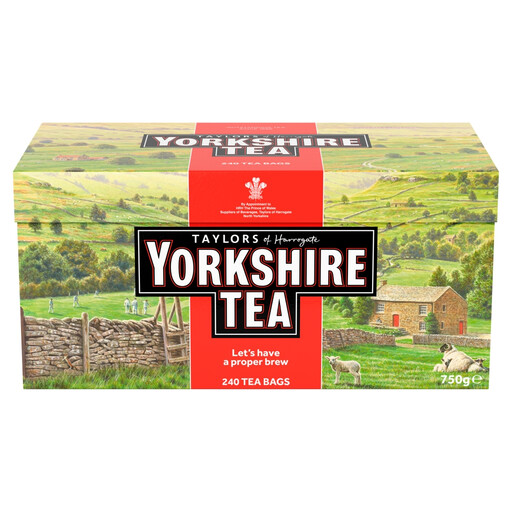
For a counted supply of individually portioned tea rather than loose leaves. The pack contains 240 tea bags and has a stated weight of 750g.
 No image available
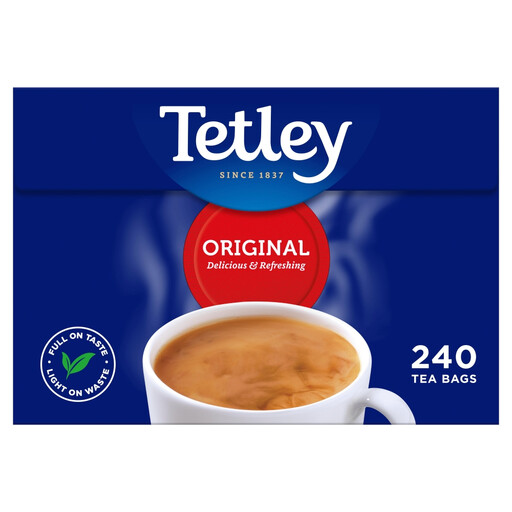
Another individually portioned option at the requested count. This pack contains 240 tea bags, weighs 750g and is not loose leaf.
 No image available
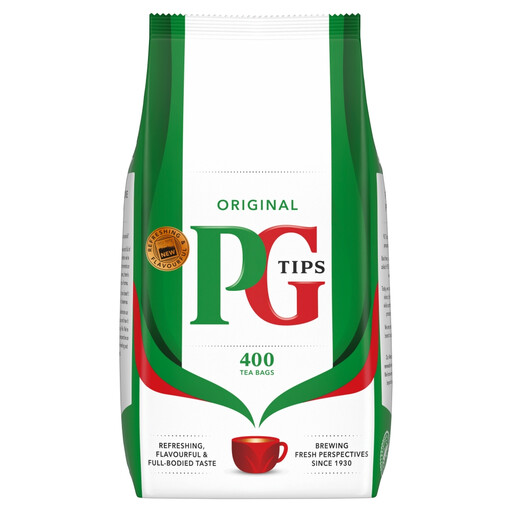
Consider this bagged option if a count above 240 fits your cupboard plans. It contains 400 tea bags, weighs 1.16kg and is not loose leaf.
 No image available
A decaffeinated, individually portioned alternative if you do not need exactly 240 bags. The pack contains 160 tea bags and weighs 500g; decaffeinated does not mean caffeine-free.
 No image available
A smaller decaffeinated bagged option to compare with the larger packs. It contains 80 tea bags, weighs 250g and does not meet the 240-bag count.
No. The 240 figure counts individual tea bags, whereas loose tea is sold by weight. Yorkshire Tea lists a 240-bag size and separately lists its loose tea as 250g, so choose by brewing format before comparing quantities.
Tea bags can be brewed in a mug without measuring leaves. For loose tea, allow for a teapot, infuser or strainer; Ringtons advises measuring one teaspoon per cup and steeping it for three to five minutes.
Follow the instructions on the pack and choose a suitable cupboard before buying a large quantity. Ringtons advises keeping loose tea airtight and away from sunlight.
Check the tea type if caffeine matters to your routine. Fortnum & Mason gives 40–50mg as a typical range per cup of black tea; decaffeinated tea bags and caffeine-free infusions are separate options, so read the exact product description.
Read the ingredients list on the exact prepacked product. GOV.UK says that any of the 14 specified allergens used as ingredients in prepacked food or drink must be clearly labelled there.