For a working-from-home lunch with a kettle and mug, choose an ordinary instant-coffee jar, refill pouch or portioned stick rather than buying a 240-cup case just for its size. The 240-count Nescafé Latte and Cappuccino examples listed by Vending Drinks Direct and Pioneer Vending are 73 mm in-cup vending refills, so check that you have the matching equipment before considering one. A jar lets you measure each drink; sticks provide a fixed portion.
Who is this for?
The right pack depends first on how you make coffee at lunch, then on how you prefer to portion and store it.
Home workers with a kettle and mug
If you make one drink at a time without vending equipment, soluble coffee in a jar or refill pouch fits that preparation method. Nescafé describes its Original granules as suitable for preparation with hot water; the 240-cup Nescafé Latte listing from Vending Drinks Direct is for a vending machine.
People who prefer portioned servings
Coffee sticks give you an individual portion without measuring from a jar. Check the pack count rather than assuming it is 240: Zepbrook lists Nescafé sticks in 200-count packs, while JDE Professional lists Douwe Egberts Pure Gold sticks in a 500-count pack.
Buyers with an in-cup vending machine
A 240-cup case becomes relevant if your machine accepts the specified 73 mm in-cup refills. Vending Drinks Direct lists a Nescafé Gold Latte case as 12 packs of 20 cups; confirm compatibility with your particular machine before ordering.
What should you check?
Start with the preparation format, then compare portions, pack size and the label for the exact coffee you would drink.
| Priority | What to check | Your needs |
|---|
| Equipment |
Check whether the pack contains soluble granules, sticks or 73 mm in-cup vending refills. Match vending refills to the machine they require. |
I make coffee with a kettle and mug, so I need a format prepared that way—not a machine refill chosen because it says 240 cups. |
| Portioning |
Check whether each serving is individually portioned or measured from a jar or pouch. For sticks, check whether they contain coffee alone or a prepared drink mix. |
A fixed portion suits me when I do not want to measure coffee at lunch; otherwise, I would rather decide how much granulated coffee to use. |
| Pack size |
Compare the stated count or weight with how often you make coffee and where you can store the pack. A weight in grams is not a confirmed number of servings. |
If I am the only coffee drinker at home, I want a pack size that makes sense for my usual consumption and cupboard space. |
| Ingredients |
Read the exact ingredients and allergen information, particularly for latte or cappuccino products. Check the preparation directions for that variant. |
I need to know whether I am buying plain coffee or a drink mix, and whether its ingredients suit me. |
| Flavour and caffeine |
Check the product's flavour description and look for an explicit decaf label if caffeine content affects your choice; flavour strength does not identify a decaf product. |
I may prefer one flavour profile for lunch, or specifically want a coffee labelled decaffeinated. |
Buying mistakes to avoid
-
Reading “240 cups” as 240 ordinary coffee sachets
Vending Drinks Direct lists its 240-cup Nescafé Gold Latte case as 73 mm in-cup drinks for vending machines. That preparation format matters more than the count if you only have a kettle and mug.
Look for the words “in-cup” and “vending refill” before choosing a case. For kettle preparation, check the directions on a jar, pouch or stick pack instead.
-
Choosing a trade pack without considering storage and use
JDE Professional lists formats including 750 g tins and 500-stick packs. Those quantities call for more storage and a longer period of use than a smaller household pack.
Work out how often you expect to make coffee and check the storage instructions before committing to a larger format.
-
Treating every instant-coffee product as the same drink
Plain soluble coffee, decaf coffee and latte or cappuccino mixes differ in formulation and preparation. A familiar coffee brand does not tell you the ingredients of a particular variant.
Read the exact pack for ingredients, allergens, preparation directions and decaf status before buying.
Brands and retailers to compare
These references help distinguish household instant coffee from portioned and machine-specific formats; a brand name alone does not establish how a particular pack is prepared.
Nescafé
Nescafé lists Original as soluble granules in jars and refill packs, while UK vending suppliers list separate 73 mm, 240-cup Latte and Cappuccino refills.
- Check the Original jar or refill format for ordinary hot-water preparation.
- Do not treat the 240-cup vending refills as interchangeable with household granules.
Kenco
Kenco presents Smooth, Rich and Decaf as distinct choices within its instant-coffee range.
- Kenco describes Smooth as a blend of freeze-dried instant and roast-and-ground coffee, and Rich as bold and full-flavoured; these are the brand's flavour descriptions.
- Check the exact variant and pack format rather than using the range name to judge its preparation or contents.
Douwe Egberts
JDE Professional lists Douwe Egberts Pure Gold in professional instant-coffee formats, including a 500-stick pack and 750 g tins.
- The sticks offer individually portioned coffee where that format suits the routine.
- Check whether a professional pack's quantity suits the number of people using it.
Tesco
Tesco Groceries lists household instant-coffee jars and refill pouches, including Nescafé products.
- Its category provides household formats to compare by product type and pack size.
- Check the individual listing for the variant and format you intend to prepare.
Sainsbury's
Sainsbury's lists own-label instant coffee alongside branded jars, decaf products and smaller drink-sachet packs.
- The range gives household buyers several preparation formats to distinguish.
- A sachet drink mix and a jar of plain soluble coffee should be checked as separate products.
Instant coffee options on Joybuy
These jars are options for making instant coffee during a working-from-home lunch. Compare their exact labels and preparation directions; a jar's weight does not make it a 240-cup vending case.
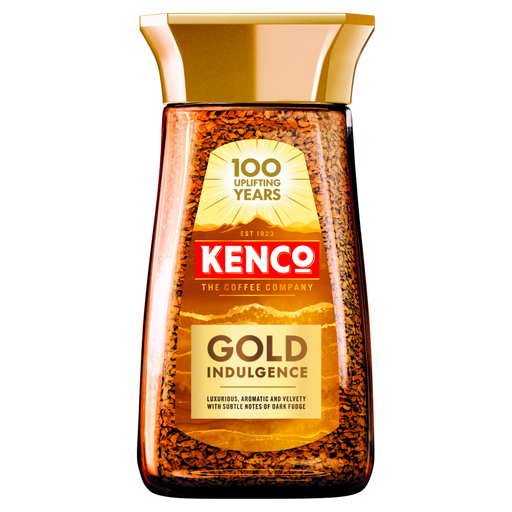 Image unavailable
Kenco Gold Indulgence Instant Coffee 195 g
A 195 g instant-coffee jar for a routine where you measure each drink rather than use an individual stick. Check the pack directions for the serving you want to make.
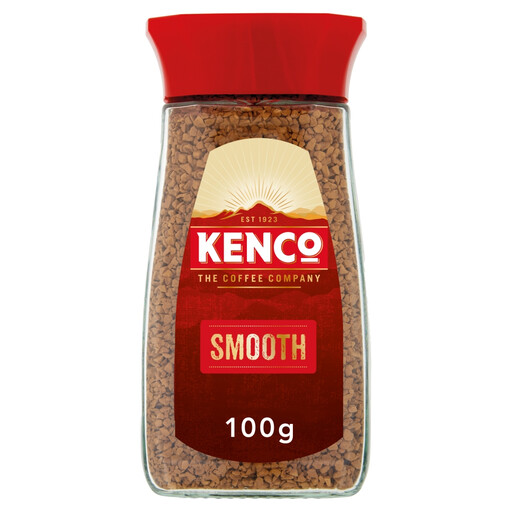 Image unavailable
Kenco Smooth Coffee 100 g
This 100 g jar is described as freeze-dried instant coffee. Its product directions specify adding one to two teaspoons to hot water, making the preparation method relevant to a kettle-and-mug lunch.
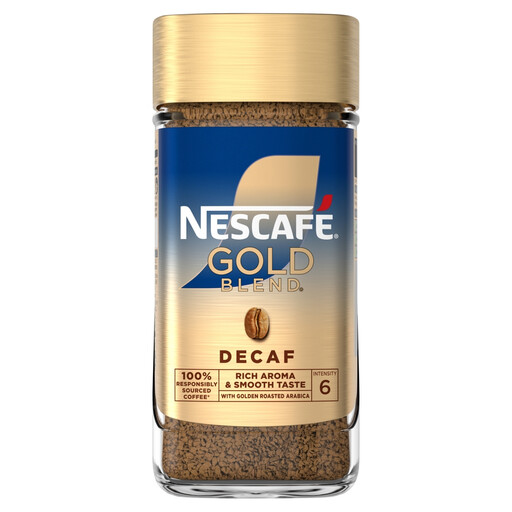 Image unavailable
Nescafé Gold Blend Decaf Coffee 190 g
A 190 g jar labelled decaffeinated soluble coffee, with hot-water preparation described for this product. Check the exact pack label if you need ingredient, allergen or product-specific caffeine information.
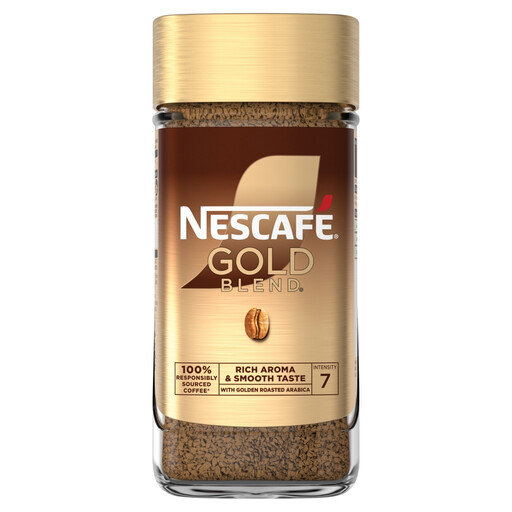 Image unavailable
Nescafé Gold Blend Coffee 190 g
This 190 g jar is identified as soluble coffee for a household coffee routine. If its precise formulation matters to you, check the ingredient list on the exact pack.
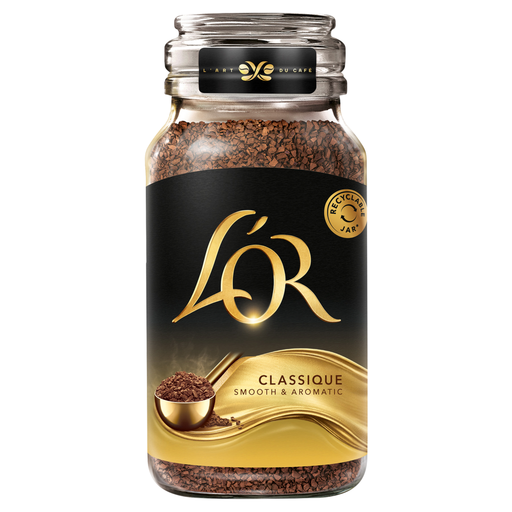 Image unavailable
L'OR Classique Coffee 150 g
This 150 g coffee is identified as instant coffee, and its listed ingredient is Colombian Arabica beans. The product copy also emphasises serving it chilled, so check the exact preparation directions if you intend to make a hot lunch-time drink.
Frequently asked questions
Can I make a 240-cup Nescafé Gold Latte case with a kettle and mug?
Do not assume so: Vending Drinks Direct identifies the 240-cup Nescafé Gold Latte case as 73 mm in-cup drinks for vending machines. If you only have a kettle and mug, choose a product whose directions specify that preparation method.
Which instant-coffee format suits one person working from home?
A jar or refill pouch lets you measure coffee for each drink, while sticks provide individual portions. Choose between them by how you prepare lunch-time coffee and how much you expect to use; neither format should be confused with a 240-cup vending refill.
Should I check allergens on a latte or cappuccino coffee pack?
Yes. Read the ingredients and allergen information for the exact prepacked variant before purchase, particularly when comparing a latte or cappuccino mix with plain soluble coffee.
How can I identify a decaf coffee for lunch?
Choose a product explicitly labelled decaffeinated rather than judging caffeine content from words describing flavour or strength. If you are tracking caffeine, include coffee alongside your other sources of it.


