
24/7 Customer Support

Free returns

Same-day & Next-day Delivery

Quality Guaranteed

Unlock Your Welcome Offers: FREE Delivery | Up to 80% OFF | Free 30-day JoyPlus trial
Download the APP
That dreaded "Storage Full" notification always seems to appear at the worst possible moment—just as you are about to download a new game, record a crucial 4K video clip or install a large application. Whether you are a gamer expanding your Nintendo Switch library, a content creator capturing high-resolution footage on a drone, or an Android user needing more space, a slow or unreliable memory card can be a significant bottleneck.
Navigating the world of memory cards can feel overwhelming, with a confusing array of speed classes, ratings and technical terms. This guide is designed to cut through the clutter. As a Joybuy Product Recommendation Officer, my role is to provide clear, practical advice to help you find a high-performance 256GB microSD card that meets the demands of your modern devices.
Before we look at specific products, let's cover a few key factors to consider. Understanding these will help you match a card's specifications to your specific needs.
The small symbols on a microSD card are not just for decoration; they indicate its performance capabilities. For demanding tasks, these are the ones to look for:
Not all devices can take full advantage of the fastest cards on the market. It is important to check your device's specifications to see the maximum capacity and speed class it supports. For example, while a 256GB memory card for Nintendo Switch is a popular choice for microSD for gaming, the console has a maximum read speed limit. A card that is significantly faster than the console can handle will still work, but you will not benefit from its full potential. The same applies to drones, cameras and handheld gaming PCs.
Here are our recommendations for high-performance 256GB microSD cards, selected to meet the needs of different users.
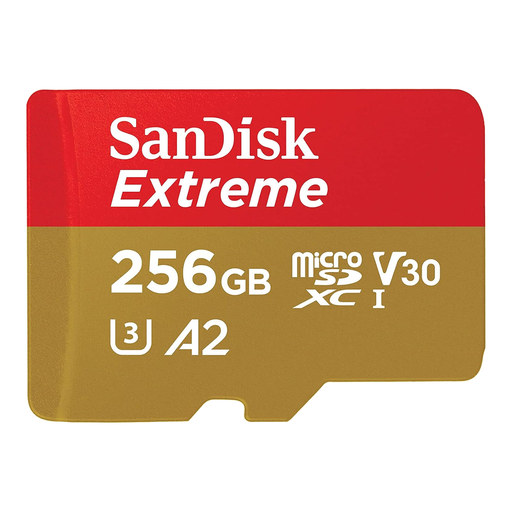
Why It Stands Out The SanDisk Extreme is a formidable all-rounder, engineered for users who demand both speed and resilience. It combines high read and write speeds with a rugged build, making it a versatile option for a wide range of high-end devices. With read speeds up to 190MB/s and write speeds up to 130MB/s, it handles large files and demanding recording tasks with ease.
Pros
Who is it for? This card is an excellent choice for content creators, drone pilots and Android power users who need a single, reliable card that performs well across multiple devices and in challenging environments.
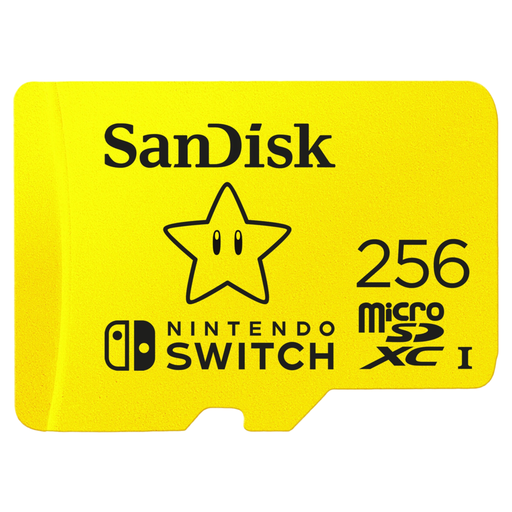
Why It Stands Out For Nintendo Switch owners, this card removes all guesswork. As an officially licenced product, it is designed and approved by Nintendo to deliver dependable, high-performance storage that is perfectly matched to the console's capabilities. It provides a seamless plug-and-play experience for expanding your game library.
Pros
Who is it for? This is the go-to option for Nintendo Switch gamers who prioritise guaranteed compatibility and straightforward performance for their console.
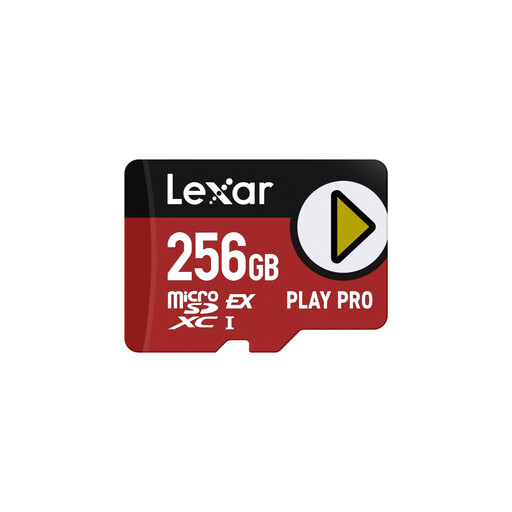
Why It Stands Out The Lexar PLAY PRO represents the next generation of microSD performance. It utilises the microSD Express interface, which leverages PCIe and NVMe technology to deliver speeds far beyond traditional UHS-I cards. With read speeds up to 900MB/s and write speeds up to 600MB/s, it is built for the most demanding, forward-looking applications.
Pros
Who is it for? This card is for tech enthusiasts, professional videographers and users of cutting-edge portable gaming devices who want to invest in future-proof technology and unlock the absolute fastest speeds their hardware can support.
If these recommendations do not quite fit your needs, or if you are looking for a different capacity, there are many other choices available. To find the right storage solution for your specific device, feel free to browse our complete collection.
Explore our full range of memory cards here
1. Is a 256GB microSD card big enough for a Nintendo Switch? For the vast majority of gamers, 256GB is an excellent capacity for the Nintendo Switch. It provides enough space to store a healthy library of digital titles, typically between 10 and 20 large AAA games, alongside numerous smaller indie games, DLC and system updates. It strikes a great balance between storage space and cost.
2. What does the A2 rating on a microSD card actually do? The A2 (Application Performance Class 2) rating indicates that a card is optimised for running applications. It achieves this through higher random read and write speeds, measured in IOPS (Input/Output Operations Per Second). For a user, this translates to faster app launch times and smoother performance when running apps directly from the microSD card on a compatible device like an Android smartphone or a handheld PC.
3. Can I use any high-performance microSD card for 4K video? Not all high-performance cards are suitable for 4K video. The key is sustained write speed. To record 4K video smoothly without interruption, you need a card that can consistently write data at a high rate. Look for cards with a UHS Speed Class 3 (U3) and/or Video Speed Class 30 (V30) rating. These certifications guarantee a minimum sustained write speed of 30MB/s, which is the standard requirement for reliable 4K recording.