
24/7 Customer Support

Free returns

Same-day & Next-day Delivery

Quality Guaranteed

Unlock Your Welcome Offers: FREE Delivery | Up to 80% OFF | Free 30-day JoyPlus trial
Download the APP
A 256GB microSD card can add substantial storage to a phone, camera, handheld console or drone. However, capacity alone does not tell you whether a card will work properly in your device. Buying based only on a low price or an impressive headline speed can lead to compatibility problems, poor recording performance or storage that fills sooner than expected.
This guide explains the specifications that matter and matches suitable options to common UK use cases.
A card may display a read speed of 150MB/s, 190MB/s or more, but this is usually a maximum under specific conditions. Your phone, camera, console, card reader and file type all affect actual transfer rates.
Some higher figures also require a particular reader. For example, certain SanDisk cards reach their stated QuickFlow transfer speeds only when paired with a compatible SanDisk Professional reader. If your laptop or camera uses a standard UHS-I interface, it may not reach the headline figure.
A conventional UHS-I microSD card and a microSD Express card are not identical. Express cards use a PCIe/NVMe interface and can offer much higher sequential speeds, but the host device must support microSD Express to use them at full performance.
A card designed for Nintendo Switch 2 should not automatically be assumed to deliver the same results in an original Nintendo Switch, Android phone or camera. Always check the device manufacturer’s supported format, capacity and speed class before ordering.
Water-, shock-, temperature- and X-ray-resistant construction can be useful for travel, outdoor filming and everyday handling. It does not make stored files permanently safe. Memory cards can still become corrupted, lost or damaged, particularly if removed while data is being written.
For irreplaceable photos, videos and documents, keep a second copy on a computer, external drive or trusted cloud service.
A 256GB card is normally a microSDXC card, because microSDXC covers capacities above 32GB. The usable space shown by your device will be lower than the advertised capacity because of formatting and system measurement.
Check that the device supports microSDXC. Older hardware may support only microSDHC cards, while some cameras and consoles have their own maximum-capacity limits. Formatting the card in the device before first use can help avoid file-system issues, but formatting erases existing content.
For video recording, look beyond the maximum read speed:
A U3 V30 microSD card is a practical specification to consider for compatible action cameras, drones and 4K video memory card applications. Confirm the camera’s own recording requirements, as bitrate and frame rate vary between models.
A microSD card fits directly into a compatible microSD slot. A microSD card with SD adapter can also be used in full-size SD slots found on many cameras, laptops and card readers. The adapter does not increase the card’s speed; it simply changes the physical format.
For a microSD card for Android, check whether your phone supports expandable storage and whether apps can be moved to removable storage. For a microSD card for Nintendo Switch, check the exact console generation and follow the console’s formatting instructions.
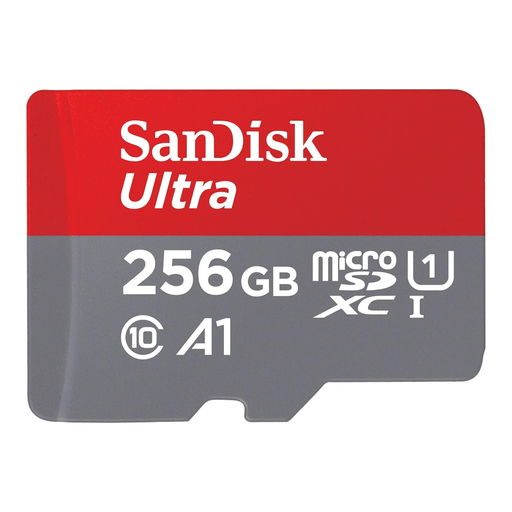
Why This Fits Their Persona: A straightforward option for Android phones, tablets and everyday storage, with an adapter for occasional use in a camera or laptop.
The product lists its A1 rating, microSDXC UHS-I format and included SD adapter, so buyers can check the essentials before purchase.
256GB capacity; up to 150MB/s read speed; A1 app performance; SD adapter included.
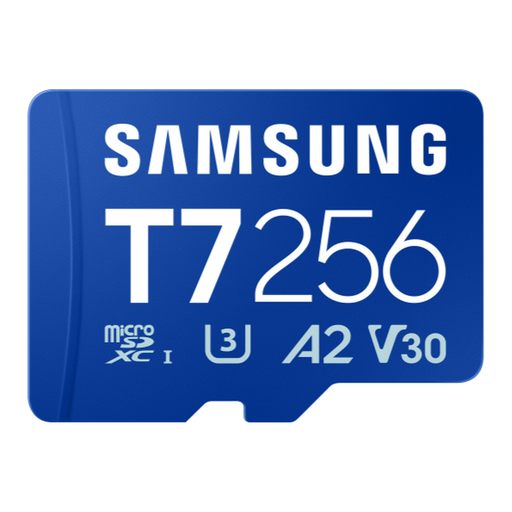
Why This Fits Their Persona: Suitable for users moving between phones, tablets, action cameras, drones and handheld gaming devices who value a broad feature set.
Its UHS-I, U3, V30 and A2 specifications are clearly stated, helping separate sustained video capability from headline transfer speed.
256GB capacity; up to 170MB/s read and 130MB/s write; A2 and V30 ratings; water, temperature, X-ray, magnet and drop protection listed.
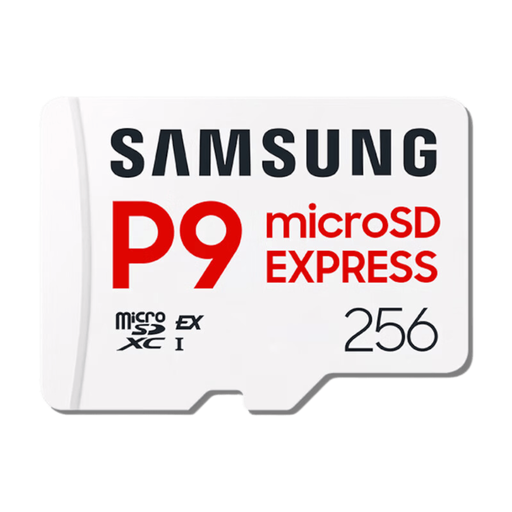
Why This Fits Their Persona: Designed for compatible microSD Express hosts, particularly users planning high-speed gaming storage and large data transfers.
The listing identifies the PCIe/NVMe Express interface and states that full performance requires a compatible host, reducing the risk of buying for an unsupported slot.
256GB capacity; sequential read speed up to 800MB/s; U3, V30 and A1 ratings; SD adapter included.
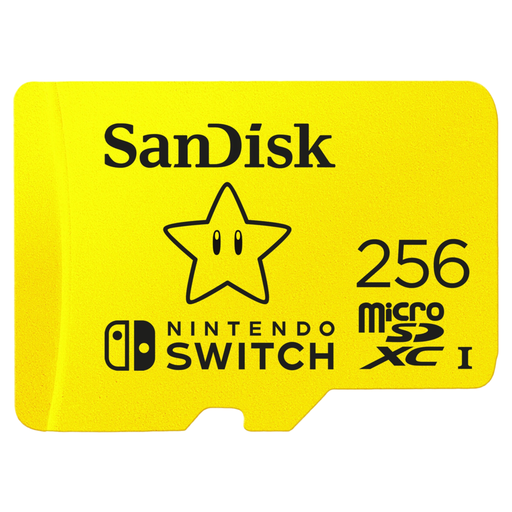
Why This Fits Their Persona: A console-specific choice for Nintendo Switch, Nintendo Switch OLED Model and Nintendo Switch Lite users expanding a digital game library.
It is listed as officially licensed for the Nintendo Switch family, avoiding uncertainty around general-purpose cards and console compatibility.
256GB capacity; up to 100MB/s read and 90MB/s write; compatibility with the Switch, OLED Model and Switch Lite.
Photographers and videographers should consider the SanDisk Extreme microSDXC 256GB + SD Adapter, which lists U3, V30 and A2 ratings, up to 130MB/s write speed and compatibility with action cameras, drones and Android devices. For full-size camera slots, the SanDisk Extreme PRO 256GB SDXC Memory Card lists up to 140MB/s write speed and V30 support for 4K UHD recording.
Lexar and Kingston also offer storage across different capacities and formats. Compare the host device requirements rather than selecting solely by brand name.
We have compiled a complete, real-time list of products that fully satisfy these strict selection criteria and UK safety regulations.
It can be, provided the phone supports microSDXC and permits expandable storage. Check the handset’s maximum supported capacity and whether apps can be installed on removable storage. A1 or A2 may be relevant for app use, but actual performance depends on the phone.
There is no fixed lifespan. Usage intensity, card quality, device conditions and the amount of writing all affect service life. Cards used for continuous dashcam or CCTV recording face heavier write demands than those used for occasional photos. Back up important files and replace a card if the device reports errors or files become corrupted.
A microSD card uses a small amount of power while the device is operating, but it does not have a separate ongoing energy supply. Any effect on battery life depends mainly on the host device and how frequently it reads or writes data.